


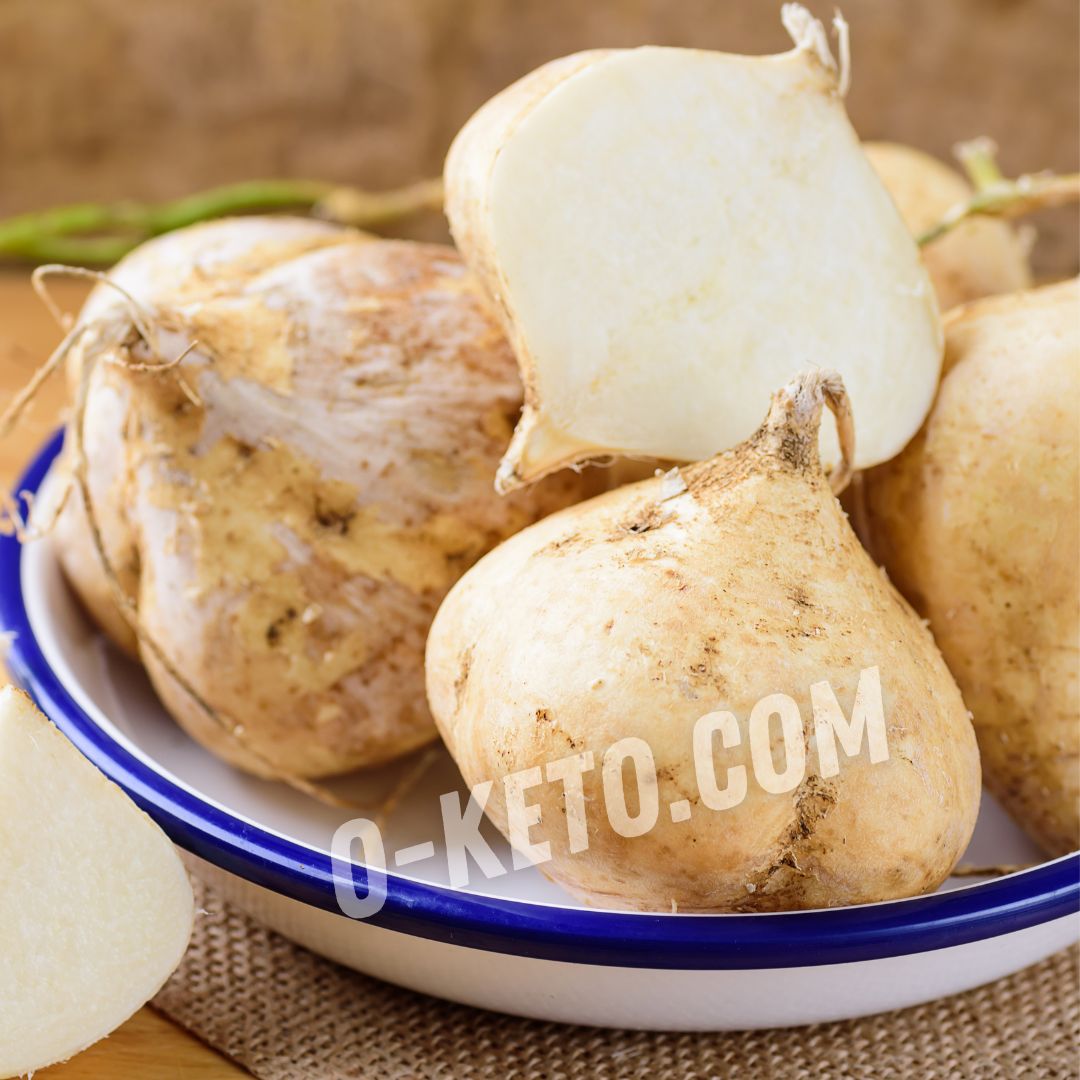

Jicama is a crunchy root vegetable from Mexican cooking, with juicy watery flesh and a mild sweet taste. It is eaten raw, cut into sticks, added to salads, salsa, lime-and-chili snacks and sometimes quickly stir-fried. In texture it resembles something between apple, radish and water chestnut, but without strong sharpness.
Per 100 g, jicama is often listed at about 38 kcal, 0.1 g of fat, 0.7 g of protein and 9.6 g of carbohydrates, of which about 6.6 g are fiber. The glycemic index is around 38, while glycemic load is low, around 1 in a small serving. It contains vitamin C, B vitamins, potassium and a lot of water. For keto, it is not unlimited, but it can be a useful crunchy accent.
Nutrition
Jicama contains more total carbohydrates than leafy greens, but a large part is fiber. A small serving can therefore fit LCHF and sometimes strict keto if carbohydrates are counted from a label or reliable table. A large bowl of jicama should not be treated as “just a vegetable.”
Its main culinary value is crunch and juiciness. It can replace sweet apples, carrots or chips in dishes that need fresh crunch, but it still requires moderation. It contains almost no fat or protein, so more satisfying foods should be served with it.
Is It Keto-Friendly?
Jicama may fit keto in a small serving, often 30-80 g as part of a salad or snack. It works better as an addition than as the base of a plate. If the menu already includes nuts, dairy, berries or other carbohydrates, the jicama portion should be reduced.
For keto, avoid pairing it with sweet sauces, honey, fruit juices and large amounts of sweet corn or beans. Better pairings are fat, acid and salt: avocado, olive oil, lime, sour cream, cheese, fish, chicken, shrimp, chili and herbs.
How to Use It
Jicama is most often eaten raw. The peel is removed because it is tough and not used in ordinary cooking. The flesh is cut into sticks, cubes or thin slices. To keep the flavor from feeling flat, acid is almost always useful: lime, lemon or sugar-free vinegar.
Practical options include:
- jicama sticks with lime, salt and chili;
- salad with avocado, cucumber and herbs;
- a crunchy addition to taco salad without tortillas;
- salsa with shrimp and cilantro;
- replacing part of apple in a savory salad.
How to Choose and Store
Choose firm heavy tubers without soft spots, mold or cracks. The skin may be rough, but it should not be wet or shriveled. Very large jicama can be fibrous, so medium tubers are more convenient for cooking.
Whole jicama can be stored in a cool dry place or the refrigerator; cut jicama should be covered and chilled. Cut flesh dries out, so it is best used within 1-2 days. Freezing damages the crunch.
Limits and Substitutes
Raw jicama may be unfamiliar for digestion because of fiber. Start with a small serving. Only the peeled root is used for food; leaves, stems and seeds are not the edible part.
Jicama can be replaced with cucumber, daikon, radish, kohlrabi, celery stalk or a small amount of green apple outside strict keto. If crunch with fewer carbohydrates is needed, cucumber, celery and radish are usually easier.
Portion and Common Mistakes
Jicama is easy to eat like a snack, so it is better to cut the needed amount in advance rather than put the whole root on the table. For a keto snack, a small handful of sticks is enough next to a sauce based on sour cream, avocado or cheese. A common mistake is adding it to fruit salads: with apple, mango or sweet dressing, carbohydrates rise quickly.
Cutting and Serving
The cut strongly changes how jicama feels. Thick sticks are good for dipping and snacking, thin matchsticks spread better through salad, and small cubes work for salsa with shrimp, cucumber and cilantro. The thinner the cut, the smaller the portion needed for noticeable crunch.
If jicama seems too watery, salt it a few minutes before serving and drain the extra juice. For keto this is more convenient than adding a sweet dressing: the flavor becomes brighter without increasing the carbohydrate load through sauce.


