


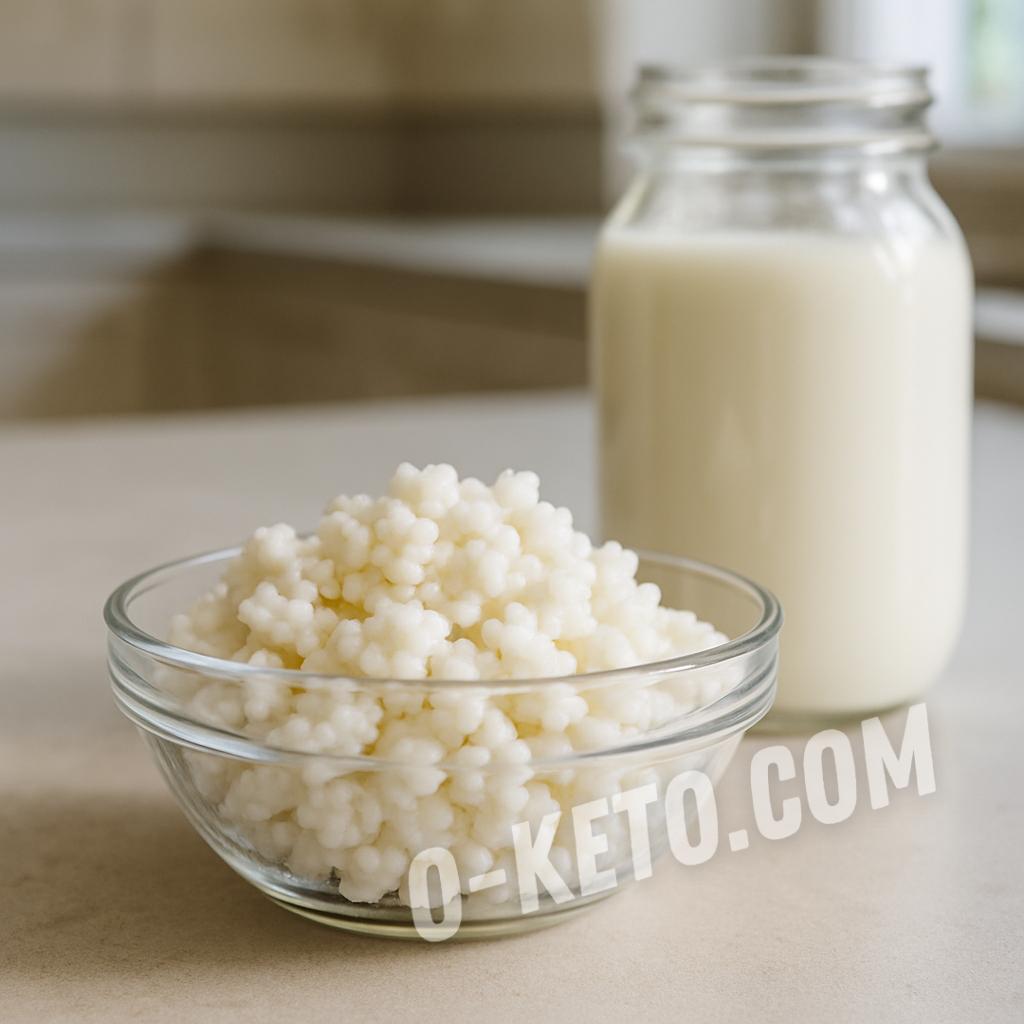

Kefir grains are a living symbiotic culture of bacteria and yeasts used to ferment milk into kefir. They look like small white irregular clusters.
They are not cereal grains. Their main value is as a starter culture rather than as a food eaten in large amounts.
What they are
Kefir grains contain microbes embedded in a polysaccharide matrix. The exact community varies, but it may include lactic acid bacteria, acetic acid bacteria, and yeasts.
When placed in milk, the microbes ferment part of the lactose and produce lactic acid, carbon dioxide, aroma compounds, and other metabolites.
Nutrition
The grains themselves are usually not eaten in meaningful portions, so their nutrition table has limited practical value. Wet grains are mostly water, microbial biomass, and polysaccharides.
For recipes, the weight of the starter and the nutrition of the finished kefir matter more than the theoretical composition of the grains.
Keto relevance
Kefir grains are not a sugar source by themselves, but the finished kefir still contains residual lactose. Longer fermentation can reduce lactose, but kefir does not become zero-carb.
On keto, count the carbohydrates in the finished drink. People with dairy allergy, dairy intolerance, or strong histamine reactions may need to avoid it.
Use and storage
The grains are added to milk, fermented at room temperature, strained, and moved to fresh milk. Clean equipment is important for keeping the culture stable.
For a pause, grains can be refrigerated in a small amount of milk. Mold, colored spots, or a rotten smell are warning signs.


