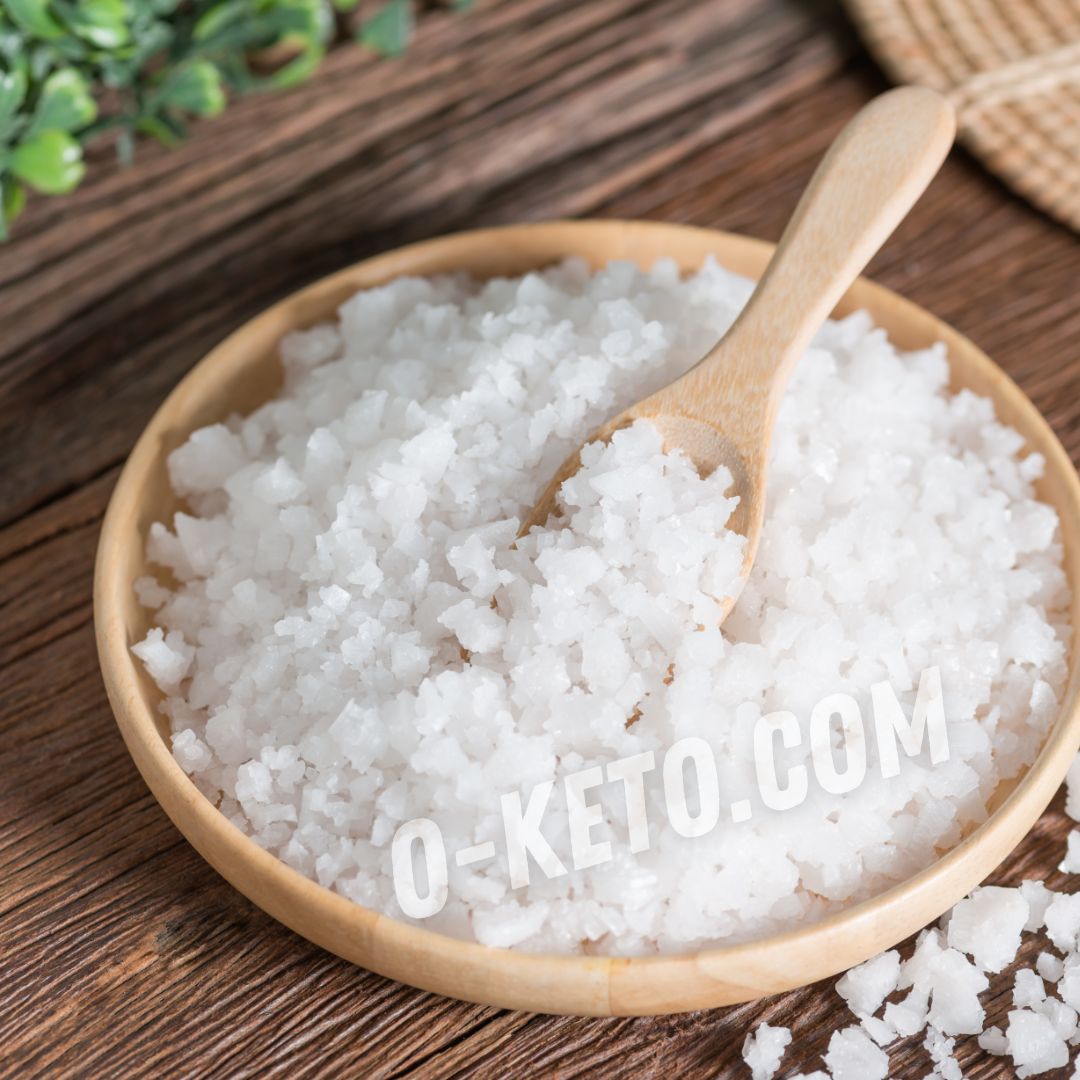

Sea salt is salt obtained by evaporating seawater. Like table salt, it is based mainly on sodium chloride, but taste and appearance can differ because of crystal shape, moisture, refinement level, and trace minerals. It may be coarse, fine, flaky, moist gray, white, pinkish, or mixed with herbs and spices.
The main role of sea salt in food is flavor and control of saltiness. It is added to soups, meat, fish, vegetables, salads, fermented foods, marinades, and baking. Coarse salt works well for salting and finishing, fine salt dissolves faster, and flakes give a crisp salty accent on the plate.
Nutritional value
Salt contains almost no calories, protein, fat, or carbohydrates. For keto and LCHF this means zero carbohydrate load. But the key number here is not calories, but sodium. Different salts can provide different sodium amounts per teaspoon because of crystal size: coarse salt takes more space with air between crystals, while fine salt packs more densely.
Sea salt may contain traces of magnesium, calcium, potassium, iron, and other elements, but usually too little to treat it as a meaningful mineral source. If iodine is needed, check the label: not all sea salt is iodized. Regular iodized salt can be more convenient for that specific task.
Is it suitable for keto?
Sea salt fits keto because it contains no sugar or starch. On low-carb eating, salt may become more noticeable because the amount of processed foods, sauces, and bread in the diet often changes. But salt needs are individual and depend on food, sweating, blood pressure, medicines, training, and total fluid intake.
Sea salt is convenient for broths, eggs, meat, fish, avocado, salads, and vegetables. In keto recipes it often makes simple foods more expressive without sweet sauces or breading. But if the diet already contains plenty of cheese, bacon, salted fish, olives, soy sauce, and prepared meats, extra salt should be counted.
How to use it
Fine sea salt suits dough, sauces, minced meat, and dishes where salt must dissolve evenly. Coarse salt works for salting fish, meat, vegetables, and fermentation. Flakes are added at the end: on steak, eggs, salad, butter, sugar-free chocolate, or roasted vegetables. This makes salt taste brighter while using less.
When replacing regular salt with coarse sea salt, rely not only on spoons but also on taste or weight. One teaspoon of fine salt may be saltier than one teaspoon of large crystals. In baking and fermentation, precision matters especially.
For steak, fish, and salad, salting in two steps is convenient: a little during cooking and a little as flakes before serving. This makes flavor easier to control and helps avoid oversalting the inside of the dish.
How to choose
Check grind, moisture, iodine, additions, and intended use. For everyday cooking, clean salt without flavorings is convenient. Herb blends can taste good, but sometimes contain sugar, flavor enhancers, starch, or acids. For strict ingredient control, it is better to buy salt separately and add spices yourself.
Moist gray salt may taste more mineral, but it needs a dry spoon and tight packaging. Flaky salt is more expensive and is usually used for finishing rather than for the pot. Strong marketing promises should not replace simple checks: taste, clean ingredient list, useful grind, and clear label.
Limitations
Any salt remains a sodium source. People advised to limit sodium, monitor blood pressure, swelling, or kidney function should count all salt sources, not only the salt shaker. Sea salt does not automatically become gentle or safe just because of its origin.
It is also important not to confuse salty taste with a full electrolyte mix. Sea salt provides mostly sodium and chloride; potassium and magnesium usually need to come from other foods or supplements if they are actually needed.
How to store it
Keep salt in a dry place, tightly closed, away from steam and strong smells. Moist salt can clump, and salt with herbs loses aroma faster. A small container is convenient for the table, while the main supply is better kept separately so moisture does not enter.
What can replace it?
In most recipes, sea salt can be replaced with table, rock, or iodized salt, adjusting the amount by taste and grind. Salt flakes work for a finishing crunch. If less sodium is needed, part of the flavor can come from acidity, herbs, garlic, pepper, lemon, vinegar, or spices, but they do not fully replace saltiness.
Sea salt is not a mineral supplement
Sea salt is made by evaporating seawater, but its main component is still sodium chloride. Small amounts of other minerals may affect taste and colour, yet they are usually too low to make sea salt a meaningful source of magnesium, potassium or iodine. On keto it can be used like table salt, based on taste and total sodium intake.