


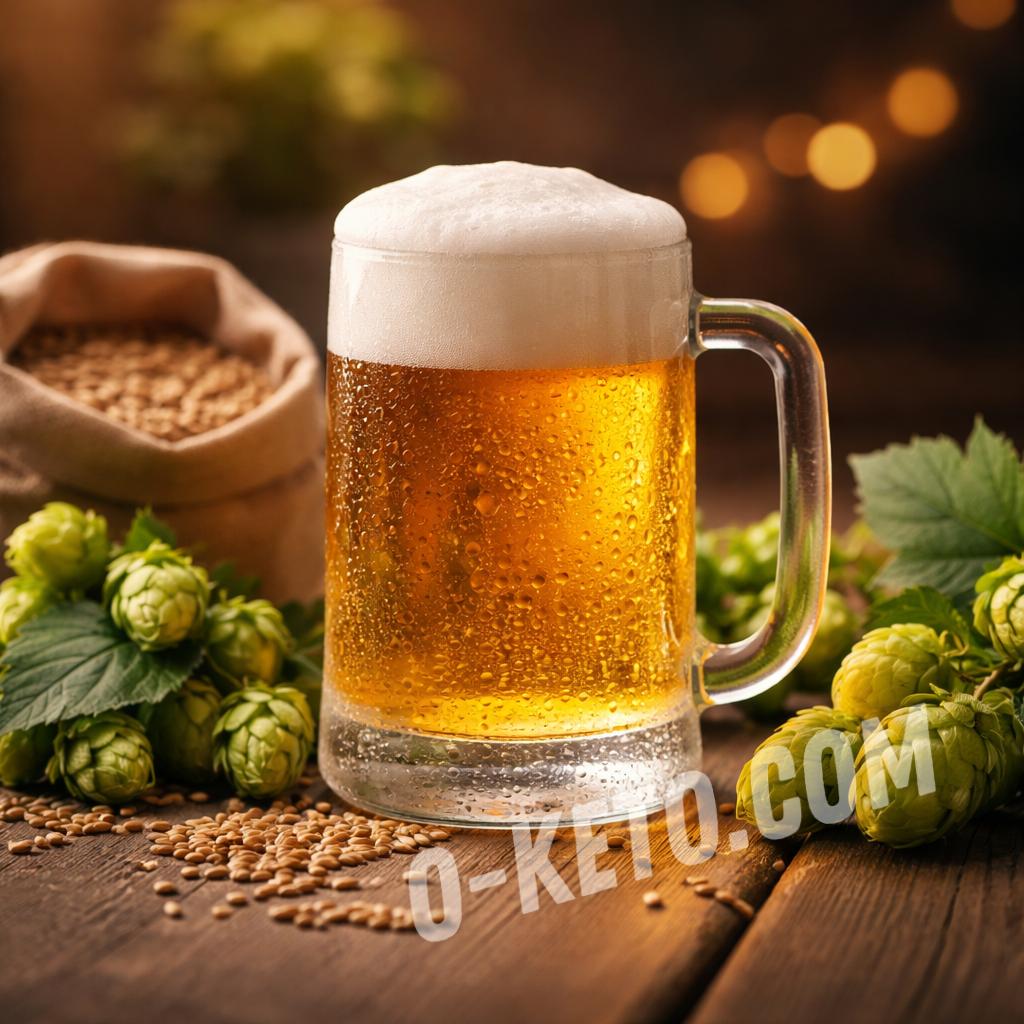

Beer — one of the oldest fermented beverages known to humanity. It is brewed from grains using water, hops, and yeast, and the production process is based on the natural fermentation of sugars.
For thousands of years, beer has played an important role in the culture and diet of various peoples. In ancient times, it was often regarded not only as a drink but also as a source of energy and micronutrients. Today, beer remains popular in many countries, but its role in the modern diet, especially with low-carbohydrate diets, raises questions.
The main feature of beer is that it is produced from grains rich in starch. During the malting and fermentation process, some of these carbohydrates are converted into alcohol, but a significant amount remains in the finished drink. This is why beer is classified as a product with a noticeable carbohydrate content. For people following a ketogenic or low-carbohydrate diet, this is of fundamental importance.
History and Origin
The history of brewing dates back over 7,000 years. Archaeological finds show that fermented grain beverages existed in ancient Mesopotamia. Sumerian texts dating back to around 4000 BC contain descriptions of the preparation and consumption of beer.
In Ancient Egypt, beer was considered an important part of the diet and was used as an everyday drink. It was consumed by people from all walks of life, including the workers who built the pyramids. In medieval Europe, brewing became an important craft, and monasteries played a significant role in refining recipes and technologies.
Modern industrial brewing developed in the 19th and 20th centuries thanks to advancements in microbiology, refrigeration technologies, and production standardization. This allowed for a stable taste and significantly increased the shelf life of the beverage.
Production Technology
Classic brewing involves several sequential stages, each of which affects the taste, aroma, and composition of the drink:
- malting — the grain (most often barley) is soaked, germinated, and then dried, activating enzymes that break down starch;
- mashing — the crushed malt is mixed with hot water, converting starch into sugars;
- filtration and boiling — the wort is separated from the grain and boiled with the addition of hops, which impart bitterness and aroma;
- fermentation — the cooled wort is inoculated with yeast, which converts sugars into alcohol and carbon dioxide;
- conditioning — the drink is aged to stabilize the flavor and clarify.
The type of beer largely depends on the type of malt, yeast strain, fermentation duration, and conditioning conditions.
Nutritional Value
The main component of beer is water — about 90–95% of the volume. The remaining part includes ethanol, residual carbohydrates, a small amount of proteins, organic acids, and minerals.
The average nutritional value of light beer per 100 ml:
| calories | 40–50 kcal |
| proteins | 0.3–0.6 g |
| fats | 0 g |
| carbohydrates | 3–5 g |
Beer may also contain small amounts of B vitamins and minerals derived from grains and yeast:
- vitamin B1;
- vitamin B2;
- vitamin B3;
- vitamin B6;
- folates;
- potassium;
- magnesium;
- phosphorus;
- selenium.
Despite the presence of these substances, beer cannot be considered a complete source of micronutrients, as their concentration in the drink is relatively low.
Beer and the Ketogenic Diet
The main issue with beer on a ketogenic diet is its carbohydrate content. Most of these carbohydrates are residual sugars formed from the starch in the grain. Even after fermentation, a significant portion remains.
The typical carbohydrate content in a standard can or bottle of 330–355 ml is:
| light lager | 10–15 g |
| ale and strong varieties | 15–20 g |
| low-carb beer | 2–5 g |
On a strict ketogenic diet, daily carbohydrate intake is usually limited to 20–30 g. Therefore, even one standard serving of regular beer can take up a significant portion of the daily limit.
Alcohol and Ketosis. Alcohol also affects metabolism. When ethanol enters the body, the liver prioritizes its processing. During this period, fat oxidation and the use of ketone bodies temporarily decrease. This does not necessarily completely take a person out of ketosis, but it can slow down fat burning.
Low-Carb Alternatives. Some types of beer are produced using technologies that reduce residual sugar content:
- low-carb lagers;
- highly fermented light varieties;
- special “keto-beer” recipes;
- non-alcoholic varieties with minimal sugar content.
Special enzymes, increased fermentation, or unique recipes are used for this.
Even such options should be consumed in moderation, considering the total carbohydrate intake and the impact of alcohol on metabolism.
Conclusion
Beer — an ancient fermented drink with a rich history and diverse production styles. Its base consists of grains, so a certain amount of carbohydrates remains in the composition. This makes beer not the most suitable drink for a strict ketogenic diet.
However, with moderate consumption and the choice of low-carb varieties, beer can sometimes fit into the diet with carbohydrate control. The key factor remains the amount of the drink and the overall balance of nutrition.


