


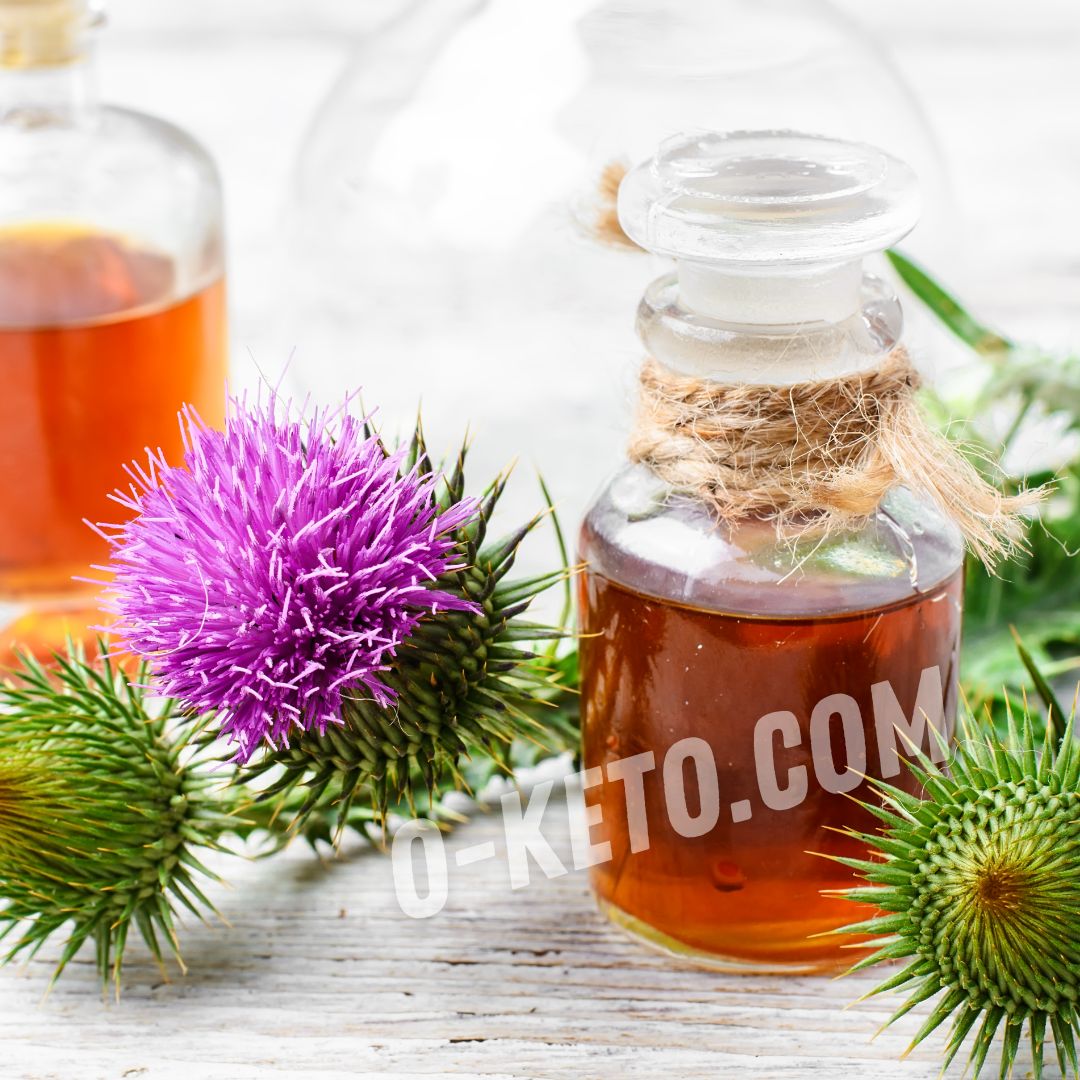

Milk thistle, or Silybum marianum, is a spiny plant from the Asteraceae family with large purple flower heads and leaves marked by white veins. In food and herbal raw material, the seeds are used most often: whole, ground, as meal, oil, or standardized extract. Young leaves and flower parts appear in traditional cooking too, but much less often.
The main compound associated with milk thistle seeds is silymarin, a mixture of plant flavonolignans. For ordinary food use, the product form matters more: seeds give fiber and a nutty-herbal taste, oil gives a fatty base, meal gives dry coarse texture, and extract is already a concentrated supplement with separate dosing.
Nutrition profile
Whole milk thistle seeds are dense and fairly fatty. They contain fiber, plant fats, some protein, and minerals. The oil is usually rich in unsaturated fatty acids, with linoleic omega-6 often taking a notable share; alpha-linolenic omega-3 is usually present in a smaller amount.
Meal left after oil pressing contains less fat and more dry fiber, so its taste is rougher and its texture more obvious in food. For keto, the point is not big claims but quantity: a teaspoon of ground seeds or meal behaves differently than a large spoon of dry supplement in yogurt or seed porridge.
Is it suitable for keto?
Milk thistle can fit keto in small servings. The oil adds almost no carbohydrates, but it is not an all-purpose cooking fat: it has a specific taste and is not suited to high heat. Seeds and meal give fiber and some net carbohydrates, so they are better counted, especially with a strict limit.
In low-carb eating, milk thistle is usually an addition to a dish rather than the base. Ground seeds can be mixed into unsweetened Greek yogurt, cottage cheese, chia pudding, salad, a nut mix, or an unsweetened smoothie. The oil works in a cold dressing with lemon, herbs, and salt.
How to use it
Whole seeds are hard, so for food they are usually lightly ground before use. Ground milk thistle should not be kept open for long: fats oxidize faster and the smell becomes heavier. Meal can be added in small amounts because it thickens strongly and makes texture dry.
Milk thistle pairs with unsweetened fermented dairy, lemon, herbs, cucumber, nuts, flaxseed, sesame, and mild salad dressings. In sweet keto desserts, its taste is not always suitable: the herbal bitterness may conflict with vanilla, cacao, and berries.
Extracts and capsules should not be treated as the same thing as food seeds. They have different concentration, a different purpose, and usually producer instructions. If milk thistle is used as a supplement, check dose, silymarin standardization, and compatibility with the personal routine.
How to choose
Seeds should be dry and clean, without mold, mustiness, or insects. A fresh product smells herbal and slightly nutty, without rancidity. Ground milk thistle is better bought in small packs or ground at home. Choose oil in dark glass, with a pressing or bottling date and clear shelf life after opening.
For meal, check grind, residual fat, and absence of sugar, flavorings, and unnecessary fillers. For extract, the Latin name Silybum marianum, active compound amount, form, and clear instructions matter. Loud promises on the package do not replace normal labeling.
Limits
Milk thistle belongs to the Asteraceae family, so caution is needed if chamomile, ragweed, arnica, calendula, or related plants cause reactions. Seeds and meal may increase gas if the portion is raised sharply. The oil is not for high-heat frying. During pregnancy, breastfeeding, childhood, and regular medication use, supplements are better discussed with a qualified professional.
Storage
Keep whole seeds tightly closed in a dry dark place. Ground product and meal are better stored cool and used faster. After opening, keep the oil refrigerated, protected from light, and tightly closed. If the smell turns rancid, bitterness becomes harsh, or color changes noticeably, replace the product.
What can replace it?
For fiber and density in dishes, milk thistle can be replaced with ground flax, chia, sesame, psyllium, or finely chopped nuts, but the taste will differ. For cold dressing, olive oil, avocado oil, flax oil, or walnut oil can replace milk thistle oil. Extract should be replaced only with a product with clear dosing, not a random spice.


