


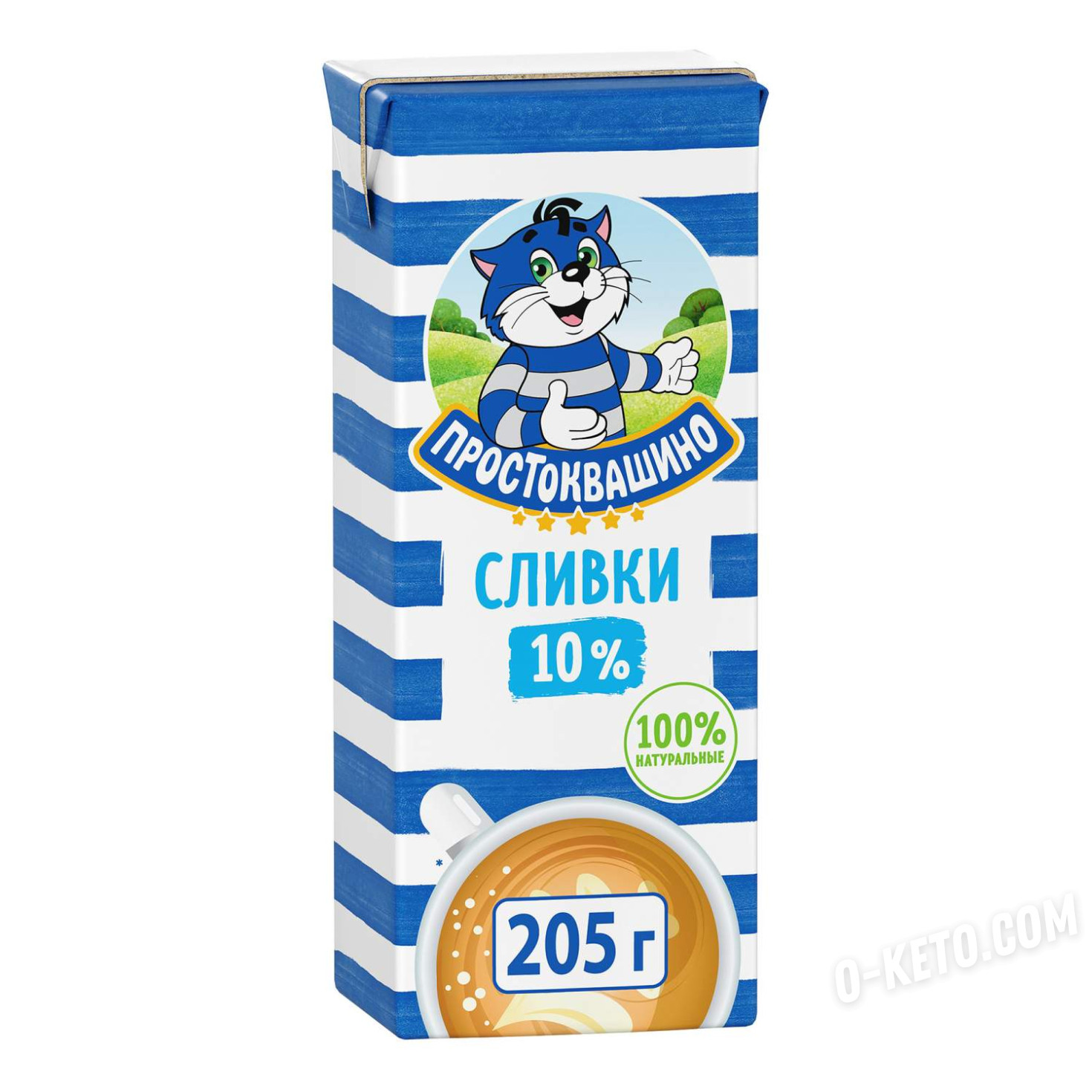

10% fat cream is a light drinking or cooking cream with a mild dairy flavor and moderate fat content. It is added to coffee, cream soups, sauces, omelets, egg bakes, stewed dishes and sugar-free desserts. Its texture is much lighter than 30-35% cream, it holds thickness poorly and is almost never suitable for a stable whipped cream.
For keto, it is usable but not the easiest product. 10% cream contains less fat than heavy cream while lactose remains. It can add light creaminess, but it does not always help build the needed fat content of a dish. It is best used where a soft dairy note is needed without a dense creamy base.
Nutrition
Per 100 g, 10% fat cream contains about 118 kcal, around 3 g of protein, 10 g of fat and about 3-4 g of carbohydrates, mostly from lactose. The glycemic index is usually low, but the carbohydrates still need to be counted. This is especially noticeable in drinks: 20-30 ml in one cup looks minor, but several cups during the day already add up.
Cream contains dairy fat, calcium and small amounts of vitamins typical of dairy foods. The main practical difference between 10% and 35% cream is the ratio of fat, water and lactose. Heavier cream often requires less product for the same creamy texture, while 10% cream is easier to overpour because it is liquid.
Is It Keto-Friendly?
10% cream can fit keto if the portion is small and carbohydrates are counted. For strict keto, 30-35% cream is often more convenient: it is thicker, fattier and gives more richness from a smaller volume. Ten-percent cream is better seen as an addition for flavor and texture rather than the main fat source.
The ingredient list deserves attention. A simple product should contain cream or milk and cream; some versions include stabilizers. Sugar, starch, sweet flavorings, vanilla coffee mixes and ready creamy drinks change the product and are usually unsuitable for low-carb eating.
How to Use It
10% cream works well in a light sauce, sugar-free coffee, omelet, cream soup or stewing where a thick fatty structure is not needed. It should not be boiled hard for a long time: the flavor becomes flatter and the sauce may separate. In hot dishes, it is easier to add cream near the end and warm it gently.
Practical options include:
- a small serving in sugar-free coffee or chicory;
- a light cream sauce for fish, chicken or turkey;
- an addition to omelet, frittata or egg bake;
- cream soup with cauliflower, broccoli or mushrooms without flour;
- stewed mushrooms, zucchini or spinach with herbs and spices;
- a base for a cold sauce with sugar-free mustard and lemon.
Portion
For drinks, 15-30 ml is usually enough. For a sauce with several servings, 50-100 ml can be used and thickness can come from cheese, egg yolk, cream cheese or brief reduction over low heat. When cream is poured “by eye,” it quickly adds both calories and lactose even though the dish still looks light.
If the goal is clear creaminess from minimal volume, compare 10% and 30-35% cream in the specific recipe. Sometimes a teaspoon of heavier cream gives the same taste as several spoons of light cream. In other cases, such as cream soup, 10% cream gives the exact softness needed without a heavy texture.
How to Choose
Choose cream with a short clear ingredient list and no sugar. Ultra-pasteurized versions are convenient to keep on hand, but after opening they still need refrigeration and timely use. If the package is swollen, the smell is sour, the taste is bitter or the liquid has flakes without heating, it is better not to use it.
For coffee, a clean dairy note without vanilla, caramel or sweetened additions matters. For sauces, cream without a strong sterilized aftertaste is more convenient: it combines more neatly with cheese, fish, poultry and mushrooms.
How to Store It
A closed package should be stored according to the producer’s conditions. After opening, keep cream in the refrigerator, close it tightly and do not leave it on the table for long. It is better to pour into a separate spoon or measuring cup rather than returning leftovers from a cup or pan back into the package.
Limits and Substitutes
Cream contains lactose and dairy proteins, so it may not suit dairy intolerance. If hunger returns quickly after coffee with cream, the reason may be too little fat in the portion, drinks that are too frequent or not enough protein in the meal.
10% cream can be replaced with 30-35% cream, unsweetened coconut cream, butter, cream cheese, sour cream or a mixture of heavy cream and water. The choice depends on the task: sauce needs thickness, coffee needs flavor, soup needs softness, and cream filling needs high fat and stable texture.
Common Mistakes
The first mistake is treating 10% cream almost like milk that does not need to be counted. One cup uses a little, but repetition during the day changes the total. The second mistake is trying to whip it like heavy cream: there is not enough fat for a stable cream, so thickeners or powdered sugar are often added. For keto, heavy cream, cream cheese or mascarpone is a better choice.
The third mistake is thickening cream sauce with flour or starch. Low-carb options are simpler: cheese, egg yolk, cream cheese, slight reduction or heavier cream. Acid also needs care: lemon, tomatoes and strong boiling can curdle the sauce, so the acidic part is better added at the end while the heat stays moderate.


