


Brittle nails
Brittle nails often reflect a wider nutritional, protein, thyroid, or stress-related background rather than a purely local cosmetic issue.


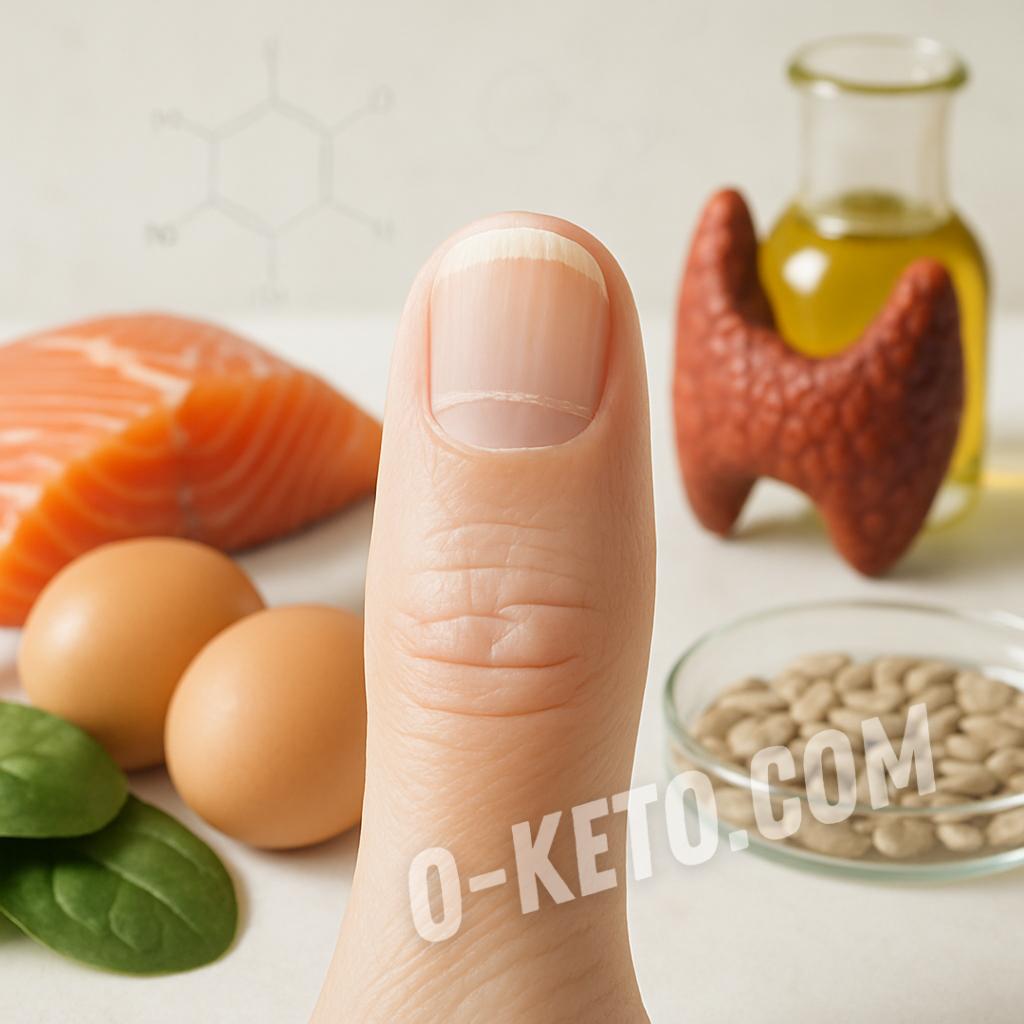
Brittle nails are often treated as a small cosmetic annoyance, but in practice they frequently reflect a broader deficiency-related or metabolic background. The nail plate is sensitive to protein intake, iron, B vitamins, zinc, biotin, thyroid function, and overall energy availability. When nails become thin, split easily, peel, or crack repeatedly, it makes sense to look not only at external care and detergents, but also at diet, laboratory markers, and general well-being. This becomes especially relevant when nail changes appear together with fatigue, dry skin, hair shedding, or other signs that suggest a possible nutrient-depleted background.
Why nails become fragile
Nails grow from tissues that require a stable flow of building materials. When the diet is low in protein, iron, zinc, biotin, and other nutrients, the body tends to prioritize more essential systems. Under those conditions, the nail plate may grow more slowly, become softer, and tolerate daily mechanical stress more poorly. Frequent contact with water, detergents, and minor trauma can matter too, but if the problem is persistent, external factors alone are often not the whole explanation.
Brittleness may also be linked to hypothyroidism, iron deficiency, rapid weight loss, chronic stress, low-calorie dieting, and intestinal absorption problems. For that reason, the complaint itself should not automatically be translated into a presumed deficiency of one single vitamin. It is more useful to view it as a sign to review the broader nutritional and recovery background.
When biotin is discussed
Biotin participates in reactions related to fat, carbohydrate, and amino acid metabolism and has long been discussed in relation to the condition of hair, skin, and nails. That is why it is often used as an additional nutritional support measure for brittle nails, especially when the diet appears weak and there is a plausible deficiency-related background. Even so, its role is best understood as part of a broader support plan rather than as the only answer to the problem.
If a person eats very little protein, avoids eggs, organ meats, fish, and greens, or lives for a long time on restrictive eating patterns, biotin alone rarely produces a strong durable effect. Better results are usually seen when it is combined with improvements in diet, sleep, and overall recovery resources.
What else is worth checking
With marked nail brittleness, it is often helpful to review a complete blood count, ferritin, B12, thyroid-related markers, and whether protein intake is truly adequate. In women, menstrual losses, the postpartum period, and chronic exhaustion may contribute. In both women and men, food quality, gastrointestinal function, stress load, and sleep quality all matter. In some cases, it is the combination of several modest deficiencies that creates a persistent clinical picture.
On low-carb or ketogenic eating, nails respond not to the concept of carbohydrate restriction itself, but to the real nutrient density of the menu. If the diet is reduced to a few repetitive “safe” foods and contains too little high-quality protein and micronutrient-dense products, brittle nails become a very plausible outcome.
How support is usually built
Support usually begins with correcting the foundation: adequate protein, more regular meals, less chronic under-eating, and review of the laboratory background. In that setting, biotin is generally considered an additional nutritional support tool rather than a replacement for all other steps. This approach is especially useful when the problem lasts longer than expected and is accompanied by other indirect signs of depleted reserves.
It is also important to remember that nails grow slowly, so any effect has to be judged over time. Changes are usually seen not within days, but over weeks and months. The more consistently the basic causes are addressed, the greater the chance that biotin support will become meaningfully noticeable.
When broader evaluation is needed
If nail brittleness is pronounced and appears together with profound fatigue, hair shedding, skin changes, weight shifts, anemia, or thyroid-related symptoms, the complaint should be treated as part of a larger picture. In that situation, cosmetic care and one supplement should not replace assessment. Brittle nails fit well into nutritional support strategies only when they do not hide a more serious deficiency-related, hormonal, or inflammatory process.
If you have any questions about the term "Brittle nails", you can ask them to AI. Please note, a low-cost OpenAI model is used. It may answer questions about disease treatment with errors!


