


E1103 (invertase)
Invertase is an enzyme that splits sucrose into glucose and fructose, changing the form, texture, and behavior of sugar rather than removing it. In low-carb eating, E1103 mainly signals sweet fillings, syrups, and soft confectionery structures.
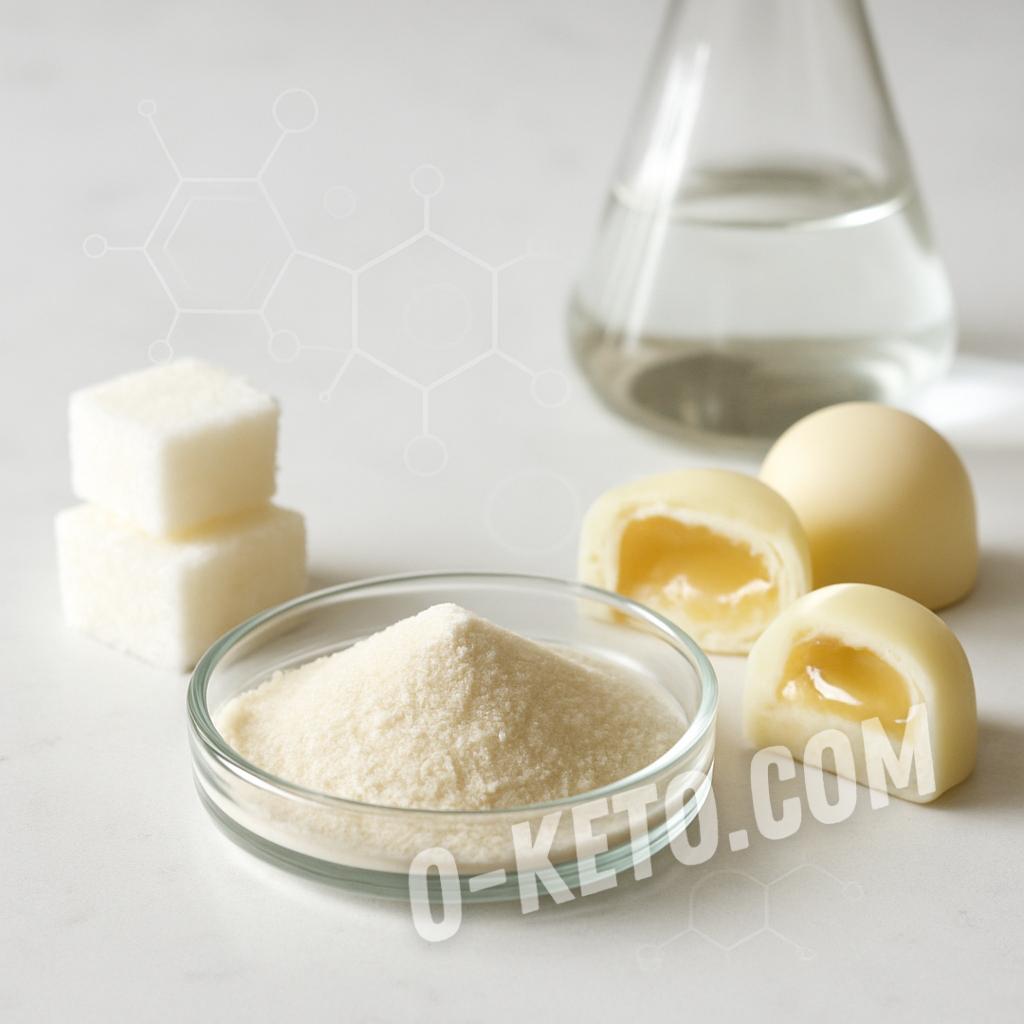
E1103 is invertase, an enzyme that breaks sucrose into glucose and fructose. In food technology it is not used for its own flavor, but to change how sugar behaves inside a product. When sucrose is converted into so-called invert sugar, fillings become softer, syrups crystallize less easily, and sweetness feels smoother. This is why invertase is often connected with confectionery, soft candy centers, fondant-like fillings, syrups, and products where the manufacturer wants to preserve a tender sweet texture over time.
How invertase works
Sucrose is made of two parts: glucose and fructose. Invertase breaks the bond between them, producing a mixture of simpler sugars. This does not reduce the carbohydrate load and does not turn sugar into a low-carb ingredient. What changes is the technological state of the sugar. A glucose-fructose mixture holds moisture better, forms large crystals less readily, and helps maintain a soft texture. That makes E1103 useful for manufacturers, but for someone limiting carbohydrates its presence often means that the product is built around sugar.
Where E1103 is found
Invertase may appear in sweet fillings, candies with liquid or soft centers, some glazes, syrups, fondant masses, desserts, and products designed to keep a delicate texture for longer. It may be used as a food additive or as a processing enzyme that performs its function during production. Industrial invertase is often produced by fermentation, for example with yeast, and then purified for food use. For the consumer, the enzyme source is less important than the food matrix it serves. If the ingredient list contains sugar, syrups, glucose, fructose, or a sweet filling, invertase does not make the product better for glucose control.
Relevance for keto and LCHF
On keto and strict LCHF, E1103 is not usually a major carbohydrate source by itself because enzymes are used in small amounts. The issue is that it often appears where there is already a meaningful amount of sugar. A common mistake is to look only at the E number and ask whether the additive is permitted, instead of judging the entire product. If invertase has split sucrose, the resulting glucose and fructose remain sugars. Glucose affects blood sugar more directly, while fructose is handled largely through the liver. For insulin resistance, diabetes, fatty liver, and appetite control, that is not a neutral detail, especially when the food is sweet and easy to overeat.
Difference from digestive enzymes
Invertase is sometimes discussed as an enzyme supplement for digesting sucrose, but E1103 in a candy or syrup should not be confused with medical treatment of digestive disorders. If someone suspects sucrase deficiency, sucrose intolerance, severe diarrhea after sweets, or an inherited enzyme problem, that belongs to diagnosis and medical care. Technological invertase in a food works on texture, not treatment. In addition, if sugar has already been split into glucose and fructose, it is not better for low-carb nutrition. It is simply another form of rapidly available carbohydrate.
Safety and tolerance
For most people, invertase itself in food-use amounts is not the main concern. The composition of the product in which it is used matters much more. Sensitive individuals can theoretically react to enzyme preparations or residual proteins from production, but in practice the main problem is more often sugar, syrups, fructose, and the overall quality of the sweet food. If candies, syrups, or soft sweet fillings trigger cravings, glucose swings, sleepiness, bloating, or worse appetite control, E1103 is not the only issue. Invertase simply helps that product stay softer, sweeter, and more technologically stable.
What to check in sweet products
When E1103 appears in candies or desserts, it is useful to check whether several forms of sugar are present at the same time. Sucrose, glucose syrup, fructose syrup, honey, invert syrup, and molasses may look like different ingredients, but for low-carb nutrition they add up to the same issue: rapidly available carbohydrates. Invertase makes such a filling more convenient technologically, but it does not improve its metabolic profile. If the product is an occasional taste exception, that is one context. If it is sold as a supposedly healthier sugar alternative, E1103 together with syrups should make the label worth reading more carefully.
If you have any questions about the term "E1103 (invertase)", you can ask them to AI. Please note, a low-cost OpenAI model is used. It may answer questions about disease treatment with errors!


