


E120 (carmines, carminic acid, cochineal)
Carmine, carminic acid, and cochineal provide red, pink, and purple shades and are derived from cochineal insects. In low-carb eating, E120 usually matters less as a carbohydrate and more for allergy, vegan, religious, and ethical restrictions.
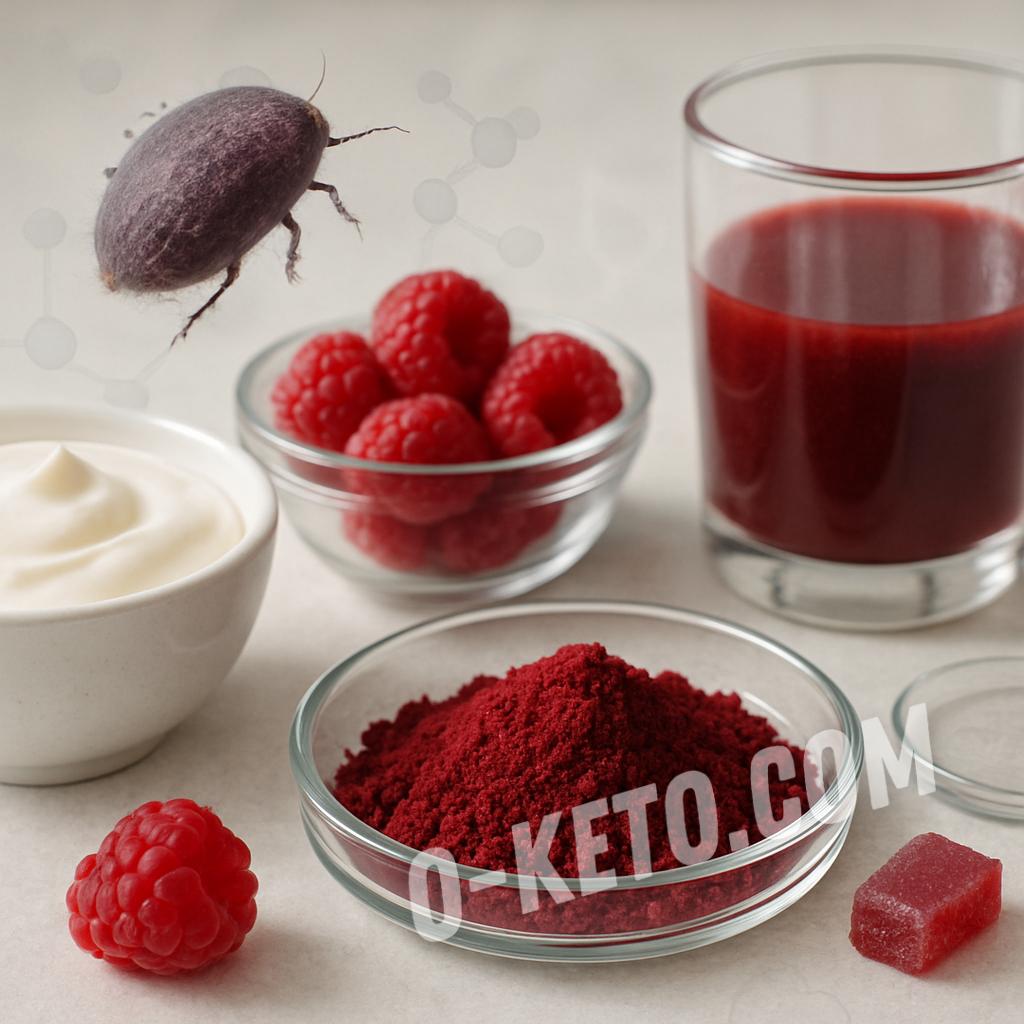
E120 refers to cochineal, carminic acid, and carmines, colorants that provide red, pink, raspberry, and purple shades. Unlike synthetic azo dyes, E120 is of animal origin: the coloring substance is obtained from cochineal insects. It is used where a stable red color is needed in yogurts, desserts, drinks, confectionery, sauces, meat products, decorations, supplements, and sometimes cosmetic or pharmaceutical forms. This origin makes E120 one of the most recognizable and controversial food colorants.
What this colorant is
The main coloring substance is carminic acid. Carmines derived from it can produce different shades depending on form, medium, acidity, and processing. Carmine is valued for its strong color and good stability compared with many plant colorants. For manufacturers, that is convenient: the color can look more natural than some synthetic dyes and can hold better in complex foods. For consumers, however, the word natural does not always mean suitable for everyone. An animal-derived colorant may be unacceptable for ethical, religious, or allergy-related reasons.
Where E120 is found
E120 may appear in strawberry and berry yogurts, ice cream, drinks, desserts, gummies, glazes, confectionery decorations, sauces, sausage and meat products, fillings, lozenges, and supplements. Red color often creates an expectation of berries, cherry, pomegranate, meat, or natural fruit intensity. But the presence of carmine does not tell you how many real berries or how much real meat the product contains. Sometimes the colorant simply makes the product visually convincing. As with other colorants, the whole ingredient list should be read: sugar, starch, syrups, flavorings, protein, fat, and real nutritional value.
Relevance for keto and LCHF
Carmine itself is not sugar or starch and usually has little meaning as a carbohydrate source. But red-colored products can be either suitable or completely unsuitable for low-carb eating. A meat product with a clear composition is one case. A sweet berry dessert with sugar, starch, and syrup is another. A yogurt colored with carmine may be good or poor depending on sugar, fillers, and protein. E120 therefore does not define the keto status of a product. It only tells you how the color was created.
Allergy and sensitivity
E120 deserves attention because allergic reactions to carmine and cochineal colors have been described in some people. Possible reactions include hives, itching, swelling, respiratory symptoms, worsening asthma, or gut reactions. These reactions do not occur in everyone, but with confirmed sensitivity, carmine should be tracked carefully. The problem may involve not only carminic acid itself, but also protein residues or the characteristics of a particular color preparation. If symptoms repeat after red yogurts, drinks, candies, or supplements, E120 should be considered as a possible factor and discussed with a clinician.
Vegan and religious restrictions
Because E120 is obtained from insects, it is not suitable for vegans and many people avoiding animal-derived ingredients. It may also matter for religious dietary rules, including different interpretations of halal and kosher status. This is not a carbohydrate or calorie issue, but for many people it is essential. Carmine should be looked for under several names: E120, carmine, carminic acid, cochineal, and related translations. Red color does not always mean E120, but if these words are listed, the origin of the colorant should be understood.
Practical conclusion
E120 is a good example of why a natural colorant is not always simple. For keto, it is usually neutral in terms of carbohydrates, but important in terms of origin, allergy, and personal restrictions. If a person eats animal-derived foods, has no reaction to carmine, and the product fits by sugar and ingredients, E120 itself may be secondary. If vegan principles, religious rules, or reactions to red products matter, carmine should be checked carefully. Color does not replace ingredient quality, and natural origin does not cancel individual tolerance.
If you have any questions about the term "E120 (carmines, carminic acid, cochineal)", you can ask them to AI. Please note, a low-cost OpenAI model is used. It may answer questions about disease treatment with errors!


 1 / 4
1 / 4


 1 / 4
1 / 4 1 / 4
1 / 4 1 / 4
1 / 4