


E140 (chlorophylls and chlorophyllins)
Green pigments based on chlorophylls and chlorophyllins are used to colour foods; the key point is to distinguish natural leaf pigments, processed derivatives and real safety data.
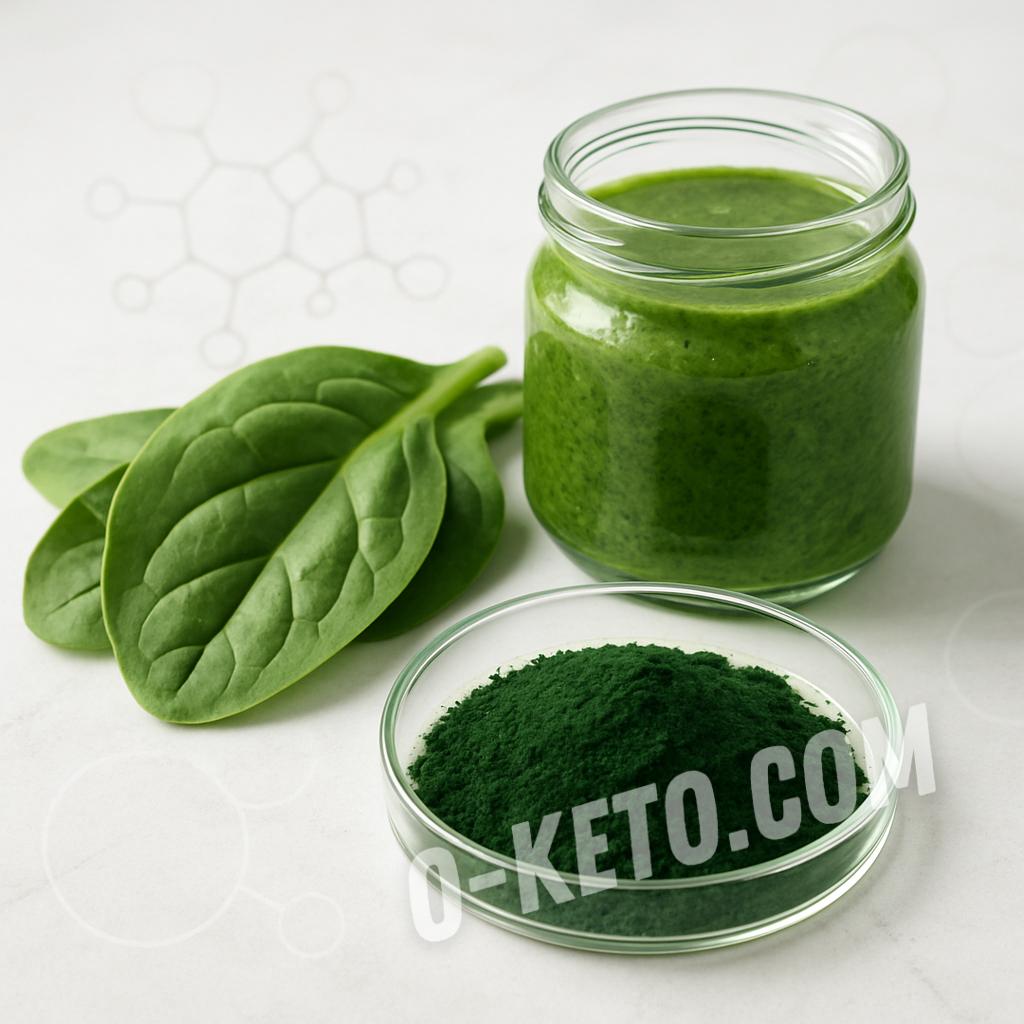
E140 covers green food colours based on chlorophylls and chlorophyllins. Unlike synthetic blue dyes, this group is connected with plant pigments: chlorophyll gives green colour to leaves, grasses and algae. In manufactured foods, E140 is used to restore or intensify green colour in sauces, desserts, confectionery, drinks, pastes, decorative mixes and other products where appearance is part of the design.
It is important not to confuse chlorophyll as part of green food with E140 as an isolated technological additive. Leafy greens provide fibre, magnesium, potassium, folates, polyphenols, bitter compounds and food volume. A colour additive provides mainly colour. A green shade on a label therefore does not make a product equivalent to salad leaves, spinach or parsley, even if the chemical theme sounds plant-based.
What E140 includes
In European classification, E140 is usually divided into chlorophylls E140(i) and chlorophyllins E140(ii). Chlorophylls are obtained from plant material, while chlorophyllins are more water-soluble derivatives produced by processing chlorophylls. These forms differ not only in name, but also in chemical properties, solubility, stability and the data available for safety assessment.
This distinction matters because a consumer sees a short code, while different materials may stand behind it technologically. Chlorophylls are closer to natural pigments found in green plants, but they are sensitive to acidity, light and heat. Chlorophyllins may be more convenient for certain uses, yet they should not automatically be treated as the same thing as chlorophyll in a serving of greens.
Colour stability and technological role
Green colour in food is difficult to maintain. During heating, changes in acidity and storage, natural green shades can become dull, greyish or olive. Manufacturers therefore use colourants to help preserve the expected appearance. In a sauce, dessert filling or drink, colour can shape flavour expectation almost as strongly as aroma: green may suggest mint, pistachio, herbs, lime, apple or naturalness before the product is tasted.
The technological role of E140 is clear: to provide or support a green shade. Nutritionally, however, it is essential to separate this visual signal from the composition of the food. Green icing does not become a source of leafy greens. A pistachio dessert does not necessarily contain much pistachio. A mint drink may be coloured, flavoured and sweetened without offering anything comparable to the nutritional value of real leaves or nuts.
Safety data and their limits
Safety considerations differ between chlorophylls and chlorophyllins. For natural chlorophylls, part of the reasoning is linked to the presence of similar pigments in ordinary foods. Still, an isolated additive and a whole food matrix are not the same thing. For chlorophyllins, EFSA has pointed to a lack of relevant data on absorption, distribution, metabolism and toxicity, as well as the need to characterise more precisely the additive actually used on the market.
The practical conclusion is calm but not naive. E140 does not need to be demonised simply because it has an E-number. At the same time it should not be treated as beneficial chlorophyll from a green smoothie. If it appears occasionally and in small amounts, it is rarely the main dietary issue. If green-coloured desserts, drinks and sweets appear every day, the problem is the overall structure of the diet rather than one code.
Relevance for LCHF and keto
E140 itself is not sugar and should not meaningfully change the carbohydrate content of a product. It is often used, however, in foods where taste and colour are built separately from nutritional value: dessert pastes, icing, flavoured drinks, low-quality sauces, candies, ice cream and mixes. For a low-carbohydrate diet, sugar, syrups, starch, maltodextrin, fruit concentrates and the amount of sweeteners are usually more important than the green dye.
There is also a marketing trap. Green colour can create a feeling that a product is healthy. A person may be more willing to buy a sweet bar, syrup or dessert if the package suggests herbs, matcha, mint, pistachio or apple. Low-carbohydrate eating, however, is not built on colour. It is built on protein, natural fats, low-starch vegetables, minerals, real satiety and control of sugar load.
How to choose products with E140
If E140 appears near the end of the ingredient list, the product is eaten rarely and the food is not based on sugar or starch, there is usually no reason for alarm. If the colourant appears in a sweet drink, dessert, syrup, candy or “healthy” green imitation, the product deserves a stricter look. A plant-derived pigment does not cancel carbohydrates, sweeteners, acids, flavourings or low nutrient density.
The best way to get the benefit of green foods is to eat the greens themselves, not products coloured to resemble them. Spinach, parsley, arugula, dill, salad leaves, broccoli, green herbs and fermented vegetables provide a food matrix that a dye cannot reproduce. In that context, E140 remains a technological label detail rather than a substitute for real green food.
If you have any questions about the term "E140 (chlorophylls and chlorophyllins)", you can ask them to AI. Please note, a low-cost OpenAI model is used. It may answer questions about disease treatment with errors!


 1 / 4
1 / 4 1 / 4
1 / 4 1 / 4
1 / 4

