


E141 (a copper complex of chlorophylls and chlorophyllins)
Green copper complexes of chlorophylls and chlorophyllins provide a more stable colour, but they are technological colourants rather than equivalents of leafy greens; source, copper content and safety data gaps matter.
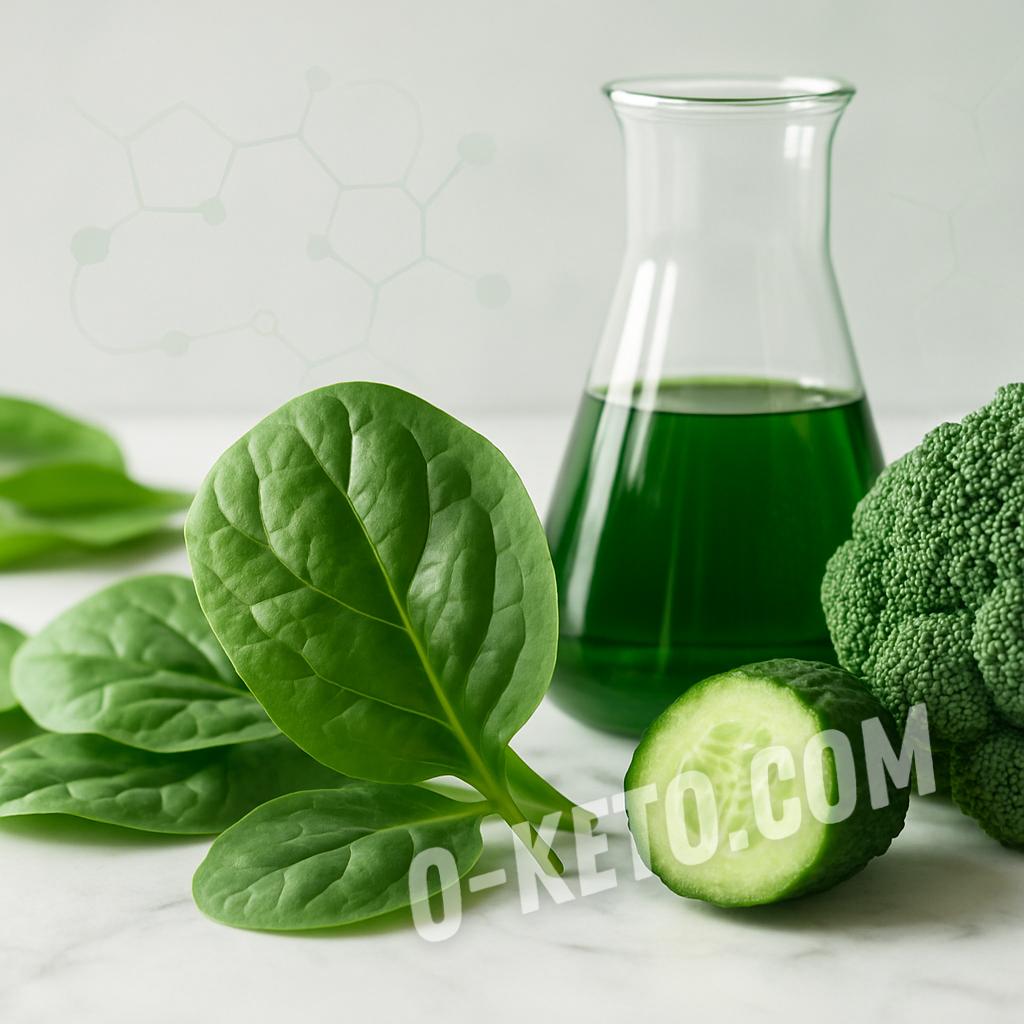
E141 is a group of green food colours in which chlorophyll or chlorophyllin molecules are complexed with copper. This treatment makes the green colour more stable than ordinary chlorophyll: it fades less easily, tolerates processing better and gives a stronger shade in products where a natural green pigment would quickly turn dull or olive. On labels, E141 may refer to copper complexes of chlorophylls E141(i) and copper complexes of chlorophyllins E141(ii).
Nutritionally, E141 must be separated from greens as food. Parsley, spinach, arugula, salad leaves and broccoli provide not only colour but also a food matrix: fibre, minerals, folates, organic acids, polyphenols, bitter compounds and volume that supports satiety. E141 mainly provides a visual signal of greenness. It may be useful in food technology, but it does not turn a drink, icing, sauce or dessert into a source of leafy vegetables.
How E141 differs from E140
E140 refers to chlorophylls and chlorophyllins without the copper complex, while E141 refers to their copper complexes. Copper is not added here as a nutritional supplement for correcting deficiency. It is part of the colourant structure and helps stabilise the shade. It is therefore wrong to treat E141 as a useful way to obtain copper or beneficial chlorophyll. It is a colourant, not a micronutrient strategy.
Solubility and use also differ. Copper complexes of chlorophylls are more associated with fat-soluble systems, while copper complexes of chlorophyllins are more suitable for water-based systems. For the consumer this is usually hidden behind one short code, but for quality and safety assessment the distinction matters. Different forms have different properties, impurities, stability and available evidence.
Where it is used
E141 is used when a stable green shade is needed: in confectionery, dessert pastes, icing, chewing products, drinks, sauces, decorative mixes and sometimes products designed to suggest herb, pistachio, apple, lime or mint flavour. It may also appear in foods marketed as natural or plant-based, because green colour easily creates an impression of freshness.
The presence of green colour says very little about nutritional value. A green candy is not healthier than a red one if the base is still sugar. A green drink is not a source of magnesium and folate if it is mostly water, acid, flavouring, sweetener and colour. For low-carbohydrate eating this distinction is especially important: visual identity should not replace ingredient assessment.
Safety and unresolved questions
In its assessment of E141, EFSA noted major gaps in the data on absorption, distribution, metabolism, chronic toxicity, genotoxicity, carcinogenicity, and reproductive and developmental toxicity. EFSA also highlighted that because the forms differ in properties and composition, data from one form cannot simply be used to assess the other. For that reason the previous acceptable daily intake is not as firm a reference point as it is for some other colourants.
This does not mean that one product containing E141 is automatically dangerous. It does mean that the phrase natural green colour is too simple. The source material, manufacturing process, copper content, accompanying non-chlorophyll components and batch specification matter. If a person eats foods with E141 rarely, the whole ingredient list is usually the more important issue. If green-coloured sweets, drinks and desserts appear daily, reducing that pattern is sensible.
Relevance for low-carb eating
E141 is not sugar and should not meaningfully add carbohydrate. It is often present, however, in products where the carbohydrate or sweet component is much more important than the colourant: syrups, dessert mixes, ice cream, icing, candies, flavoured drinks and sweet sauces. In such products, sugar, glucose syrup, fruit concentrates, starch, maltodextrin, polyols and the role of the product in the diet need attention.
Even a sugar-free product may be questionable if it keeps a person dependent on bright sweet flavours every day while providing little protein, fat, minerals or satiety. In this setting E141 is not the main culprit; it is one part of an industrial design. LCHF is easier to sustain when the food base is recognisable: meat, fish, eggs, fermented foods, leafy greens, low-starch vegetables, natural fats and simple sauces.
How to assess the label
If E141 appears near the end of the ingredient list in an occasional product that is not sugar-based and does not replace real food, there is usually no reason to organise the diet around fear of this code. If it appears in a bright dessert, sweet drink, syrup, icing or green snack bar, the product deserves a stricter look. The key question is what the food provides besides colour, flavour and sweetness.
The most reliable way to get the benefits of green foods is to eat actual green foods. Spinach, parsley, dill, broccoli, arugula and salad leaves do not merely colour the plate; they change the density of the diet in minerals, fibre and phytochemicals. E141 can perform a technological function, but it should not become a symbolic replacement for greens.
If you have any questions about the term "E141 (a copper complex of chlorophylls and chlorophyllins)", you can ask them to AI. Please note, a low-cost OpenAI model is used. It may answer questions about disease treatment with errors!


 1 / 4
1 / 4


 1 / 4
1 / 4 1 / 4
1 / 4