


E150b (caramel II, sulfite caramel)
Sulphite caramel E150b gives brown colour and differs from plain caramel by its manufacturing process; the important issues are the colour class, sulphite context and the surrounding ingredient list.
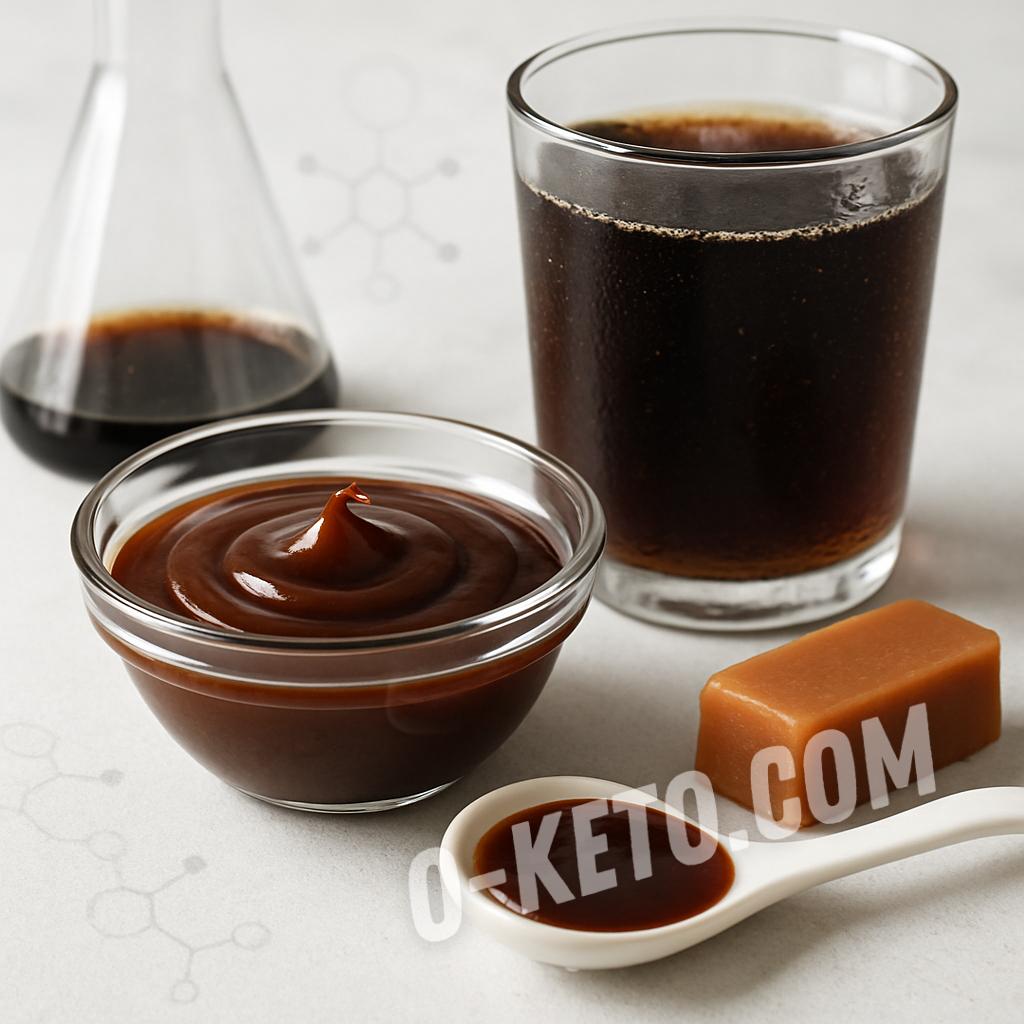
E150b, or caustic sulphite caramel, is a class II caramel food colour. It is produced by heating carbohydrate raw materials in the presence of sulphite compounds, which distinguishes it from plain caramel E150a and from the ammonia-based classes E150c and E150d. In foods, this additive is used mainly for brown colour, from amber to dark brown, depending on dose, acidity, recipe and technological purpose.
The word caramel easily causes confusion. In home cooking it suggests sugar, sweetness and dessert. In an industrial ingredient list, E150b usually means a colourant rather than a sweetener. It may be produced from carbohydrate material, but it is added in small amounts to adjust shade and standardise appearance. A product with E150b should therefore be judged by its complete label, carbohydrate content and frequency of use, not by the word caramel alone.
What makes E150b different
The key feature of E150b is the use of sulphite compounds during manufacture. This does not make every serving of a product dangerous, but it explains why caramel colours are not completely interchangeable. They have different technological properties, accompanying substances and fields of use. When a manufacturer chooses E150b, the aim is a particular colour profile, solubility, stability or compatibility with the food system.
For consumers, E150b should not be understood as homemade caramel, syrup or burnt sugar from a pan. It is a standardised technological additive. It may appear in drinks, sauces, vinegars, flavoured products, confectionery and other manufactured mixes. In small doses it usually contributes colour more than taste or carbohydrate, but the ingredients around it often have a much greater effect on nutritional value.
Safety and sulphite context
EFSA assessed caramel colours E150a, E150b, E150c and E150d as a group while taking account of differences between classes. The practical message is that safety is not assessed by the everyday word caramel, but by manufacturing process, specification, possible by-products and actual intake from different food sources. The more drinks, sauces and ready-made products with colourants a diet contains, the more relevant the total pattern becomes.
The sulphite aspect matters especially for people who already know they are sensitive to sulphites or who react to sulphite-containing foods with respiratory symptoms, skin reactions, headache or discomfort. E150b is not the same as adding a large amount of free sulphite to every serving, but its manufacturing route explains why such people should read labels carefully. With strong or repeated reactions, it is safer to discuss tolerance with a clinician and avoid consistent triggers.
Low-carbohydrate relevance
E150b itself is usually not a meaningful source of carbohydrate in a serving. It is often found, however, in products where the carbohydrate load may be hidden in other components: sweet sauces, syrups, desserts, drinks, glazes, marinades and prepared mixes. For LCHF, sugar, glucose syrup, fructose syrup, molasses, maltodextrin, starch, flour and fruit concentrates are usually more important than the colourant.
Dark drinks and sauces create a separate issue because the brown colour can make them seem serious and unsweetened. Whisky, rum, vinegar or soy sauce may contain caramel colour without adding much carbohydrate in a normal serving. A barbecue sauce, sweet marinade or dessert drink may have a similar colour and a very different composition. Decisions should not be made from colour; grams of carbohydrate and serving size need to be checked.
How to read the label
If E150b appears near the end of the ingredient list and the product is used rarely or in small amounts, it is usually not the central nutritional issue. If sugar, syrups, starches, thickeners, flavourings and sweet-taste enhancers appear beside it, the product should be assessed as processed and potentially carbohydrate-rich. Caramel colour does not make food healthy or unhealthy by itself; it shows that appearance has been technologically adjusted.
A calm practical approach works best: do not fear one code, but do not let brown colour create an illusion of naturalness, ageing or richness. Real nutritional value comes from protein, natural fats, minerals, vegetables, fermented foods and reliable satiety. E150b remains a label detail, not a reason to choose a product over simpler food.
If you have any questions about the term "E150b (caramel II, sulfite caramel)", you can ask them to AI. Please note, a low-cost OpenAI model is used. It may answer questions about disease treatment with errors!


