


E131 (a patented blue V)
Patent Blue V E131 is a synthetic blue colorant used for blue, sky-blue, and greenish shades, often in drinks, desserts, and decorative products. In low-carb eating, it is not a carbohydrate, but it helps identify brightly processed foods and possible colorant reactions.
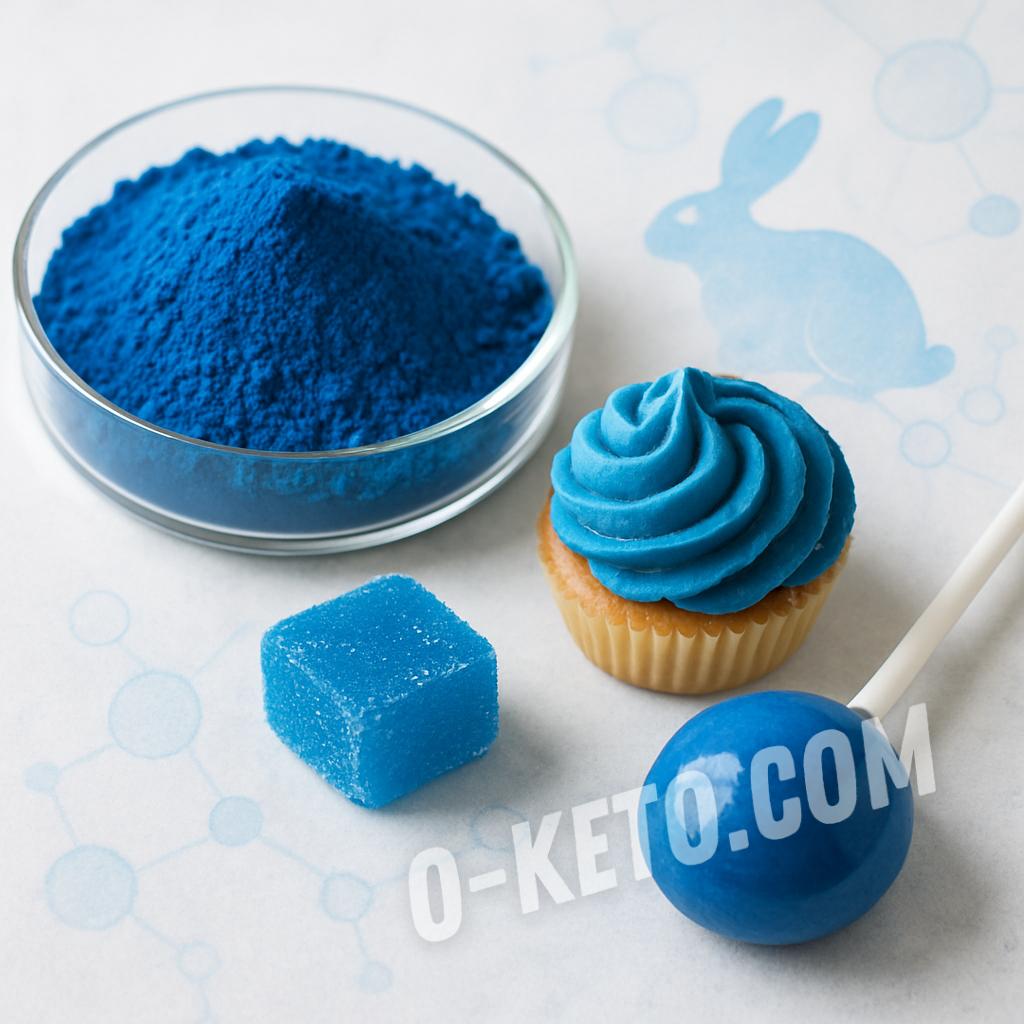
E131 is Patent Blue V, a synthetic blue colorant. It provides blue, sky-blue, and sometimes greenish shades, especially when used together with yellow colorants. In foods, it may appear in drinks, desserts, confectionery, decorations, sauces, chewing products, and some supplements. Unlike red azo dyes, E131 belongs to another chemical group, so it should not automatically be grouped with E122, E124, or E129. Its role is color, not nutritional value.
What this colorant is
Patent Blue V belongs to synthetic triphenylmethane colorants. It helps create shades that are often associated with berries, mint, icy drinks, marine themes, sports products, or decorative glaze. Blue color in food is almost always a strong visual signal because naturally blue food shades are relatively uncommon. E131 is therefore often used not to imitate one specific food, but to create an unusual, bright, or cooling image. The colorant does not add minerals, protein, fiber, or health value.
Where E131 is found
E131 may be found in bright drinks, desserts, ice cream, candies, chewy sweets, decorative glazes, sprinkles, sauces, tablet forms, and some imported products. When mixed with yellow colorants, it can produce green shades, so it should not be searched for only in blue products. Mint, lime, or tropical green may sometimes come from a combination of blue and yellow. If someone tracks colorant sensitivity, it is important to record the full set of E numbers, not only the dominant visible color.
Relevance for keto and LCHF
E131 is not sugar, starch, or a source of net carbohydrates. It should not directly raise glucose. But products with industrial blue and green shades often fall into the category of sweet drinks, desserts, candies, chewing products, or decorative mixes. For keto, sugar, syrups, maltodextrin, starch, polyols, acids, caffeine, flavorings, and serving size matter more. The colorant itself may be metabolically neutral, while the surrounding product may be poorly suited to stable appetite and glucose control.
Sensitivity and medical context
Patent Blue V is known not only as a food colorant, but also as a dye used in some medical procedures in different contexts and doses. This does not mean that food-use amounts of E131 are equivalent to medical use. But when discussing sensitivity, form, dose, and route of exposure matter. In foods, symptoms are often mixed with reactions to sugar, acids, preservatives, flavorings, and other colorants. If itching, rash, headache, or digestive discomfort repeats after bright blue products, E131 is worth tracking separately.
How not to misread color
A blue or green product does not necessarily contain only one colorant. Green may come from E131 combined with a yellow colorant, while purple may result from blue mixed with red. Searching only for the word blue is therefore not enough. The whole ingredient list should be read: Patent Blue V, E131, other colorants, acids, sweeteners, and preservatives. For a person with specific sensitivity, this is especially important. A reaction to E131 does not prove a reaction to all blue products, but repetition with one code makes it meaningful.
Practical conclusion
E131 is a colorant for strong visual effect. In low-carb nutrition, it is usually not a carbohydrate source, but it often appears in products where color, aroma, and sweetness matter more than food value. If a product with E131 is occasional, sugar-free, and well tolerated, the colorant itself may be secondary. If daily bright drinks, candies, dessert mixes, or child-oriented products are involved, simpler food is a better choice. Blue color may be attractive, but it does not replace protein, fats, micronutrients, or real satiety.
Blue color and child-oriented products
Blue shades are often used in products designed for impact: icy flavor, space themes, bright glaze, party drinks, or a sports image. Such products are rarely bought for nutritional value. They work through color, sweetness, and novelty. This is especially visible in foods aimed at children: bright color can increase appeal even when the formula is mainly sugar, acids, and flavorings. E131 helps reveal that mechanism and prevents color from being mistaken for quality.
If you have any questions about the term "E131 (a patented blue V)", you can ask them to AI. Please note, a low-cost OpenAI model is used. It may answer questions about disease treatment with errors!


 1 / 4
1 / 4


 1 / 4
1 / 4

 1 / 4
1 / 4