


E151 (a black brilliant BN, Black PN)
A synthetic black azo dye used for dark shades in drinks, desserts and sauces; nutritionally, the ADI, child exposure and the full ingredient list matter.
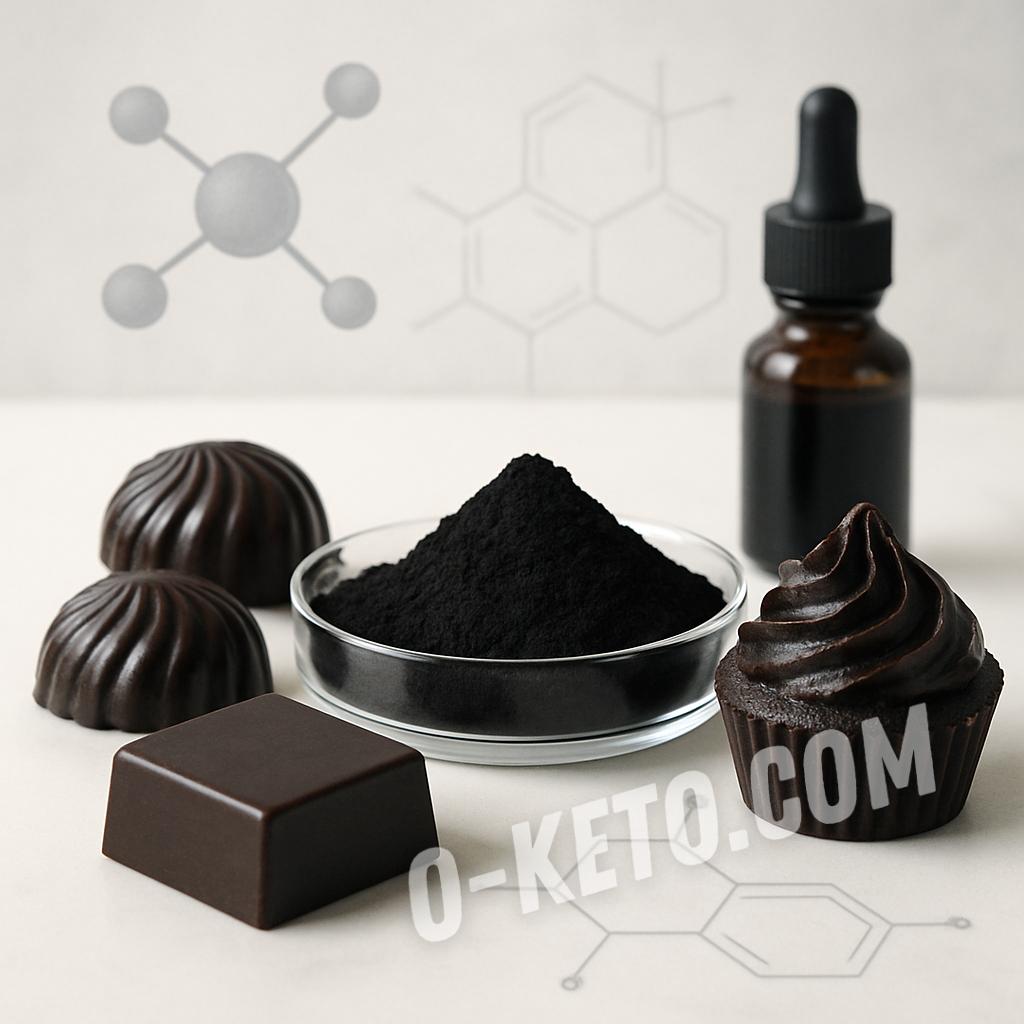
E151, or Brilliant Black BN, is a synthetic black food colour from the azo dye group. It is used when a product needs a dark grey-black, violet-black or almost black shade. On labels it may appear as E151, Brilliant Black BN, Brilliant Black PN or Black PN. It is not a flavouring or a nutrient, but a tool for appearance, especially in drinks, desserts, confectionery, sauces and decorative products.
Black colour in food often suggests intensity, chocolate notes, berry depth, liquorice, coffee, premium design or novelty. E151 itself does not add cocoa, coffee, berries, minerals or antioxidants. It only changes the visual signal. A product containing E151 should therefore be judged by its composition rather than by the impression created by colour.
Where E151 appears
Brilliant Black BN may be used in soft drinks, dessert mixes, jellies, candies, icing, decorative coatings, dark sauces and some prepared foods. Sometimes it does not work as a purely black colour, but as part of a colour blend that deepens purple, brown, grey or dark green shades. A product therefore does not always look black even when E151 is present.
Whole foods rarely need this dye. Black colour can come from olives, cuttlefish ink, spices, roasting, cocoa, coffee or fermentation, and those foods bring their own flavour and matrix. E151 provides only technological colour. This distinction matters in products that look berry-like, chocolate-like or naturally dark, but are actually built from water, acids, flavourings, sweeteners and colour.
Safety and acceptable intake
EFSA confirmed an acceptable daily intake for Brilliant Black BN of 5 mg per kilogram of body weight per day. The assessment also noted that refined exposure estimates were generally below the ADI at maximum reported use levels, but high-level intake in children under 10 could exceed this reference point. That detail is practical: children often choose bright or unusual drinks, sweets and desserts, and their body weight is lower.
An ADI does not mean that a dye is useful or desirable. It is a safety reference for chronic intake under certain data and assumptions. If a person rarely consumes products with E151, the colour is usually not the main dietary issue. If dark drinks, sweets and industrial desserts are present every day, the whole product pattern needs attention: sugar, acids, sweeteners, flavourings, portions and replacement of real food.
Low-carbohydrate relevance
E151 itself is not sugar, starch or a meaningful energy ingredient. A product with this dye can be low in carbohydrate if it contains no sugar, syrups, flour, starch or sweet concentrates. In practice, however, E151 often appears in products with dessert or beverage logic, where sweet taste and striking appearance are more important than satiety.
For LCHF, the ingredients around the colourant matter. Sugar, glucose-fructose syrup, maltodextrin, fruit concentrates, starch and flour immediately change the assessment. Sweeteners are not always neutral either: large amounts of polyols can cause bloating and loose stool, while intensely sweet drinks can maintain cravings. In that setting, E151 is not the main villain; it is a marker of an industrial construction.
Individual tolerance
Some people associate strongly coloured products with skin reactions, headache, itching, abdominal discomfort or poorer wellbeing. In real products it is difficult to separate one dye from acids, preservatives, flavourings, sweeteners and other colours. When a reaction repeats, removing the specific products and watching the change is more useful than arguing about the dye in isolation.
It is especially reasonable to limit frequent sources of E151 in children, in people with known sensitivity to azo dyes, during active gastrointestinal disease and in diets already high in drinks and sweets. Black colour should not hide a weak ingredient list. If a product provides no protein, minerals, natural fats or lasting satiety, it should remain occasional regardless of which dye creates the shade.
If you have any questions about the term "E151 (a black brilliant BN, Black PN)", you can ask them to AI. Please note, a low-cost OpenAI model is used. It may answer questions about disease treatment with errors!


 1 / 4
1 / 4
 1 / 4
1 / 4 1 / 4
1 / 4


 1 / 4
1 / 4