


E123 (amaranth)
Amaranth E123 is a synthetic red azo dye, unrelated to amaranth grain as a food. In low-carb eating, it matters as a marker of brightly processed products and a colorant with a more restricted regulatory context, not as a carbohydrate source.
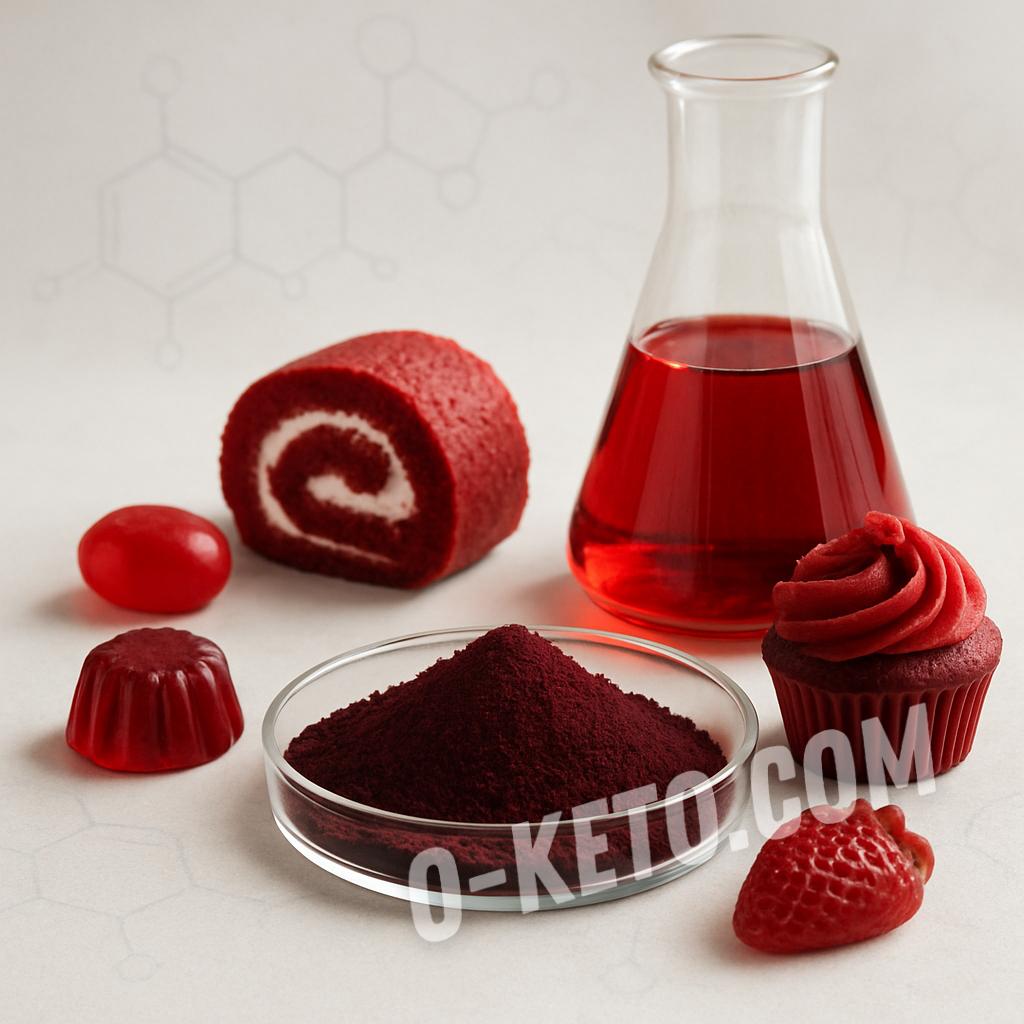
E123 is amaranth, a synthetic red azo dye. It should not be confused with the amaranth plant or amaranth grain; the shared name does not mean nutritional relatedness. As a food colorant, E123 is used for red, cherry, wine-like, purple, and berry shades. It is a technological component for color, not a source of protein, minerals, or fiber. A product containing E123 does not become amaranth-based or healthy because of the colorant name.
What this colorant is
Amaranth belongs to synthetic azo dyes. It provides a strong red color and may be used where stable intense coloring is needed. Regulatory attitudes toward E123 differ between countries, and its use can be more limited than that of some other colorants. EFSA re-evaluated the safety of amaranth and lowered the acceptable daily intake, which makes accurate description especially important. This is not a reason for panic, but it is a reason not to describe it with generic words such as ordinary colorant. It has its own regulatory history.
Where E123 is found
E123 may be used in some drinks, desserts, confectionery, fish and caviar imitations, sauces, decorations, and special products where a deep red shade is needed. It is especially worth checking in imported products, brightly colored sweets, and foods with wine-like, berry, or decorative color. The red shade can create an impression of cherry, pomegranate, red wine, or berry richness. As with other colorants, however, color does not prove the presence of natural ingredients. It only manages perception.
Relevance for keto and LCHF
E123 is not sugar or starch. By itself, it should not directly raise glucose. However, products using intense red colorants often contain sugar, syrups, starch, fructose, acids, flavorings, or sweeteners. For low-carb nutrition, those factors matter more than the dye molecule. If E123 appears in a sweet drink, dessert, or sauce, the entire formulation should be evaluated. If the product is low in carbohydrates, well tolerated, and used rarely, the colorant itself may be secondary, but it should not create an illusion of naturalness.
Sensitivity and caution
As a synthetic azo dye, E123 may matter for people tracking reactions to bright red and purple products. Possible complaints are not always specific: itching, hives, headache, digestive discomfort, worsening asthma symptoms, or reactions in sensitive children. Such symptoms should not automatically be blamed on one dye, because benzoates, acids, sugar, flavorings, and other colors are often present as well. But if reactions repeat specifically with products containing E123, avoiding it and discussing the pattern with a clinician is reasonable.
Difference from amaranth as a food
Amaranth grain is the seed of a plant and contains starch, protein, and minerals. For keto it is usually limited because of carbohydrate content. Colorant E123 is a completely different substance, not a grain and not flour. The questions are therefore different: for the grain, carbohydrates and portion size matter; for the colorant, technological use, sensitivity, and regulatory status matter. If a label says E123 or Amaranth as a colorant, that is not an argument for nutritional value. It is only the name of a red azo dye.
Practical conclusion
E123 is a colorant for which templates are especially unhelpful. It is not a carbohydrate, but it often appears in products far from whole food. It has nothing to do with the nutritional value of amaranth grain, but it can create a bright berry or wine-like image. For keto and LCHF, the main issues are product composition, sugar, starch, sweeteners, and frequency of use. For sensitive individuals, the issue is whether reactions repeat with this specific colorant. If red color is needed in home cooking, small portions of berries, paprika, beet powder with carbohydrate awareness, or other clear ingredients are often more transparent than bright industrial coloring.
If you have any questions about the term "E123 (amaranth)", you can ask them to AI. Please note, a low-cost OpenAI model is used. It may answer questions about disease treatment with errors!


 1 / 4
1 / 4 1 / 4
1 / 4

 1 / 4
1 / 4
 1 / 4
1 / 4
