


E1440 (hydroxypropyl starch)
Hydroxypropyl starch makes starch systems softer and more stable during chilling and freezing; in keto eating it remains a processed starch ingredient.
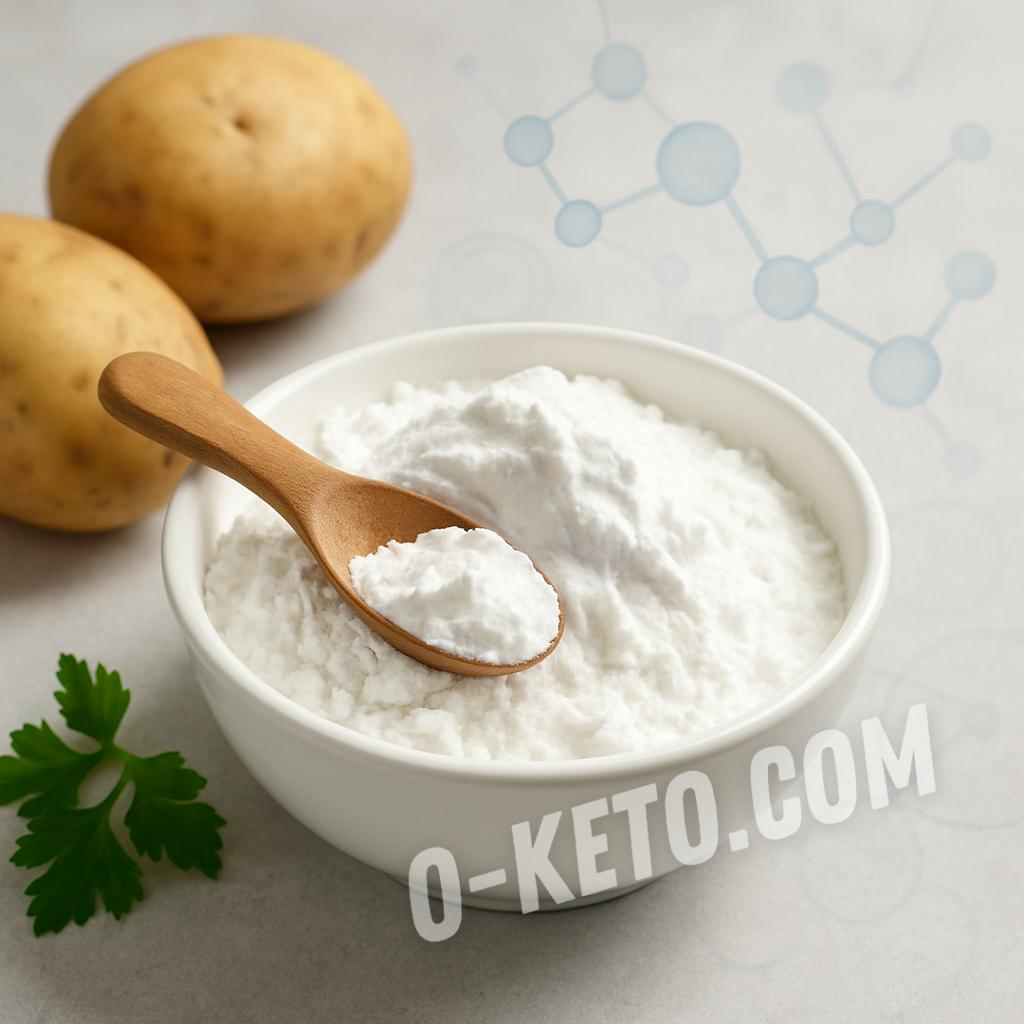
E1440 is hydroxypropyl starch. It is produced when starch is treated with propylene oxide and hydroxypropyl groups are introduced into the structure. This modification makes starch more stable during chilling, freezing, thawing and storage. It better preserves soft viscosity and is less prone to firm retrogradation than ordinary starch.
In food manufacturing, E1440 is useful where a product must remain smooth, moist and pleasant after refrigeration or freezing. Plain starch can become firm, grainy and watery after cooling. Hydroxypropylation helps reduce these problems. For the consumer this appears as a creamy sauce, soft filling, stable dessert or semi-finished food that looks better after reheating.
What hydroxypropylation changes
Hydroxypropyl groups prevent starch chains from coming too tightly together after heating and cooling. The gel therefore stays softer for longer, releases less water and better tolerates freeze-thaw cycles. This is especially important for frozen foods, chilled desserts, creamy fillings and sauces where the consumer expects the same texture every time.
This treatment does not make starch a beneficial fiber. It only changes the physical behavior of the ingredient in the food. E1440 does not add complete protein, does not provide beneficial fats and is not a way to reduce carbohydrates. It helps processed food remain attractive, which is a separate issue for someone trying to eat more simply and control appetite.
Where E1440 appears
Hydroxypropyl starch may be used in frozen meals, sauces, soups, dessert bases, creamy fillings, dairy analogues, reheatable foods and semi-finished products. It is especially useful where ordinary starch would deteriorate after cooling or release water. Its role in the formula is often structural rather than flavor-based: make the product smooth and stable.
If E1440 appears near the beginning or middle of the ingredient list, it may be an important part of the texture. If sugar, syrups, flour, maltodextrin or other starches are nearby, the product is probably not suitable for strict keto even if it looks light. If the code appears at the end of the list and the serving is small, the effect may be moderate, but total carbohydrates still matter.
Keto and LCHF context
In a low-carb diet, E1440 should be read as a signal of processed starch structure. Small trace amounts may not matter much. Foods where hydroxypropyl starch creates the base of a sauce, dessert or ready meal, however, may contribute net carbohydrates and maintain a preference for soft industrial foods that are easy to eat beyond need.
For diabetes, insulin resistance and ketosis control, the sugar line is not enough; the total carbohydrate profile matters. A product can be unsweetened or sucrose-free while still containing starch stabilizers. If glucose rises after it, sleepiness appears or hunger returns quickly, the smooth texture does not make it a good choice.
Tolerance and limitations
In food-use amounts, E1440 is usually not considered a separate problem for a healthy person. Reaction to the finished food depends on the whole formula: fat, salt, acids, polyols, emulsifiers, flavors and other thickeners. If discomfort repeatedly follows ready-made creamy or frozen products, reducing the whole category is more reasonable than looking for one guilty ingredient.
For celiac disease or wheat allergy, the starch origin should be checked. The number E1440 does not say whether the source starch was corn, potato, wheat, rice or tapioca. For keto practice, the best conclusion is simple: traces of hydroxypropyl starch may be unimportant, but foods where it holds the main texture should not become everyday staples.
The freezing context is especially important for E1440. If a product is designed for freezer storage and reheating, hydroxypropyl starch may be one of the ingredients that protects the pleasant texture. A fresh home-cooked dish usually does not need this level of stability, so the presence of E1440 often points to a more processed food.
If you have any questions about the term "E1440 (hydroxypropyl starch)", you can ask them to AI. Please note, a low-cost OpenAI model is used. It may answer questions about disease treatment with errors!


