


Kidneys
These paired organs regulate water, sodium, potassium, acid-base balance, blood pressure, waste elimination, and vitamin D activation. In low-carb nutrition, hydration, electrolytes, medication effects, blood pressure, and actual kidney function matter more than a blanket fear of protein in healthy people.
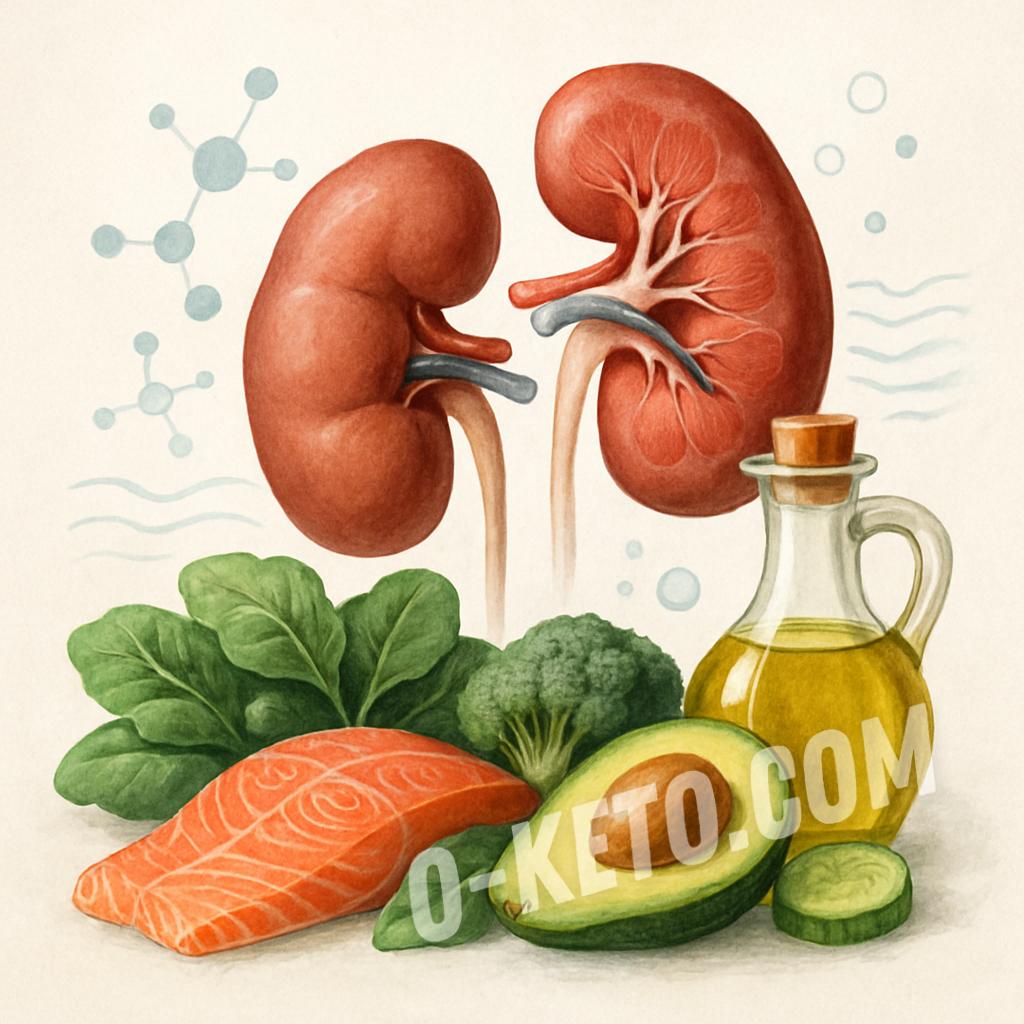
The kidneys are paired organs that constantly regulate the composition of blood and the internal environment. They remove metabolic waste, retain or excrete water and electrolytes, help control blood pressure, maintain acid-base balance, activate vitamin D, and produce erythropoietin for red blood cell formation. Their role is therefore much broader than making urine. The kidneys work with the heart, blood vessels, adrenal glands, bones, intestine, and hormonal systems.
For nutrition, it is important to distinguish healthy kidneys from chronic kidney disease, stones, infections, diabetic kidney damage, high blood pressure, and medication effects. The same dietary advice may be reasonable for a person without kidney disease and inappropriate when estimated glomerular filtration rate is reduced. Protein, salt, water, potassium, magnesium, and low-carbohydrate eating should be discussed in the context of tests, blood pressure, medicines, and diagnosis rather than a vague fear of kidney load.
What the kidneys regulate every day
The central job of the kidneys is stability. If a person drinks more water, the kidneys increase fluid excretion. If salt intake is low or blood pressure falls, systems that retain sodium and water are activated. If the acid load changes, the kidneys excrete acids and preserve bicarbonate. They also regulate potassium, phosphorus, calcium, and magnesium, although some of these processes depend on hormones, the intestine, and bone tissue.
Because kidney regulation is complex, symptoms are not always obvious. In early chronic kidney disease, a person may feel normal. Swelling, severe weakness, itching, nausea, high blood pressure, changes in urine, anemia, and electrolyte problems often appear later or have other causes. When risk is present, regular markers matter more: creatinine with estimated GFR, urine albumin or protein, urinalysis, blood pressure, glucose, HbA1c, and sometimes ultrasound.
Protein and low-carb nutrition
A common myth suggests that protein is automatically harmful to the kidneys. In healthy people, adequate protein intake is not considered a cause of chronic kidney disease. Protein is needed for muscles, enzymes, immunity, recovery, skin, hormones, and satiety. In low-carbohydrate nutrition it is especially important because the diet should not become a collection of fats without amino acids and micronutrients.
The situation changes when kidney disease already exists. In chronic kidney disease, protein, sodium, potassium, phosphorus, and fluid may require individual limits. With reduced GFR, albuminuria, diabetes, nephropathy, polycystic kidney disease, recurrent stones, or nephrotoxic medicines, the diet should be coordinated medically. The danger is not the low-carbohydrate approach itself, but unsupervised extremes: very high protein, too little fluid, unsuitable supplements, and ignoring blood pressure or test results.
Electrolytes, salt, and adaptation
When people transition to keto or LCHF, insulin often falls and the kidneys excrete more sodium and water. During the first weeks, weakness, headache, cramps, palpitations, lower blood pressure, or salt cravings may appear. This is not necessarily kidney disease; it is often water-salt adaptation. Electrolytes still need to be adjusted intelligently, especially when high blood pressure, heart failure, kidney disease, or medication use is present.
Diuretics, ACE inhibitors, angiotensin receptor blockers, potassium supplements, NSAIDs, lithium, some antibiotics, and glucose-lowering medications deserve particular caution. Their effects may shift as diet, weight, and salt intake change. A person with hypertension or kidney disease should not simply increase salt or potassium because of online advice. Blood pressure and laboratory monitoring are important because both deficiency and excess of electrolytes can be dangerous.
Stones and uric acid
Kidney stones are not all the same. They may be oxalate, uric acid, phosphate, or cystine stones. A universal ban on spinach, meat, or salt does not solve the problem without knowing stone composition and urine chemistry. Risk is influenced by urine volume, citrate, pH, sodium, calcium, oxalate, uric acid, infections, genetics, dehydration, and medications. During low-carb eating, chronic dehydration and an overly monotonous meat-only pattern should be avoided.
If stones recur, analyzing the stone and assessing twenty-four-hour urine is more useful than guessing. Some cases need more fluid and citrate, others sodium control, uric acid management, or infection treatment. Citrate, magnesium, potassium, and vegetables may help in some scenarios and be unsuitable in others, especially when kidney function is reduced.
When medical evaluation is needed
Medical evaluation is needed for blood in urine, a sudden drop in urine output, severe flank pain with fever, swelling, persistent high blood pressure, sudden weakness, confusion, severe nausea, recurrent stones, protein in urine, or reduced estimated GFR. In diabetes and hypertension, kidneys should be monitored regularly even without symptoms because early changes are often more manageable than late ones.
The kidneys adapt well, but they do not tolerate extremes indefinitely: dehydration, uncontrolled painkillers, persistent high blood pressure, high glucose, alcohol, smoking, random diuretics, and supplements with unclear composition. A well-constructed low-carbohydrate diet can improve metabolic risks, but only when hydration, electrolytes, blood pressure, protein quality, and real laboratory markers are respected.










If you have any questions about the term "Kidneys", you can ask them to AI. Please note, a low-cost OpenAI model is used. It may answer questions about disease treatment with errors!


