


NMR lipid profile
An expanded NMR lipoprotein profile estimates not only cholesterol, but also particle number, size and distribution, which makes it useful when standard lipid testing leaves risk unclear.
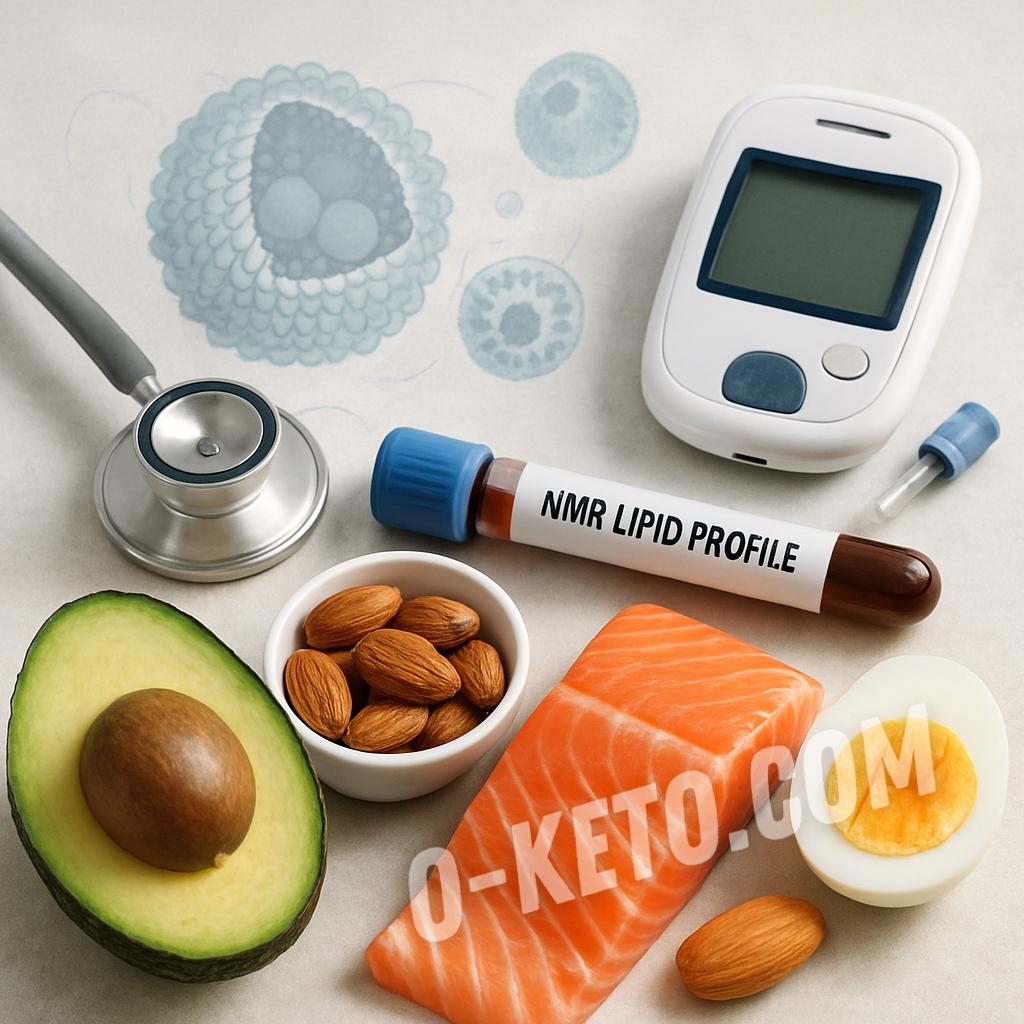
An NMR lipid profile is an advanced lipoprotein assessment performed with nuclear magnetic resonance technology. Unlike a standard lipid panel, it attempts to describe not only cholesterol and triglyceride concentrations, but also particle number, particle size and distribution across lipoprotein classes. In practice this becomes useful when a standard lipid panel does not fully resolve risk: for example in insulin resistance, high triglycerides, mixed dyslipidemia, strong family history or unusual lipid shifts during weight loss and dietary change.
What the test shows
The profile offers a more detailed view of lipoproteins by estimating how many particles are circulating, how large they are and how they are distributed. This matters because two people can show a similar LDL-C value while carrying a very different number of particles and a very different metabolic context. In some situations, the packing and number of particles matters more than cholesterol concentration alone.
That is why the test can provide an additional layer of understanding when the usual lipid panel leaves too many open questions, especially in metabolically complex cases.
When NMR is especially useful
This type of profile may be helpful in high triglycerides, insulin resistance, diabetes, mixed dyslipidemia, strong family cardiovascular risk and situations where clinicians want to know whether atherogenic particle burden is truly elevated. It can also be useful when low-carbohydrate or ketogenic eating changes standard lipids in a way that is hard to interpret and a deeper look is needed.
That does not mean everyone with a lipid test needs NMR. In many people, standard lipids together with ApoB, non-HDL cholesterol, triglycerides and clinical context already answer the important questions.
What affects interpretation
NMR findings do not exist outside the broader metabolic picture. Body weight, insulin resistance, glucose handling, triglycerides, inflammation, hypothyroidism, medications and the phase of weight loss or diet adaptation can all influence how the profile should be understood. Looking only at particle size without the surrounding context can easily produce exaggerated or oversimplified conclusions.
For that reason clinicians usually compare NMR results with ApoB, the standard lipid panel, waist circumference, blood pressure, glucose status and family history. That is what turns the test into a useful clarifying tool rather than an expensive collection of isolated numbers.
How it is read with ApoB and standard lipids
If NMR shows a high number of atherogenic particles and ApoB is also elevated, the message becomes more coherent. If LDL-C is high but ApoB and the particle pattern look less concerning, the interpretation may shift. This kind of cross-reading between NMR, ApoB, non-HDL, triglycerides and the broader clinical picture is what prevents blunt conclusions from a single metric.
During active weight loss or major dietary change, timing also matters. Lipid transport patterns may temporarily shift before they stabilize, so one result should not always be treated as the final answer.
Why the test is not a supreme verdict
A common mistake is to treat the NMR lipid profile as the ultimate truth that automatically overrides every standard lipid value and all clinical context. In reality it is a refinement tool, not a stand-alone verdict. It is most helpful when it answers a real clinical question rather than being ordered out of curiosity without an interpretation plan.
The best use of NMR is as a deeper layer of lipid analysis in complex or ambiguous situations. In that role it can improve risk understanding without turning into a source of false precision or unnecessary alarm.
In practice, the value of NMR is not that it simply produces more numbers, but that it helps clarify whether an unusual lipid pattern truly means higher risk or merely reflects a different way of packaging lipids. When the test is used to answer that specific question, it becomes a meaningful addition rather than just a complicated report.
If you have any questions about the term "NMR lipid profile", you can ask them to AI. Please note, a low-cost OpenAI model is used. It may answer questions about disease treatment with errors!


 1 / 4
1 / 4 1 / 4
1 / 4 1 / 4
1 / 4
 1 / 4
1 / 4


 1 / 4
1 / 4 1 / 4
1 / 4