


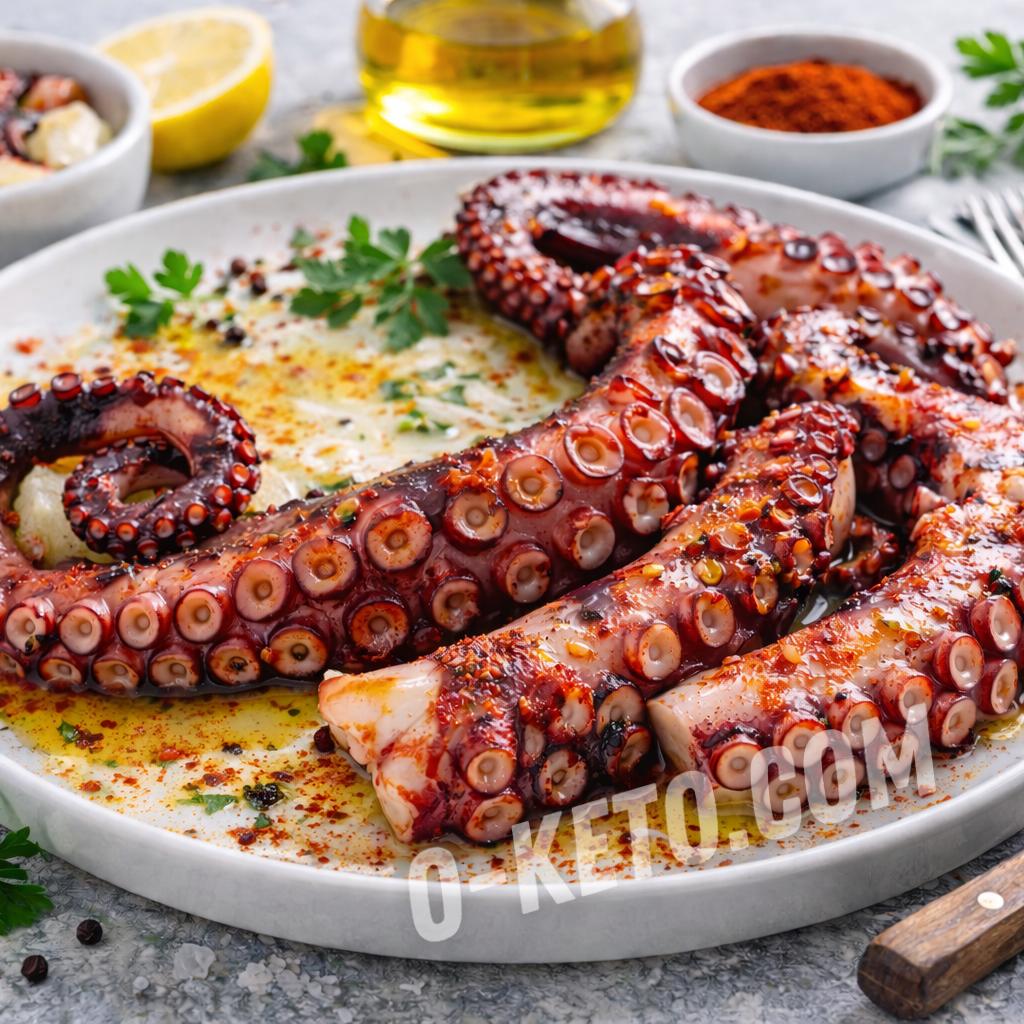

Octopuses are cephalopod mollusks with a dense, rich flavor and a characteristic texture. Unlike squid, they are most often boiled, even if grilling, baking, or carpaccio is planned later. Pre-boiling softens the fibers, but it should be noted that the weight of the octopus significantly decreases due to juice loss.
Why octopus is almost always boiled. Even when served grilled or as thinly sliced tentacles, pre-boiling helps achieve a tender texture. Without this step, the meat often remains tough.
Alternatives include poaching and sous-vide, which provide a more controlled texture.
Fresh or frozen: which is better
Interesting fact: octopus is a rare exception among seafood that benefits from freezing. Freezing breaks down some muscle fibers and makes the meat softer.
If the octopus is fresh:
- the smell is clean, marine;
- the skin is shiny, without slime;
- the tentacles are firm;
- the color is natural, without a gray coating.
Fresh octopus needs to be softened beforehand—either mechanically or by freezing before cooking.
Frozen octopuses:
- a thin glaze without large ice chunks;
- no snow crumbs in the packaging;
- thaw slowly in the refrigerator.
After thawing, the octopus is boiled until tender, focusing not on time but on texture: a fork should go in without resistance.
Cooked-frozen octopuses. They are sold for time-saving. They just need to be thawed carefully and used in cold dishes or lightly sautéed.
Cooking methods for octopus
How to properly boil octopus:
- immerse the thawed octopus in unsalted water;
- add herbs and roots for aroma;
- cook at a gentle simmer until tender;
- let it cool in its own broth to retain juiciness.
It’s better to salt at the end or just before serving—salt can tighten the fibers.
Other cooking methods:
- poaching;
- sous-vide;
- baking;
- stewing;
- frying;
- grilling.
When frying, the octopus actively releases juice and can be cooked in its own broth—especially successful in clay pots.
Classic serving options. In Croatia, octopus is cooked “under the bell”—with potatoes and vegetables under a metal lid with coals, creating even heat.
In Spain, it is served with boiled potatoes, olive oil, and smoked paprika—a simple yet very expressive combination.
Best pairings:
Practical recommendations
- do not strictly rely on minutes—check tenderness with a fork;
- after boiling, let the meat “rest” in the broth;
- for grilling, use already boiled tentacles;
- avoid overloading with spices;
- cut across the fibers for a more tender texture.
Octopus requires patience, but with the right preparation, it offers a deep, rich flavor and a dense yet tender texture.
The main principle is to first soften, then carefully bring to the desired doneness.


