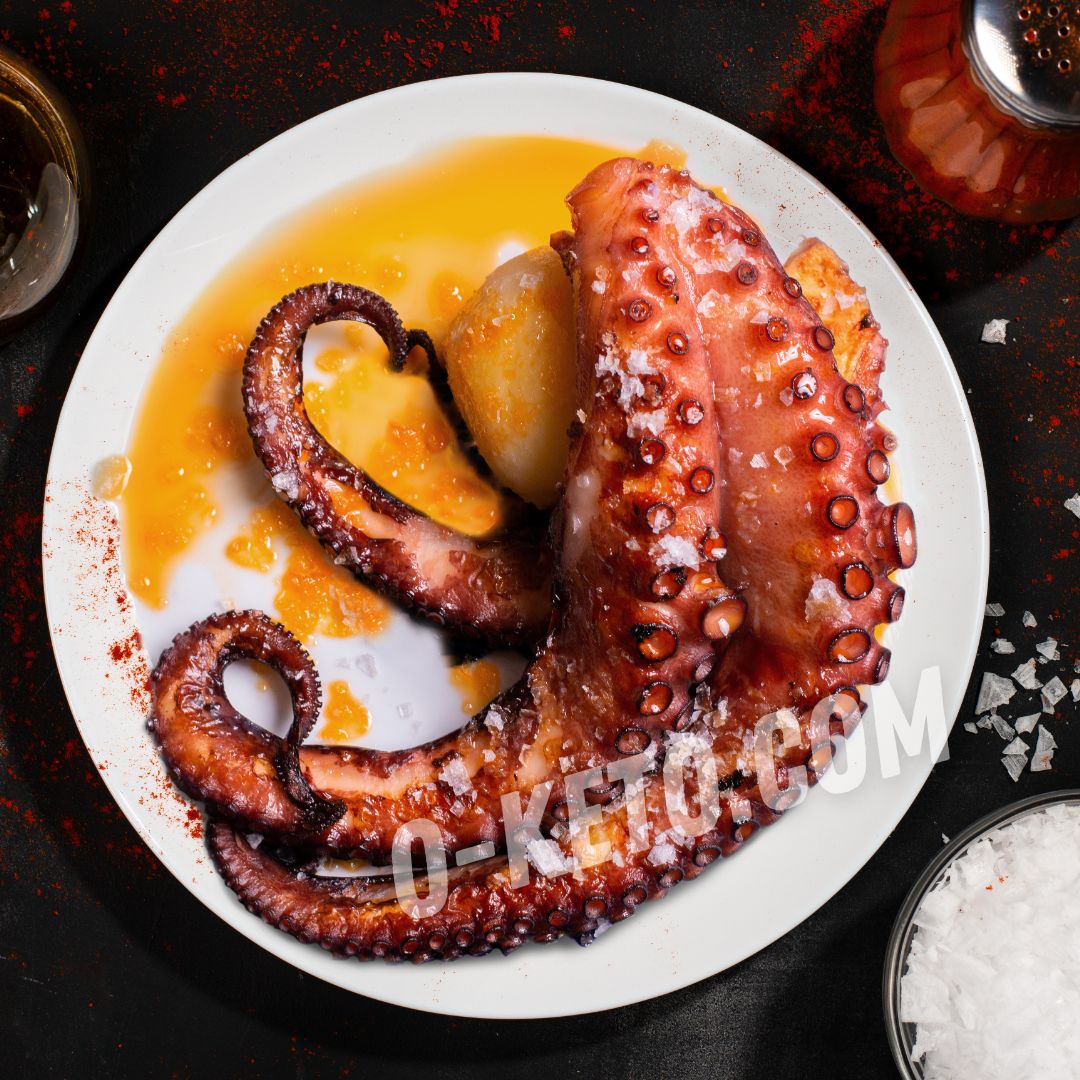

Octopus is a marine mollusk with firm, springy meat and a mild sweet-salty flavor. In Mediterranean and Asian cooking it is boiled, braised, grilled, added to salads, soups, and appetizers. Well-cooked octopus is tender, but mistakes can quickly make it rubbery.
For keto, octopus works as an almost zero-carb protein source. It is very lean, so in a low-carb plate it is best paired with olive oil, butter, avocado, aioli, herbs, and non-starchy vegetables.
Nutritional value
Per 100 g of cooked octopus, values are often around 160 kcal, about 30 g of protein, and about 2 g of fat, with almost no carbohydrates. The product itself has almost no carbohydrate load. Values can change with cooking, water loss, and portion size.
Octopus contains vitamin B12, zinc, magnesium, selenium, phosphorus, iron, and taurine. Its practical role is the most important point: high protein, low fat, and almost no carbohydrates. This means the fat in the dish usually needs to come from elsewhere.
Is it suitable for keto?
Octopus fits keto well when cooked without flour, breading, sweet marinades, or starch-thickened sauces. In its plain form, it is a protein food that can be used in salads, hot dishes, or appetizers.
But octopus is not as filling as fatty fish or meat because it contains little fat. If hunger returns quickly after the dish, it usually needs more oil, sauce, or another fat source.
How to cook
The main goal is tenderness. Octopus is often slowly boiled or braised first, then quickly browned on the grill or in a pan. If large tentacles are fried immediately, they may stay tough.
Practical options include:
- salad with olive oil, lemon, parsley, and celery;
- grilled octopus with garlic butter and herbs;
- a warm appetizer with avocado and cucumber;
- soup with fish broth, tomatoes, and sugar-free spices;
- octopus with aioli and lettuce leaves instead of bread.
Common mistakes
Octopus is often ruined by two extremes: cooking it too little or keeping already tender meat on the heat for too long. In the first case it stays tough; in the second it becomes dry. Check tenderness with a fork, and once the texture is right, move to quick browning or serving.
Acidic marinades are better added after cooking or shortly before serving, so the flavor stays bright and the meat does not become unpleasantly dense. Salt should also be controlled: octopus already has a marine taste, and sauces, capers, olives, and marinades can quickly make the dish too salty.
How to choose
Fresh octopus should smell like the sea, not ammonia or sourness. The meat should be springy, without slime or gray damaged areas. Frozen octopus is often convenient because freezing can slightly tenderize the tissue and make cooking easier.
Small octopus cooks faster and works well for appetizers. Large tentacles are better softened first and browned later. Ready marinated versions should be checked by ingredients: sugar, starch, and extra oil are most often hidden in the brine or sauce.
If already cooked octopus is purchased, look not only at the meat but also at the brine or sauce. A plain chilled product is convenient for salads and quick grilling, while spiced versions may be too salty or sweet. For better control at home, choose a neutral product and add lemon, oil, garlic, and herbs yourself.
What to pair it with
Octopus works well with acidic and fatty accents: lemon, lime, olive oil, butter, aioli, garlic, parsley, paprika, chili, and black pepper. In a keto plate, it pairs well with cucumber, avocado, lettuce leaves, zucchini, cauliflower, tomatoes in a moderate portion, and olives.
Rice, potatoes, sweet sauces, and bread make the dish no longer low-carb. If a more filling serving is needed, it is better to add an oil-based sauce, eggs, avocado, or a vegetable side with olive oil.
Storage and limits
Thaw octopus in the refrigerator, not in warm water. Cooked octopus does not keep long and should be cooled quickly. Refreezing after thawing worsens texture and raises spoilage risk.
As a marine product, octopus can cause allergies. Sodium also matters: prepared marinated versions, cans, and restaurant dishes may contain a lot of salt. If salt is restricted, choose plain boiled or frozen octopus and season it yourself.
Substitutes
For keto purposes, octopus can be replaced with squid, shrimp, crab meat, crayfish, scallops, or white fish. In texture, squid and cuttlefish are closest, but they also need careful cooking so they do not become tough.