


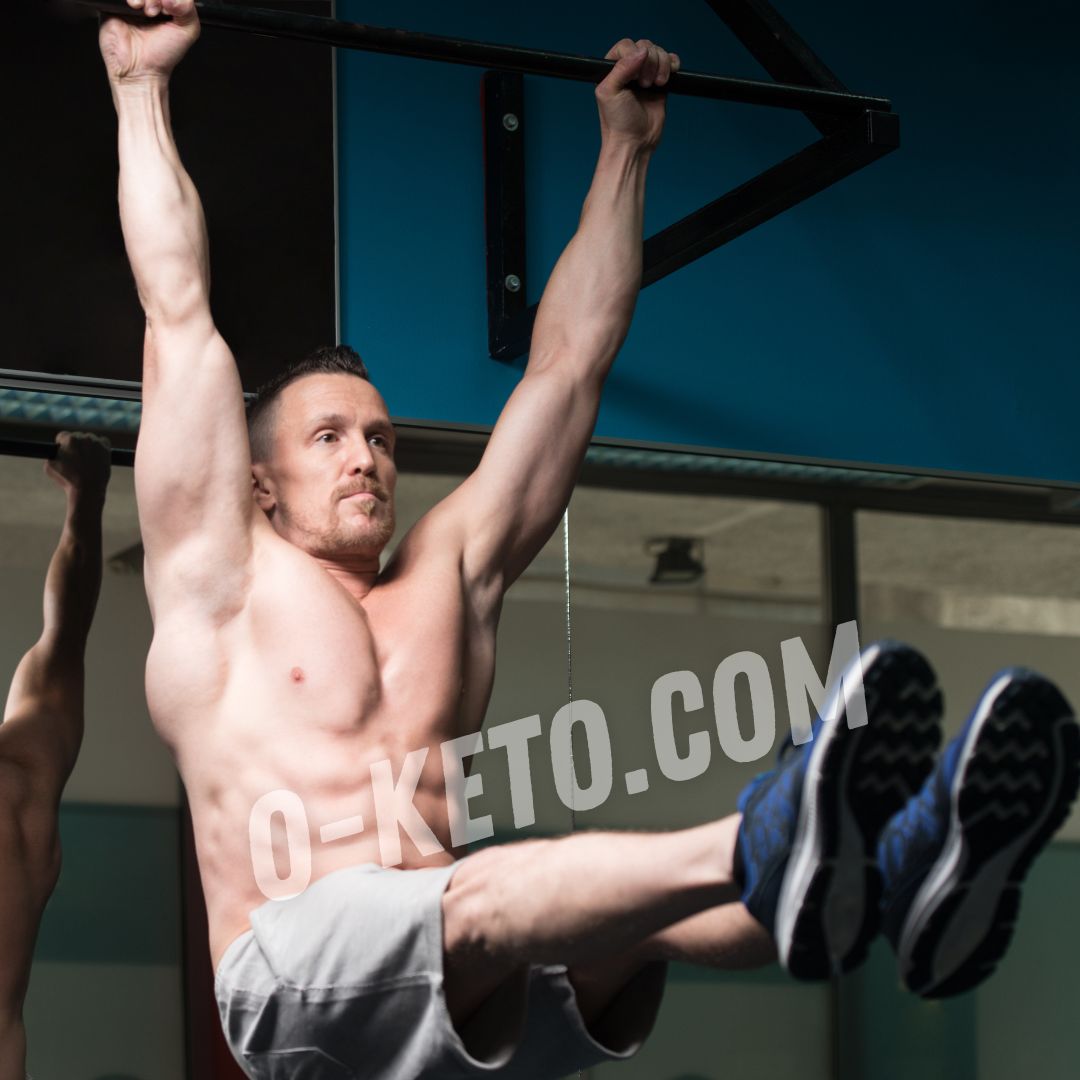
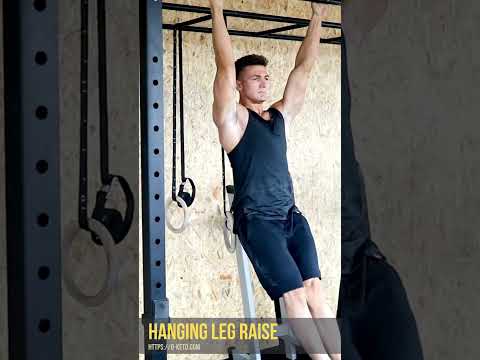
Hanging leg raises are one of the most effective exercises for strengthening the abdominal muscles, especially the lower part.
Additionally, this exercise develops the core muscles, which helps improve stabilization and overall strength performance.
This exercise is performed on a pull-up bar or a stand with forearm supports. The athlete, hanging, raises straight or bent legs, focusing on the work of the abdominal muscles.
Muscles Engaged During Hanging Leg Raises
Rectus Abdominis (lower part): the primary target of the load.
Oblique Abdominals: engaged when raising legs to the sides or twisting.
Iliopsoas Muscle: involved in the process of raising the legs.
Core Muscles: provide stability and body control.
Forearm and Shoulder Muscles: hold the body on the bar.
Execution Technique

Starting position:
- Hang on the bar with a pronated grip (palms facing away from you).
- Arms fully extended, legs hanging freely.
- Engage your core and slightly squeeze your shoulder blades together.
Leg raise:
- Slowly raise your legs forward until they are parallel to the floor (or higher if flexibility allows).
- Avoid swinging; the movement should occur through the abdominal muscles.
Lowering the legs:
- Slowly lower your legs back to the starting position, maintaining control over the movement.
Variations
Bent Leg Raises: a simplified version for beginners.
Straight Leg Raises to the Bar: a more challenging version with maximum engagement of the abs and core.
Leg Raises with Torso Rotation: focuses on the oblique abdominal muscles.
Leg Swings: while raising your legs, perform movements to the right and left.
Weighted Raises: hold a dumbbell or plate between your legs to increase the load.
Benefits
Strengthening the Lower Abs: effectively works the lower part of the rectus abdominis.
Core Development: enhances body stability by strengthening all muscles involved in stabilization.
Improved Flexibility: regular training increases the mobility of the hip joints.
Functionality: improves strength and body control in daily life and sports.
Variability: easily adaptable to any fitness level.
Common Mistakes and How to Avoid Them
Body Swinging: reduces abdominal muscle activation and can lead to injury.
Engage your core and avoid jerking movements.
Incomplete Range of Motion: insufficiently high leg raises reduce effectiveness.
Raise your legs to parallel with the floor or higher.
Bending Knees During Straight Leg Raises: reduces the load on the abs.
Keep your legs straight if your fitness level allows.
Too Fast Execution: reduces control and effectiveness of the exercise.
Move slowly, focusing on muscle contraction.
Overloading the Forearms: weak arms can hinder the exercise performance.
Use pull-up straps or work on strengthening your grip.
Tips for Beginners
Start with Simplified Variations: bend your knees to reduce the load.
Use Forearm Straps: this will help relieve the forearms if they tire quickly.
Don’t Rush: perform the movement smoothly, avoiding jerking and swinging.
Keep Your Core Engaged: this will prevent overstraining your lower back.
Comparison with Other Ab Exercises
Plank: focuses on static strength and stabilization.
Crunches: target the upper abs, paying less attention to the core.
Russian Twist: engages the oblique abs but does not affect the lower abs as much.
Sources
- Electromyographic comparison of the upper and lower rectus abdominis during abdominal exercises
- Understanding the Active Straight Leg Raise (ASLR): an electromyographic study in healthy subjects
- Effects of the pelvic rotatory control method on abdominal muscle activity and the pelvic rotation during active straight leg raising
- Electromyographic response of the abdominal musculature to varying abdominal exercises
- An electromyographic analysis of the Ab-Slide exercise, abdominal crunch, supine double leg thrust, and side bridge in healthy young adults: implications for rehabilitation professionals


