


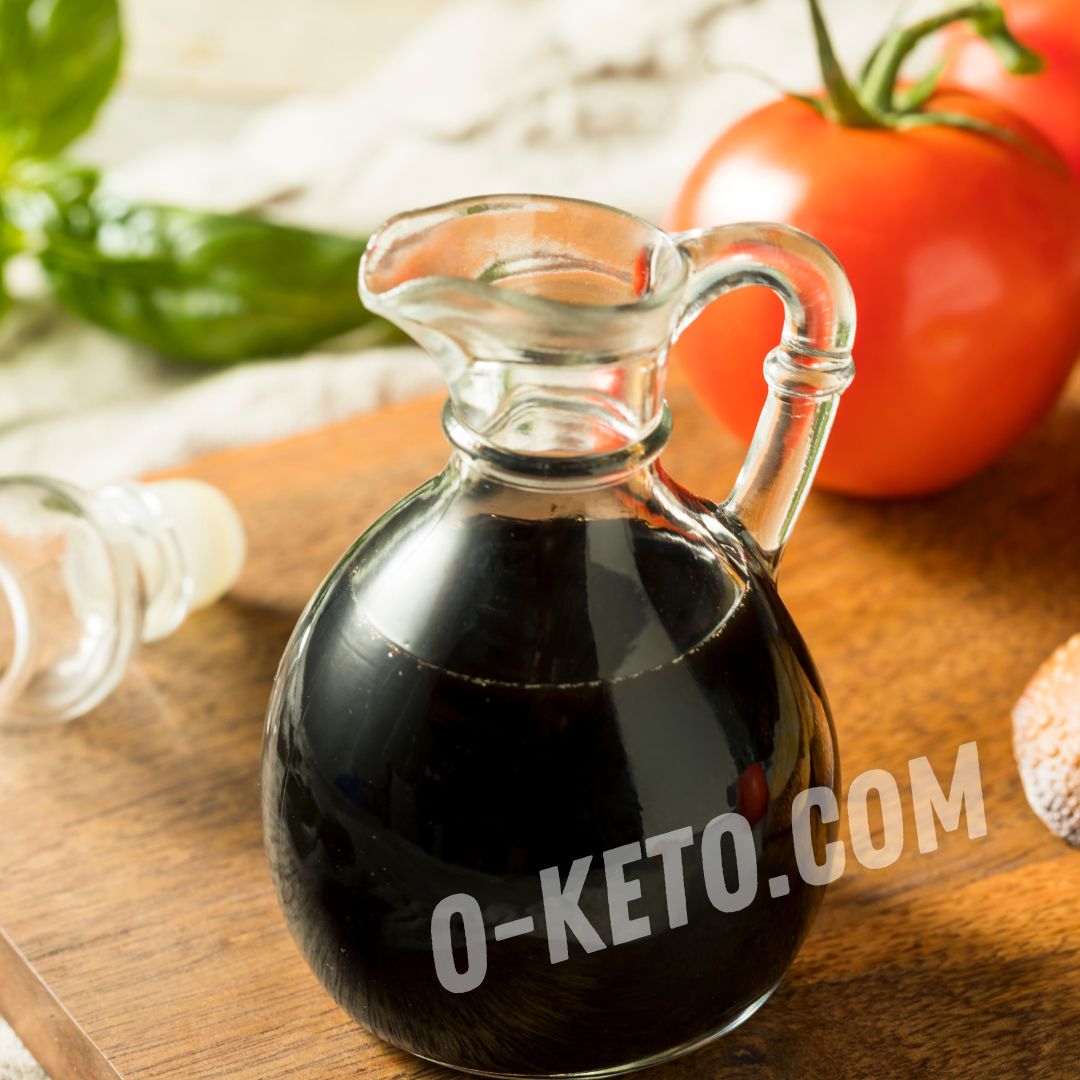

Balsamic sauce is a thick sweet-and-sour condiment based on balsamic vinegar or reduced grape must. It gives food dark color, fruity acidity, light caramel notes, and a glossy texture. It is added to salads, meat, poultry, cheeses, grilled vegetables, sugar-free strawberries, and sauces that need a small bright accent.
It is important to distinguish balsamic vinegar, traditional aged vinegar, and balsamic cream or sauce. Vinegar is usually thinner and more acidic. Sauce is thicker and sweeter because it has been reduced or thickened. This is why keto use requires attention: carbohydrates often come from grape sugar, caramel syrup, sugar, or starch.
Origin and types
The balsamic tradition is linked to Italy’s Emilia-Romagna region, especially Modena and Reggio Emilia. The classic base is made from grape must of Trebbiano, Lambrusco, and other local grapes, then aged in wooden barrels. Long aging gives complex aroma, thickness, and sweetness without an ordinary sauce thickener.
Very different products may stand on the same shelf: aged Aceto Balsamico Tradizionale, more affordable balsamic vinegar, glaze, cream, and sauces with additions. For a salad, a few drops of good vinegar may be enough, while thick cream is used as a finishing accent rather than the main dressing.
Nutritional value
A serving of about 15 ml may contain roughly 14–20 kcal and 3–4 g of carbohydrates, but thick creams can be higher. Protein and fat are usually almost absent. Glycemic load depends on serving size and composition: one teaspoon and two tablespoons are different situations.
Minerals and plant compounds may be present, but balsamic sauce is used in such small amounts that it should not be treated as a meaningful nutrient source. Its role on the plate is flavor, acidity, and aroma.
Is it suitable for keto?
For keto and LCHF, balsamic sauce is possible only in small amounts. A practical portion is a teaspoon or a thin line over food. If carbohydrate control is strict, choose balsamic vinegar without sugar and build flavor with a fatty base: olive oil, sugar-free mustard, herbs, and salt.
The riskiest option is balsamic cream with sugar, glucose syrup, caramel, starch, or fruit concentrate. It may look like a condiment but be closer to a sweet sauce by carbohydrates. The label matters more than the name.
How to use it
Balsamic sauce is added at the end: over salad with arugula, mozzarella, and tomatoes, steak, duck, chicken breast, cheese, fried zucchini, eggplant, or mushrooms. For keto, balsamic acidity works well with fat: olive oil, cream sauce, cheese, or avocado.
Use it carefully in marinades. Sweetness darkens quickly in a pan or on the grill, and too much acidity can make the meat surface tougher. It is often better to add part of the sauce at the end or mix it with oil and spices.
What to pair it with
The best pairings are olive oil, arugula, basil, mozzarella, hard cheeses, beef, duck, chicken, tomatoes, eggplant, zucchini, and mushrooms. In sweet-style keto desserts it is used very precisely: a few drops with berries or cream give contrast, but the portion should be counted carefully.
How to choose
A clear product should have understandable ingredients: balsamic vinegar, grape must, sometimes a small amount of thickener. The higher sugar, syrups, and starch appear in the list, the less convenient the sauce is for low-carb eating. Good vinegar smells grapey, woody, sweet-and-sour, without a harsh chemical note.
Check carbohydrates per 100 ml and per serving. Producers sometimes list a tiny serving, making the number look calmer. If the sauce pours in a thick ribbon and tastes very sweet, count it as a concentrated condiment.
Limitations
An acidic product can irritate a sensitive stomach, worsen reflux discomfort, and feel unpleasant on sensitive enamel. In such cases, reduce the portion, do not drink it separately, and use it with food. With strict sugar limits, choose vinegar without sweet additions.
How to store it
Keep a sealed bottle in a dark, cool cupboard. After opening, follow the label: some sauces can stay at room temperature, while thick creams are sometimes better refrigerated. Wipe the neck because a sweet thick drop quickly becomes sticky and spoils the taste of the next serving.
What can replace it?
If acidity without sugar is needed, use wine vinegar, apple cider vinegar, lemon juice, or vinegar with olive oil. If a thick dark note is needed, a small amount of sugar-free balsamic vinegar can be reduced, but carbohydrates still need counting. For salads, lemon, sugar-free mustard, salt, and good oil are often enough.


