


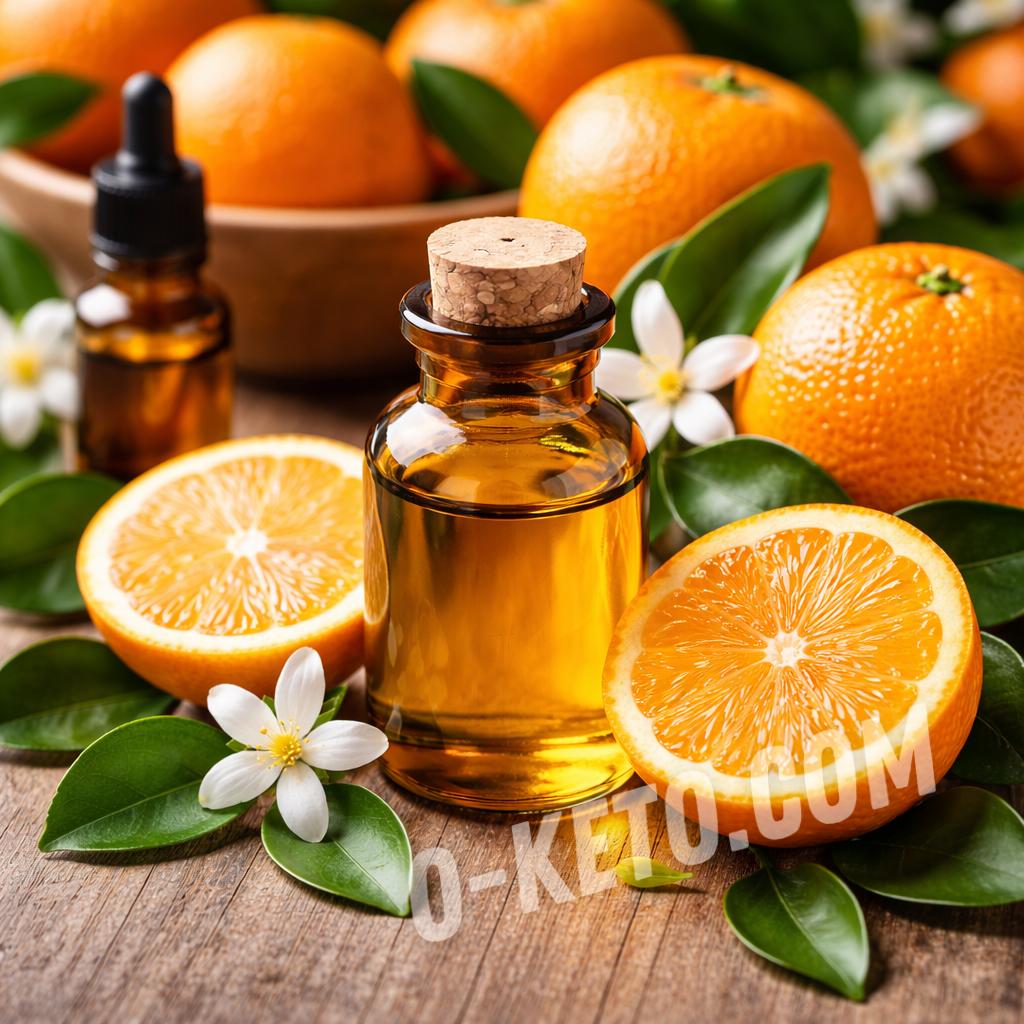

Mandarin essential oil is obtained from the peel of Citrus reticulata fruit, usually by cold pressing. It is a concentrated aromatic product with a soft, sweet, warm citrus scent. It should be separated from mandarin juice, food flavoring, and ordinary oil: essential oil does not provide fruit juiciness and is used in drops.
Mandarin is one of the old cultivated citrus fruits, linked to China and later spread through trade routes to Japan, India, the Mediterranean, and Europe. Today the oil is produced in different regions, including Italy, Spain, Brazil, and the USA. It is used for room scent, cosmetic blends, and sometimes cooking when the bottle is marked for food use.
Composition and aroma
Mandarin oil is based on volatile monoterpenes, especially limonene. Gamma-terpinene, alpha- and beta-pinene, myrcene, and small amounts of other aromatic compounds may also be present. The profile is usually softer and sweeter than lemon or grapefruit, without strong bitterness.
Good oil smells like fresh mandarin peel, not candy fragrance, solvent, or rancid fat. If the aroma becomes flat, heavy, or unpleasantly old, do not use the product in food or on skin. Citrus oils lose brightness quickly after opening, so a small bottle is often more practical than a large one.
Is it suitable for keto?
For keto and LCHF, mandarin essential oil has almost no carbohydrate impact because it is used in microdoses. It can add a mandarin zest aroma to cream, sugar-free cheesecake, coconut dessert, jelly, hot drink, or low-carb glaze. But it does not replace the fruit: it has no pulp, juice, or familiar sweet-sour base.
If a recipe needs liquid, acidity, or natural mandarin sweetness, juice, zest, or another ingredient is needed and should be counted separately. If only aroma without sugar and extra moisture is wanted, a very weak dilution of oil or fresh zest is more convenient.
How to use it
For food, essential oil should not be dropped straight into a serving. Dilute it first in a fatty base, alcohol extract, or another suitable carrier, then add part of that dilution. Even one drop can be too bright for a small cream or drink. For guests and children’s dishes, ordinary zest is safer if food-use labeling and dosage are uncertain.
In a diffuser, a few drops per room are usually enough. On skin, use only diluted in a carrier oil or finished cosmetic product. Mandarin oil is often perceived as gentle, but that does not remove the need for a patch test, careful concentration, and sun caution after applying it to exposed areas.
How to choose
The label should show Citrus reticulata, plant part, extraction method, country of raw material, shelf life, and intended use. For cooking, a separate food-use indication is needed. A dark glass bottle with a tight cap and dropper is preferable. Cloudiness, sticky cap, missing producer data, and an overly sharp smell are poor signs.
Green, red, and regular mandarin oils may differ in sweetness, freshness, and depth. For recipes, test the aroma in a small sample first because some oils resemble fresh zest while others move toward perfumery sweetness.
Limits
Mandarin essential oil is concentrated and may irritate skin, eyes, and mucous membranes. Do not use it undiluted, leave it where a child can take it, or add it to food without food-use labeling. Pregnancy, childhood, citrus allergy, sensitive skin, and regular medication use are reasons to discuss use with a qualified professional.
Storage
Keep the bottle tightly closed in a cool dark place, away from the window, stove, and damp bathroom. After opening, write the date on the bottle. Citrus oils lose freshness faster in air, so wipe the neck, close the cap immediately, and make carrier-oil blends in small portions.
What can replace it?
For food, the best substitutes are fresh mandarin zest, orange zest, a little juice, lemon zest, or lime zest if another citrus note fits. For room scent, sweet orange, lemon, lime, or bergamot essential oil can work. In desserts, zest is often easier because it is softer to dose and gives a clearer taste.


