


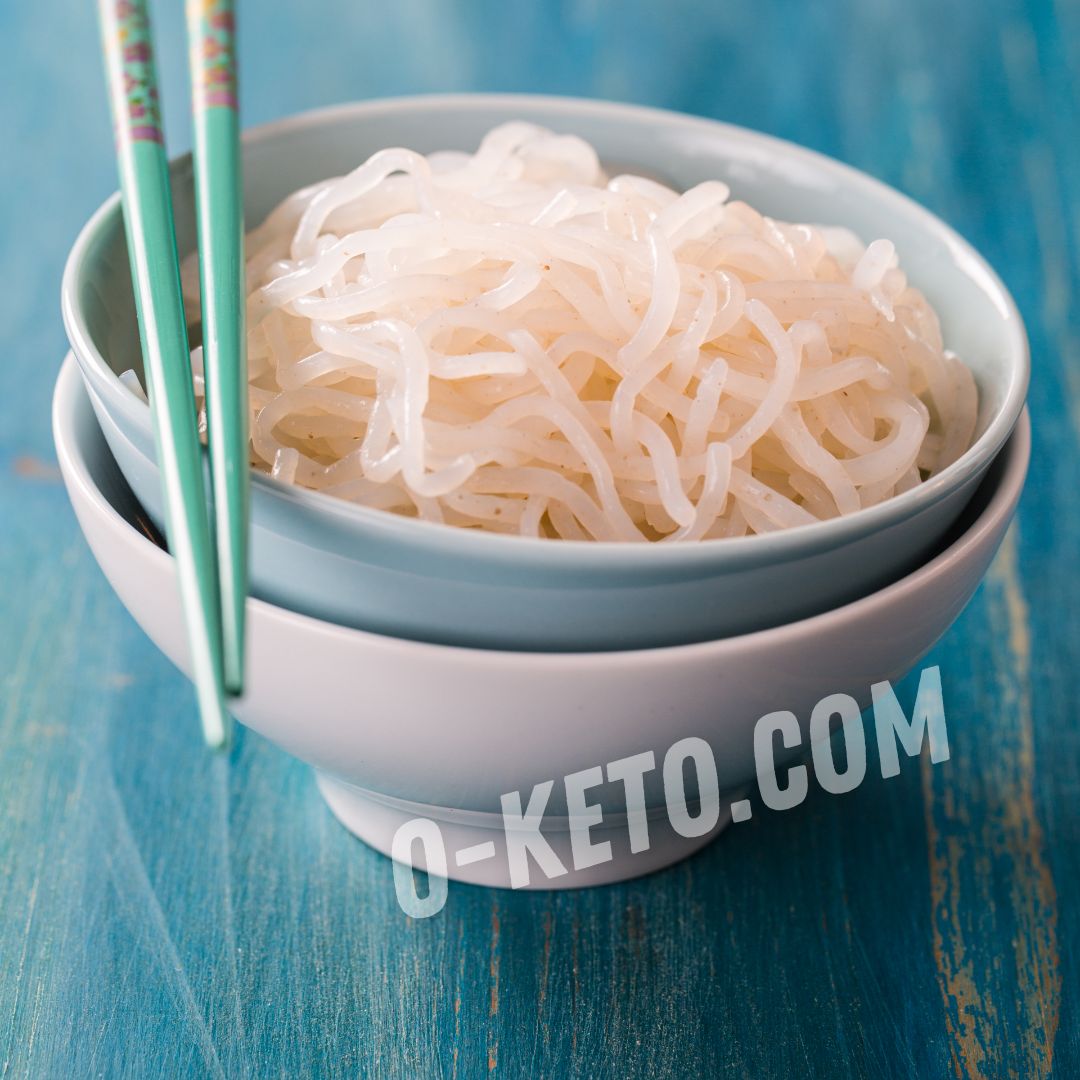

Konjac is a plant whose tuber is used to make glucomannan, a water-soluble dietary fiber. From this mass, producers make shirataki: translucent noodles, rice-shaped grains, spaghetti, fettuccine, and other forms. Prepared shirataki does not taste much like ordinary wheat pasta, but it works well as a neutral base for sauce, broth, pan-frying, and Asian-style dishes.
The product comes from East Asian cooking, where konjac has been used for a long time. In low-carb eating it became popular because it contains very few calories and digestible carbohydrates. Its role should still be understood honestly: shirataki does not replace the nutritional value of meat, fish, eggs, or vegetables. It is mainly volume, texture, and a convenient carrier for flavor when you want noodles or rice without a regular portion of starch.
Nutritional value
Most ready-to-eat shirataki is water. Per 100 g, it usually provides less than 10–15 kcal, very little protein and fat, and carbohydrates mostly in the form of fiber. Values differ between brands, so the label still matters: some products include oat fiber, soy ingredients, thickeners, or blends with ordinary flour.
Glucomannan gives shirataki its firm, slightly jelly-like texture. The product contains few vitamins and minerals, so it should not be the whole plate. To make the meal more complete, add a protein component, a fatty sauce, herbs, low-carb vegetables, spices, and salt to taste.
Fits keto and LCHF
Konjac shirataki fits keto and LCHF well when it is made without sugar, starch, or ordinary flour. Clean versions often contain only water, konjac flour or glucomannan, and an acidity regulator. In that form, they provide almost no digestible carbohydrates and can replace rice or pasta where shape and volume are important.
The main mistake is treating shirataki as a complete meal on its own. Without sauce and additions, it is almost blank in flavor and can leave the dish feeling unfinished. It works better as a base for a plate with chicken, beef, egg, shrimp, cheese, creamy sauce, mushrooms, zucchini, cabbage, spinach, or green onion.
How to prepare before cooking
Shirataki often has a specific smell straight from the package. This is normal for a product stored in liquid, but it is better to remove the smell before cooking. Drain the liquid, rinse the noodles or rice thoroughly under cold running water, and let them drain in a sieve. After that, the product can be warmed briefly in boiling water or moved straight to a dry hot pan.
Dry heating is an important step. A few minutes in a pan without oil helps evaporate excess moisture and makes the texture more pleasant. When the shirataki stops releasing much water, add oil, sauce, meat, vegetables, and spices. If this step is skipped, the finished dish often turns watery and the sauce clings less well to the noodles.
How to use
Shirataki noodles work best in dishes with a strong sauce. They take on the taste of sesame oil, sugar-free soy sauce, garlic, ginger, chili, cream, cheese, mushroom sauce, pesto, sugar-free tomato sauce, and broth. They can be used in a stir-fry, ramen without wheat noodles, chicken soup, creamy mushroom pasta, or a cold salad with cucumber and herbs.
Rice-shaped shirataki is useful for fried rice without ordinary rice, low-carb stuffed peppers, bowls, soups, and sides for curry. For better flavor, rinse and dry-heat the rice first as well, then mix it with egg, meat, vegetables, spices, and fat.
How to choose
Read the ingredient list. A basic version should contain water and konjac flour, sometimes calcium hydroxide or another acidity regulator. If the product contains sugar, starch, wheat flour, rice flour, or sweet sauces, it will no longer be as low in carbohydrates. It is useful to choose packages that separately list total carbohydrates, fiber, and drained weight.
The shape depends on the dish. Thin noodles are good for soups and Asian sauces, wide noodles for creamy and cheese-based versions, and rice for bowls, curry, and frying with egg. If you are trying shirataki for the first time, start with a small package: the texture is unusual, and not everyone likes it immediately.
Limitations
Because of the high fiber content, shirataki can cause digestive discomfort if you eat a large portion right away or do not chew well. Start with a moderate amount and drink enough fluid during the day. Children, people who have difficulty swallowing, and anyone following a special diet prescribed by a clinician should be cautious with dense jelly-like noodles.
How to store
Unopened packages should be stored according to the producer’s instructions: some brands are shelf-stable, while others require refrigeration. After opening, transfer the product to a closed container with clean water and use it within the next few days. It is better not to freeze cooked shirataki dishes, because the texture can become tougher and less pleasant after thawing.


