


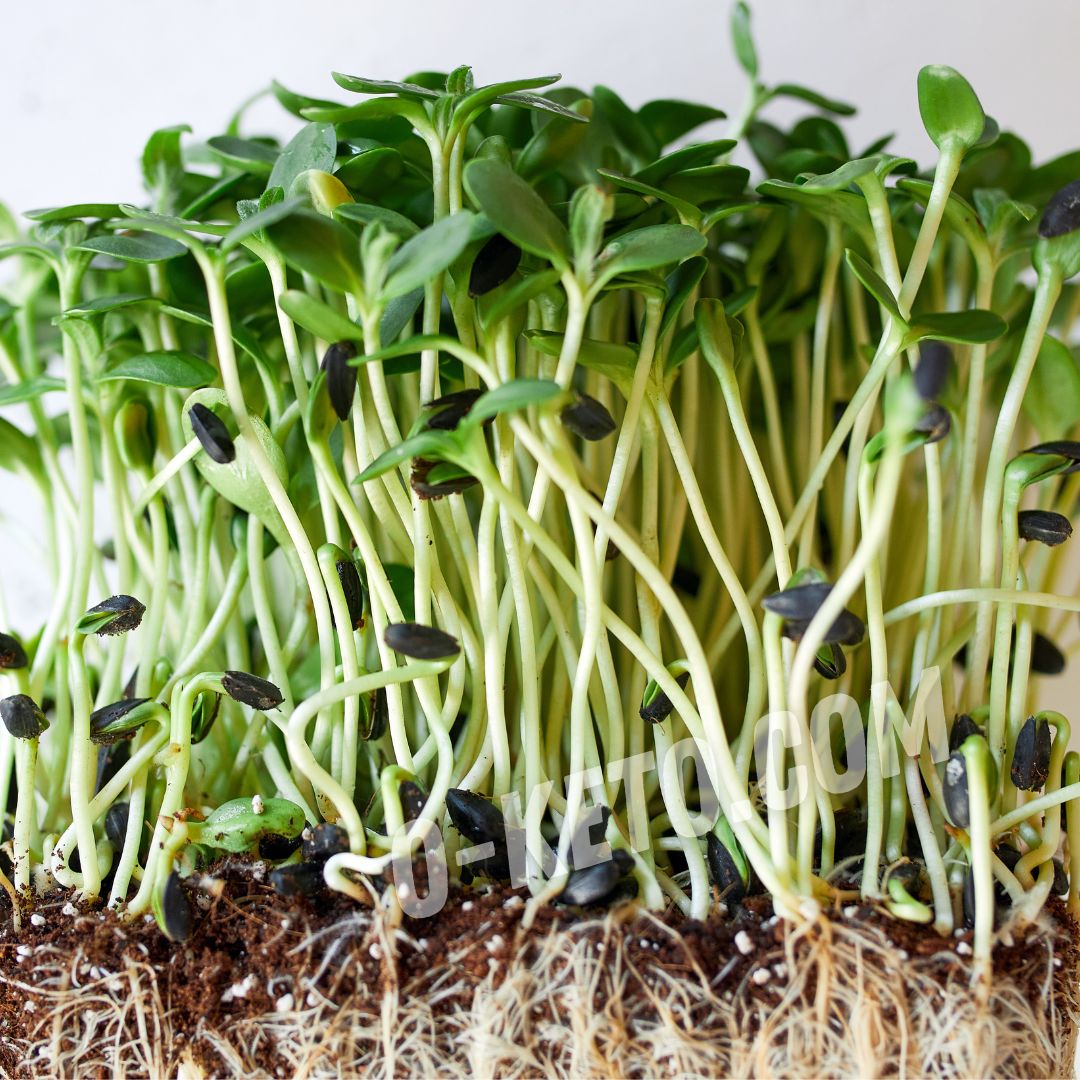

Microgreens in tablets are not fresh sprouts, but a dried, powdered, or extracted form of young plants pressed into tablets. They may contain broccoli, alfalfa, wheatgrass, barley grass, radish, cabbage, pea shoots, sunflower, or a mixture of different crops. The quality of such a product depends entirely on the raw material, drying method, and additives.
It is important not to confuse tablets with living microgreens. Fresh sprouts provide taste, texture, water, and some fiber, while a tablet is a concentrated dry form with no culinary role. It is more of a dietary supplement than a vegetable side dish and does not replace a salad.
Nutritional value
Exact values depend on the formula. One tablet usually has few calories and carbohydrates because the serving is small. But per 100 g of dry powder, numbers may look high: dried product concentrates fiber, minerals, plant pigments, and other compounds.
Microgreens from different crops may contain vitamin C, vitamin K, folates, carotenoids, chlorophyll, polyphenols, and minerals. Broccoli and other cruciferous greens are often discussed for glucosinolates and sulforaphane-related compounds. But in a tablet, the amount depends on variety, sprout age, processing, and storage.
Is it suitable for keto?
Microgreens tablets are usually compatible with keto and LCHF by carbohydrates if they contain no sugar, syrups, starch, maltodextrin, or sweet fillers. The portion is small, so the carbohydrate load is usually low. But this does not make tablets necessary for a keto diet.
For low-carb eating, fresh vegetables, greens, eggs, fish, meat, cheese, and quality fats remain the base. Tablets can be convenient during travel or when fresh greens are unavailable, but they do not add volume to the plate and do not replace a normal vegetable serving.
How to choose
The ingredient list comes first. A good product is clear: it names the plants, raw material form, dose, producer, and excipients. The more flavorings, colors, sweeteners, and vague “green complexes” there are, the harder it is to evaluate real value.
For keto, fillers are especially important. Tablets may contain rice flour, dextrose, maltodextrin, sucrose, fruit powders, or sweet flavor additions. If the dose is large or daily, such details can already matter.
It is useful when the producer lists not only attractive plant names, but also the serving weight. A phrase like “greens blend” without grams and composition is almost useless for evaluation. For sensitive people, traces of gluten, soy, nuts, and other allergens also matter.
How to take them
The instructions of the specific producer should be followed. There is no universal dose: tablets differ in size, concentration, and formula. They are usually taken with water and with food or separately, if the package says so. Adding them to hot drinks is not always sensible because some sensitive compounds may be less stable.
If the product is used for the first time, it is better to start with the minimum dose and check tolerance. Plant concentrates can sometimes cause bloating, stool changes, bitterness in the mouth, or discomfort, especially if the formula contains many cruciferous greens, herbs, or fiber.
It is better not to start several new supplements at the same time. If discomfort appears, it will be hard to understand what caused it. Tablets are easier to introduce separately, watching the reaction for several days without sharply changing the rest of the diet.
Limitations
Microgreens tablets should not be presented as a remedy for specific conditions. They are a concentrated plant product, not a treatment. Caution is needed with allergy to specific plants, pregnancy, anticoagulant use, vitamin K restrictions, and chronic situations where supplements should be discussed with a professional.
Fresh microgreens are also not the same as tablets. In a salad they give taste and texture, while a tablet gives only a dry dose. If the goal is to diversify food, fresh greens are better, with tablets kept as a backup format.
How to store them
Tablets are stored in tightly closed packaging, away from light, heat, and moisture. A humid bathroom or a kitchen area near the stove is a poor place. If tablets change smell or color, start crumbling, become damp, or develop spots, they are better not used.
What can replace them?
The closest replacement is fresh microgreens of broccoli, radish, pea, sunflower, alfalfa, or cabbage. For an ordinary diet, leafy greens, parsley, dill, cilantro, spinach, arugula, and salad mixes also work. If a convenient dry form is needed, sugar-free greens powders can be an alternative, but their ingredients should also be checked.


