


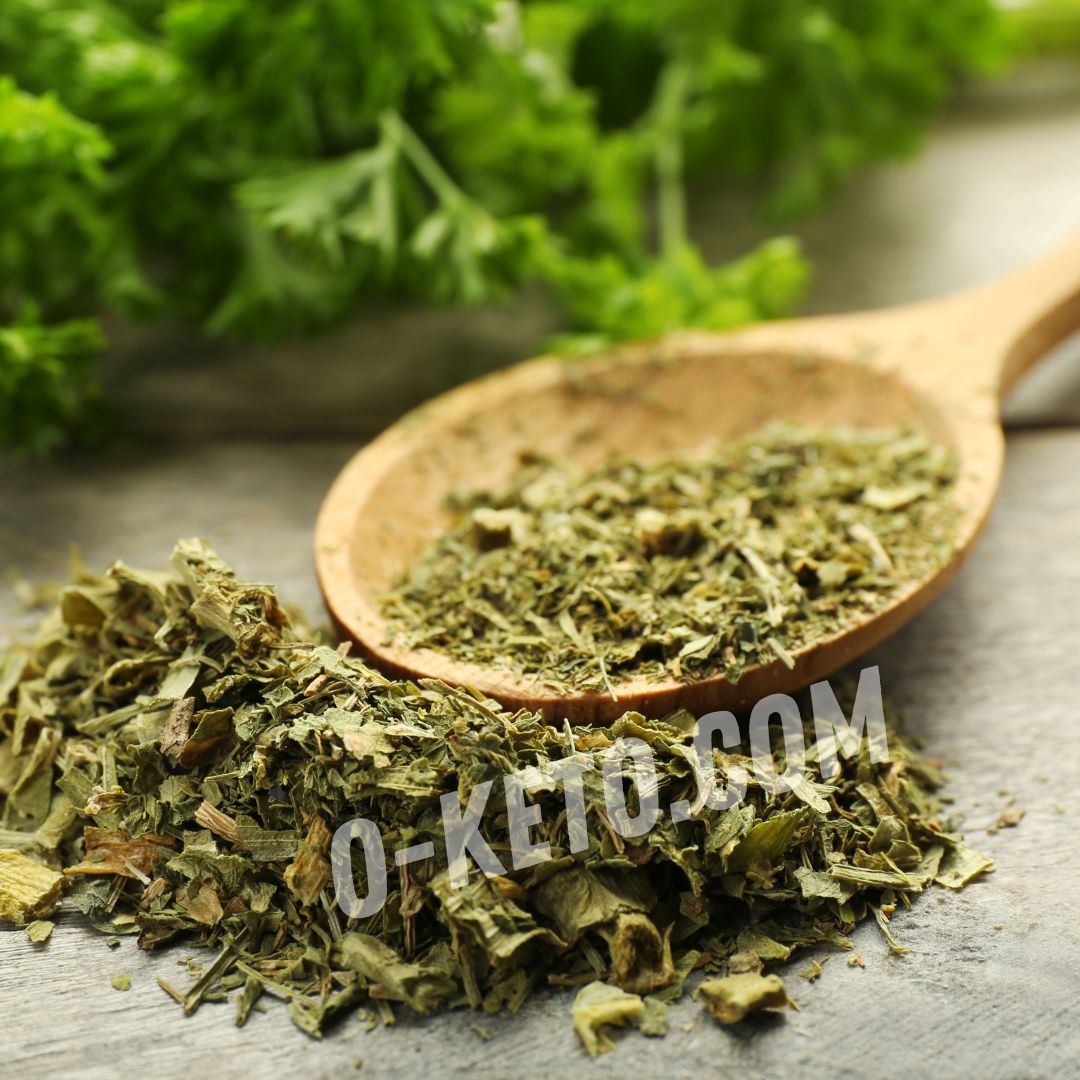

Dried parsley is parsley leaves that have been dried and chopped for storage and quick use in food. Its flavor is softer than fresh parsley: less juicy and less bright, but convenient in soups, stews, sauces, ground meat, omelets and dry spice mixes. If the product is finely ground parsley, it usually disperses faster through the dish.
Per 100 g, dried parsley is often listed at about 300 kcal, 22 g of protein, 7 g of fat and 55 g of carbohydrates. These numbers look high, but the real portion is almost always small: a teaspoon or tablespoon weighs far less than 100 g. For keto, the important point is not only composition per 100 g, but how much herb actually reaches the plate.
Nutrition
Dried parsley keeps part of the mineral and vitamin profile of the herb. It may contain vitamin K, smaller amounts of vitamin C, iron, potassium, calcium, magnesium and aromatic plant compounds. But it should not be treated as a main vitamin source: in ordinary portions it is a seasoning, not a large vegetable serving.
Carbohydrates in dried herbs are concentrated because water has been removed. This is not a problem when using a pinch in sauce, but it matters if parsley becomes the base of a green coating, a thick dry mix or is added by tablespoons to many dishes. The glycemic index of such a portion has little practical meaning because the weight is small.
Is It Keto-Friendly?
Dried parsley fits keto and LCHF as an aromatic seasoning. It makes simple protein dishes brighter without sugar, flour or sweet sauces. It works with fish, chicken, eggs, creamy sauces, unsweetened cottage cheese, mushrooms, cauliflower, zucchini and salad dressings.
The main caution is ready seasoning blends. Plain parsley is simple, but mixes for soup, potatoes, vegetables or “Italian herbs” may contain salt, sugar, starch, maltodextrin, flavor enhancers and a large amount of dried vegetables. For strict keto, it is better to buy separate dried parsley and mix spices at home.
How to Use It
Dried parsley works best in dishes with moisture: soups, stews, sauces, omelets and casseroles. This gives it time to soften and release flavor more evenly. In cold salads, it can be mixed with oil, sour cream, sugar-free mayonnaise or lemon juice and left for a few minutes before serving.
Practical options include:
- adding it to creamy sauce for fish or chicken;
- mixing with garlic, lemon and olive oil;
- using it in omelets, cheese filling or unsweetened cottage cheese;
- putting it into a meat marinade with salt and pepper;
- adding it to soup near the end so the aroma does not become flat.
How to Choose and Store
Good dried parsley smells like herbs, not dust, hay or dampness. The color may be less bright than fresh parsley, but a very brown shade often means old raw material or poor storage. The ingredient list should contain only parsley, without sugar, starch, salt or flavorings if you want to control the dish yourself.
Store it in a dry closed jar away from steam, light and the stove. Moisture quickly turns fine herbs into lumps, while heat destroys aroma. A large package makes sense only if it is used often. If the smell is almost gone, the parsley may still fit keto by carbohydrates, but it will add little flavor.
Limits and Substitutes
Dried parsley rarely causes problems in small amounts, but sensitive people may react to large amounts of herbs, essential oils or coarse dry fiber. People who need stable vitamin K intake should consider regular large portions of greens, even dried ones.
It can be replaced with fresh parsley, dill, cilantro, chives, basil, oregano, thyme or a sugar-free herb mix. If fresh flavor is needed, fresh herbs are better. If a dry pantry seasoning is needed, dried dill or parsley mixed with garlic without extra additives is closest.
Fresh and Dried Parsley in Recipes
Dried parsley does not give the same juicy flavor as fresh parsley, so it works best where the dish already contains moisture and fat. It opens up better in a hot sauce, soup or omelet than on the dry surface of cooked meat. If a bright green accent is wanted at the end, dried parsley can be combined with fresh herbs, lemon zest or a small amount of garlic.
When replacing fresh parsley with dried, do not use the same volume. Dried parsley is more concentrated by weight but weaker in fresh aroma, so start with a small pinch, let the dish stand and only then add more. This helps avoid a dry grassy aftertaste.


