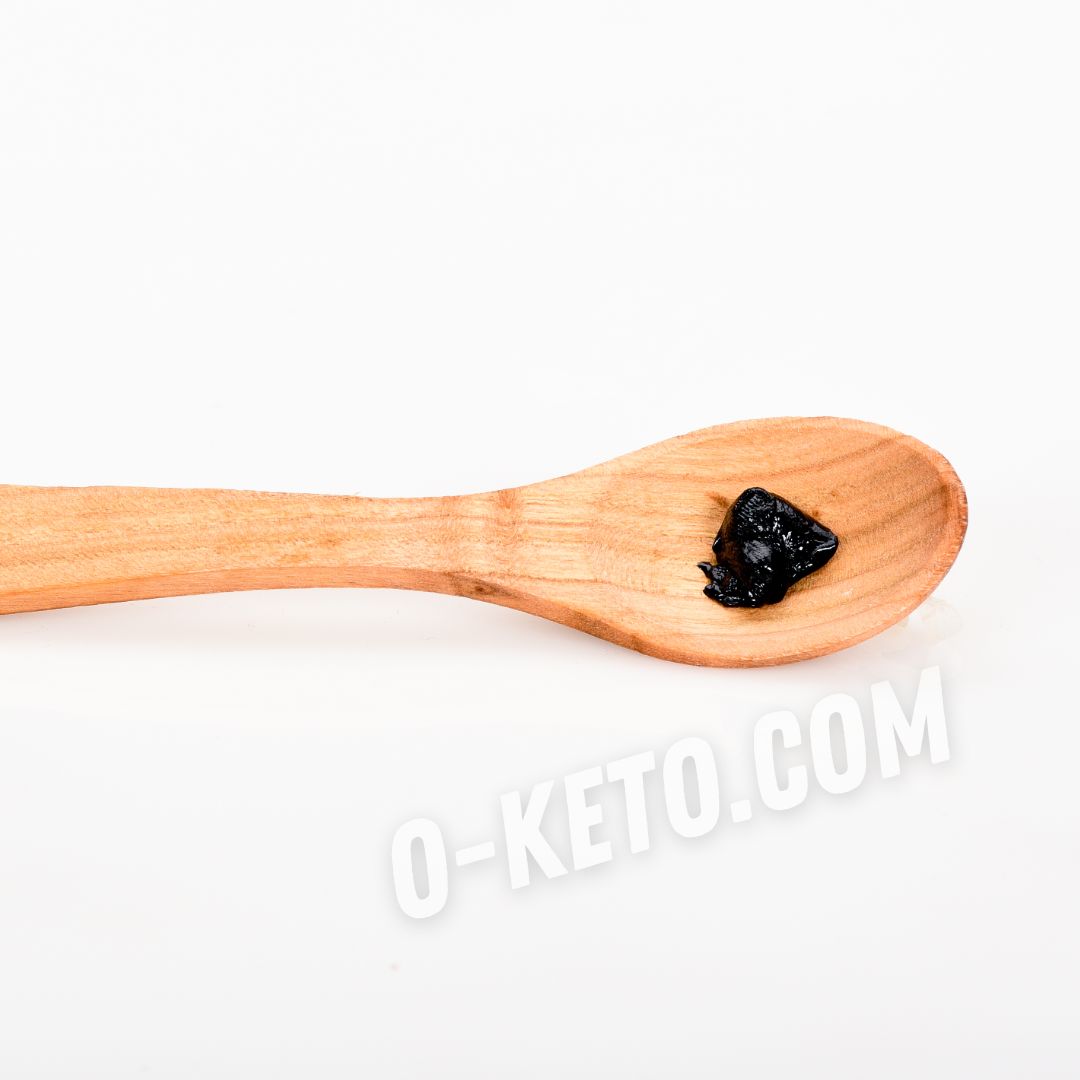

Shilajit is a dark resin-like natural substance collected in mountain regions and purified before sale. It is sold as resin, paste, powder, tablets, or capsules. The taste is usually bitter, and the smell is earthy, mineral, sometimes smoky. It is not an ordinary food product but a supplement used in very small portions.
In traditional systems of different regions, shilajit has been known for a long time, but modern buyers usually meet it as a dietary supplement. For keto and LCHF, it is not a source of fat, protein, or fiber. If used, it should be assessed by composition, purity, dosage, and compatibility with the specific diet, not as a replacement for food.
Composition and nutritional value
The nutritional value of shilajit in a normal portion is almost irrelevant: doses are measured in milligrams, not grams. Calories, protein, fat, and carbohydrates in such a portion are usually close to zero. Therefore, it does not affect a keto menu as an energy source.
Composition depends on origin and purification. Descriptions often mention humic and fulvic acids, mineral compounds, organic acids, and trace amounts of different elements. On the label, however, the important parts are not a decorative substance list but raw material testing, absence of heavy metals, clear dosage, and proper marking.
Is it suitable for keto?
Purified shilajit without sugar and syrups usually adds no meaningful carbohydrates. In that sense, it can be compatible with keto. But tablets, lozenges, and liquid forms sometimes contain sugar, honey, molasses, flavorings, or starchy fillers. Those additions need to be counted separately.
It is important not to confuse keto compatibility with necessity. Shilajit does not make a diet more low-carb and does not replace salt, magnesium, potassium, protein, fats, or ordinary food. If the menu has issues with electrolytes, calories, or protein, they are better handled with direct food and nutrient tools.
How it is used
Most often, shilajit is used according to the producer’s instructions: a very small amount of paste is dissolved in water, or capsules are taken. Increasing the dose independently is not a good idea because concentration differs between products. For resin and powder, accuracy is especially important: a “small piece” can vary greatly in weight.
Adding shilajit to hot food usually makes little sense: the taste is noticeable, and the dose is small. A separate intake is more practical if the product is chosen at all. For people practicing intermittent fasting, forms with sweeteners or syrup may not fit their eating-window rules.
How to choose
Choose a purified product from a producer that shows raw material origin, composition, dosage, and laboratory control. Testing for heavy metals and foreign impurities is especially important. Packaging should protect from moisture and light, and the instructions should be clear, without miracle-style promises.
A very low price, sharp chemical smell, sticky mass of unknown origin, absent dosage, and loud claims are poor signs. Words such as “Altai,” “Himalayan,” or “mountain” prove nothing by themselves. Documents, purity, and a stable product form matter much more.
Limitations
Shilajit is unsuitable for pregnant and breastfeeding people, children, and people with serious chronic conditions unless discussed with a specialist. Caution is needed when taking prescribed preparations, with kidney problems, iron-handling disorders, and tendency to allergic reactions. If unpleasant sensations appear, use is stopped.
Raw, unpurified material should not be used. It may contain soil impurities, heavy metals, and unknown contaminants. It is also unwise to combine several supplements with similar mineral components without understanding the total load.
How to store it
Shilajit is kept tightly closed in a dry cool place, away from sunlight and strong smells. Resin and paste are taken with a clean dry tool so water does not enter the package. Capsules and tablets are kept in their labeled container or an airtight one. If smell, color, or texture changes sharply, the product is better not used.
What can replace it?
Shilajit has no exact culinary replacement because it is not a spice, not a fat, and not a protein source. If the task is to cover minerals in the diet, clearer foods and supplements are usually easier: salt, magnesium, potassium when appropriate, mineral water, meat, fish, eggs, greens, and offal. If shilajit itself is needed, only another tested purified product of the same category is a real replacement.