


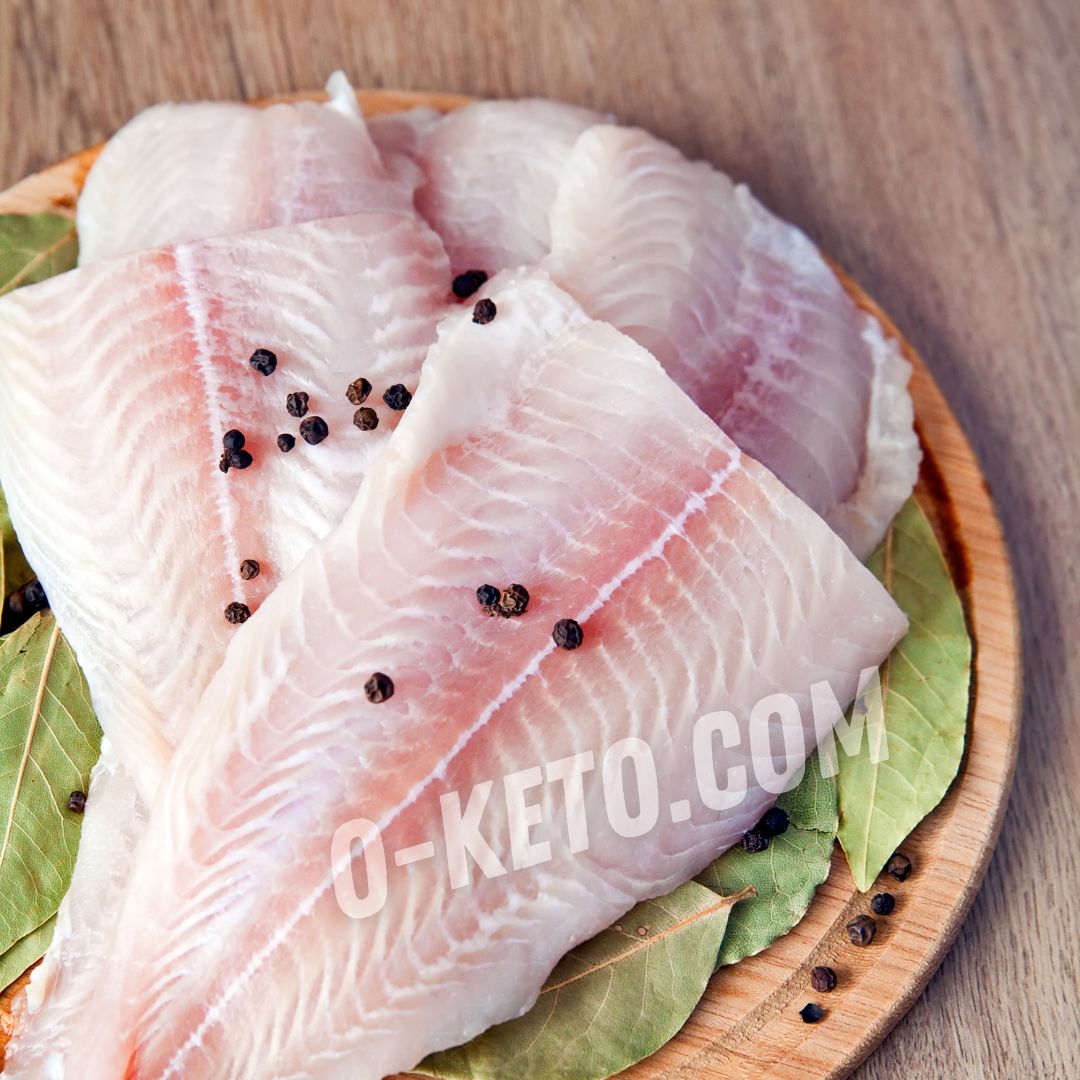

Pangasius is a freshwater fish from the pangasiid catfish family, most often sold as frozen fillets. Most supply comes from Southeast Asia, especially the Mekong basin and Vietnamese aquaculture. The fish has white or slightly pink flesh, a mild taste, almost no small bones, and fillets that cook quickly.
Its neutral flavor is what made pangasius popular in home cooking: it needs no complex cutting, works for frying, baking, stewing in sauce, and steaming. At the same time, it is not a fatty marine fish with a strong aroma, but a mild protein product whose result depends heavily on freezing quality and cooking method.
Nutrition
Nutrition tables for pangasius often show about 20-22 g of protein and around 4 g of fat per 100 g, with almost no carbohydrates and a glycemic index of 0. In practice, numbers may vary: in frozen fillets, part of the weight can be water and ice glaze, so the real portion after thawing becomes smaller.
Pangasius contains protein, B vitamins, selenium, phosphorus, and a small amount of fat. It does contain omega-3 and omega-6 fats, but usually less than fatty marine fish such as mackerel, herring, or sardines. It is therefore better viewed mainly as a mild white fish, not as the main source of fish oil.
Place in keto and LCHF
Pangasius fits keto and LCHF because plain fillet contains almost no carbohydrates. Because it is not very fatty, it is better cooked with butter, cream sauce, sugar-free pesto, cheese, avocado, olive oil, or a side of low-carb vegetables. This makes the dish more filling and keeps it from becoming a dry diet-style piece of fish.
Problems usually come not from the fish itself but from processing: breading, batter, sweet sauces, starch in marinade, and ready-made semi-finished products add carbohydrates quickly. For strict eating, buy plain fillet without breading and read the ingredient list if the fish is sold in marinade or sauce.
How to cook
Frozen fillet is best thawed slowly in the refrigerator and then dried with a paper towel. If wet fish goes straight into the pan, it will stew in liquid and fall apart easily. For frying, use medium heat, a little fat, and a short time: thin fillets usually need only a few minutes on each side.
For baking, pangasius pairs well with butter, lemon, garlic, dill, parsley, paprika, black pepper, zucchini, broccoli, cauliflower, or spinach. In cream sauce the fish becomes softer, but it should not be overheated: with long cooking, the fillet loses juice and separates into fibers.
How to choose
Good frozen fillet has an even color, without gray spots, strong odor, or a thick layer of ice. Ice glaze may be present, but it should not make up a large part of the package. If there is a lot of snow inside, the pieces are frozen into one lump, or the package is damaged, the fish may have thawed and frozen again.
It is better to choose a product with country of origin, producer, freezing date, and ingredient list. The list should show pangasius fillet; sometimes water is listed as part of the glaze. If phosphates, salt, or other additions are present, this is not automatically dangerous, but taste, texture, and cooked weight may differ.
Limits
Pangasius is often farmed, so quality depends on the specific producer and batch control. For everyday cooking, this is a reason to choose reliable brands, avoid fish with a harsh smell, and not build the whole fish rotation around one species. Alternating it with other fish and seafood keeps the menu more varied.
Like any fish, pangasius can cause individual reactions in people with fish allergy. It is also important to cook it through, especially if it has been frozen for an unknown length of time or bought loose. Raw or half-raw serving is not the best choice for this type of fillet.
Storage and substitutes
Store frozen pangasius in the freezer according to the producer’s date. After thawing, do not freeze it again: the texture will become watery and fragile. Cooked fish should be kept in the refrigerator in a closed container and eaten quickly because delicate fillet absorbs odors easily.
Pangasius can be replaced with tilapia, pollock, hake, cod, haddock, zander, or another mild white fish. If a fattier fish is needed, mackerel, salmon, herring, or sardines can be used, but the taste and structure of the dish will change. For recipes in cream sauce, hake, pollock, and cod are closest.


