


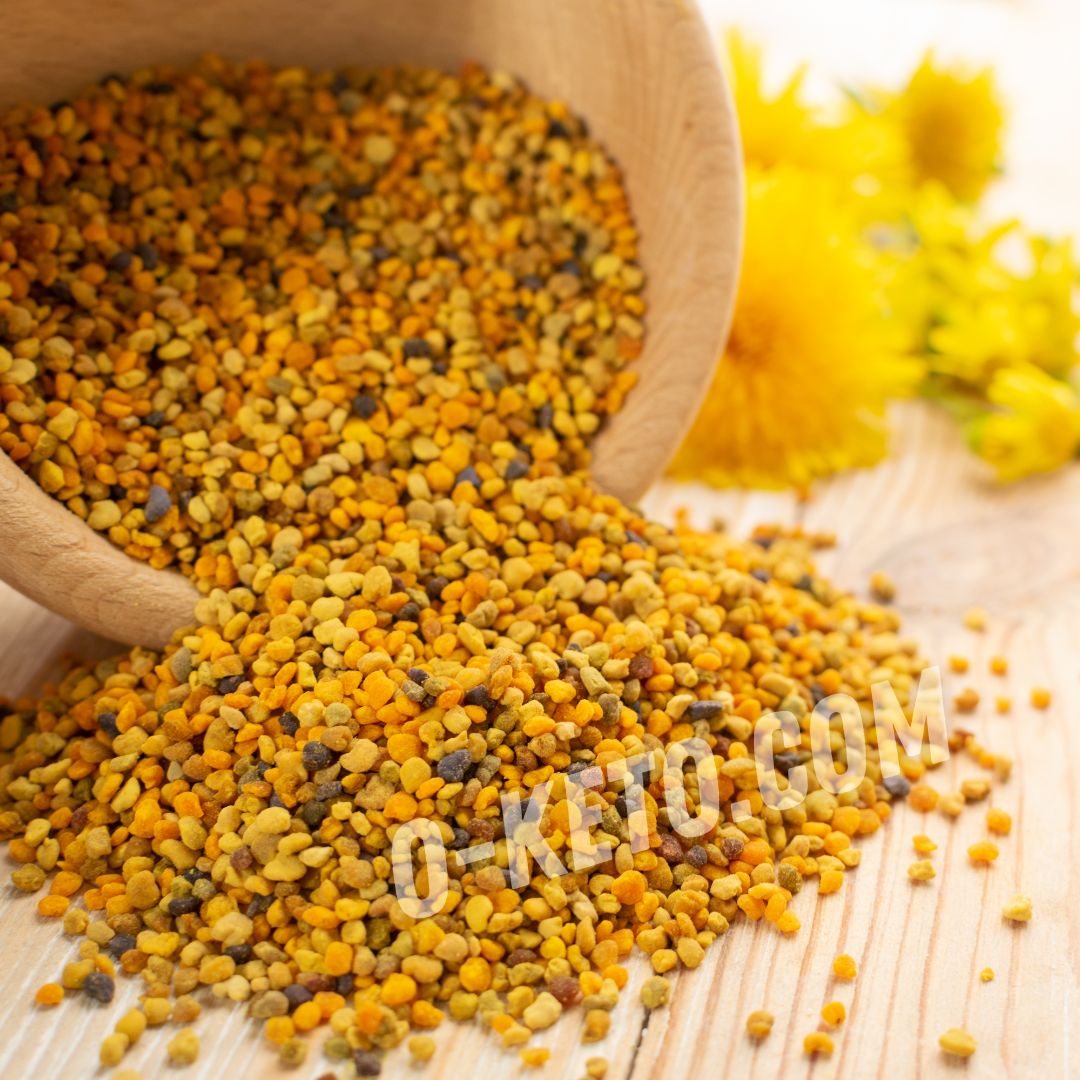

Perga, or bee bread, is a product bees make from flower pollen. Pollen is packed into honeycomb cells, mixed with honey and bee enzymes, pressed down, and fermented inside the hive. The result is a dense sweet-sour granule with floral, honey-like, and sometimes slightly bread-like flavor.
Perga is usually sold as a beekeeping product for small portions. It is not ordinary flour, not a nut, and not a sweetener, but it does contain noticeable carbohydrates. In a keto diet, it should therefore not be treated as a neutral addition: it is used only in a measured dose if there is room for it.
Nutrition
Perga composition depends on plants, season, apiary, and storage. The older text gave approximate values: about 20 g of protein, about 5 g of fat, and about 40 g of carbohydrates per 100 g. It may also contain B vitamins, vitamin C, minerals, organic acids, and plant pigments.
But 100 g of perga is not a normal serving. More often, 1/2-1 teaspoon is used, meaning only a few grams. In such a dose, the carbohydrate contribution is much smaller, but it is still present. If the diet is strict, perga is better weighed at first rather than taken as a heaped spoon.
Place in keto and LCHF
For strict keto, perga is controversial. It is natural, but that does not mean low-carb. Its carbohydrates can quickly take part of the daily limit, especially if perga is used with berries, yogurt, nuts, or other foods that also contain carbohydrates.
If perga remains in the menu, treat it as a concentrated flavor and food accent. A small portion can be added to cottage cheese, plain Greek yogurt, cream-based dessert, a nut mix, or eaten separately after a meal. It is better not to add it to hot dishes: flavor and aroma become rougher.
How to use
Perga is usually eaten without cooking. The granules can be slowly chewed, mixed with plain yogurt, cottage cheese, mascarpone, a small amount of nuts, or coconut flakes. If the taste is too sour or dense, perga can be soaked in a small amount of room-temperature water.
It should not be combined with honey if the goal is low-carb eating: the mixture becomes a sweet carbohydrate addition. Adding perga to porridge, sweet bars, and desserts with dried fruit is also a poor fit because the total load rises quickly.
How to choose
Good perga smells floral, mildly sour, and a little honey-like, without mold, mustiness, or dampness. Granules may be different colors: yellow, brown, orange, gray, or almost black. This is normal because pollen comes from different plants.
It is important to buy perga from a reliable seller who handles drying and cleanliness properly. A product that is too moist spoils faster, while an overdried one may be hard and almost aroma-free. If possible, choose a small package and check the collection or packing date.
Limits
Perga is a bee product and pollen product, so allergic reactions are possible. People who react to pollen, honey, propolis, or bee stings should be especially careful. It is better to start with a tiny amount rather than a full teaspoon.
Because of carbohydrates, perga needs separate counting on strict keto and when glucose is monitored. Children, pregnant people, those taking regular medicines, and people with chronic conditions should discuss such concentrated foods with a clinician, especially if pollen reactions have occurred before.
Storage and substitutes
Store perga in a dry cool place or in the refrigerator, in a tightly closed jar. Moisture spoils it quickly: sour odor, mold, or stickiness may appear. Use a dry clean spoon and do not keep the jar open near steam.
There is no exact culinary substitute. If a floral taste is needed, a tiny amount of bee pollen can be used if tolerated. If the goal is simply to add something to yogurt or cottage cheese in a keto menu, nuts, chia seeds, coconut flakes, cinnamon, or a small amount of berries are usually easier.


