


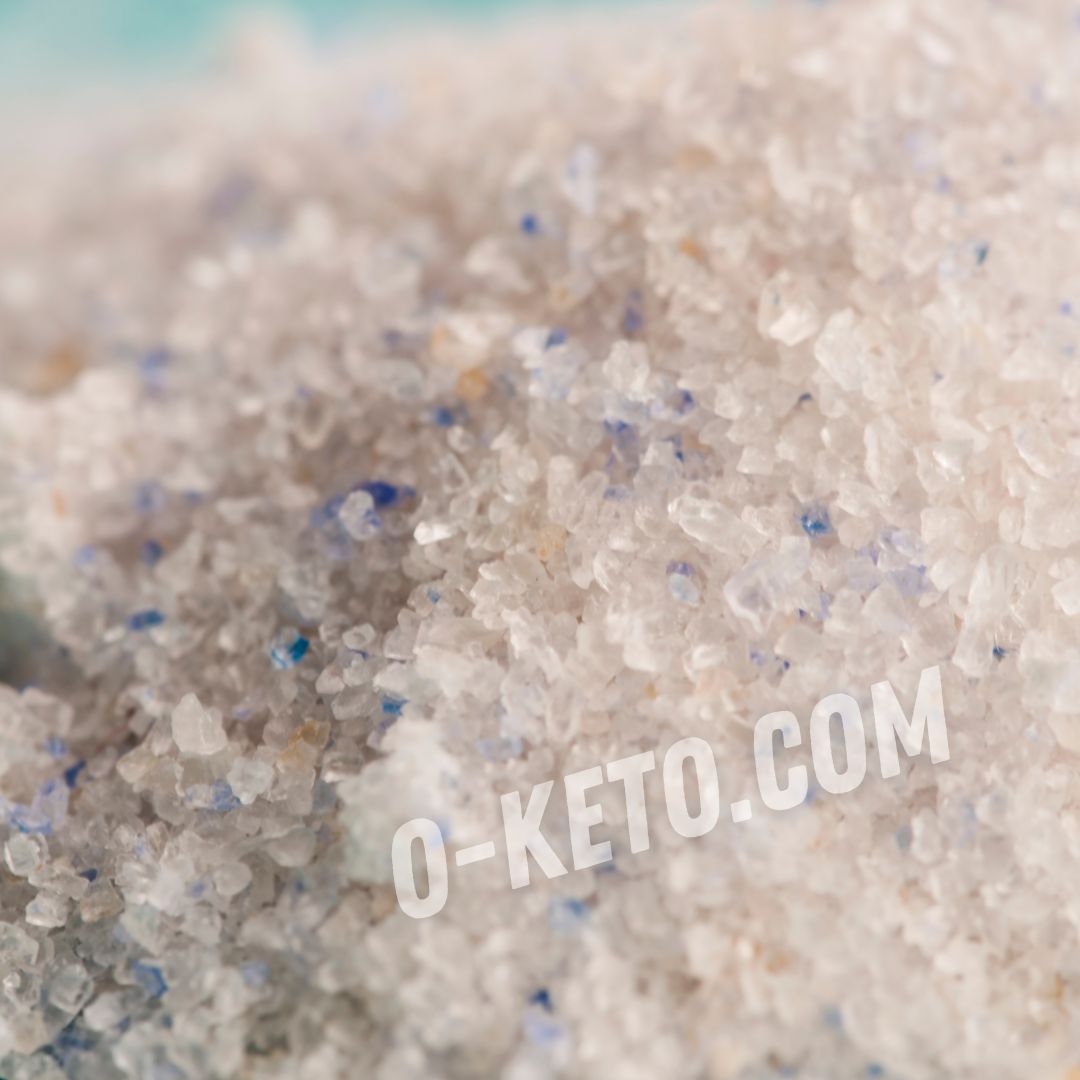

Persian blue salt is a rare rock salt from Iran with white-gray crystals and blue or blue-violet inclusions. The color comes not from dye but from crystal structure and potassium-containing minerals that refract light. Its taste is salty, sometimes with a slight mineral bitterness.
For keto, this salt provides no carbohydrates and does not affect the carbohydrate load of a dish. But its role is still the role of salt: it enhances flavor, adds sodium, and is used in small amounts. It is not a mineral supplement and not a way to improve the diet by itself.
Nutritional value
Persian blue salt contains no protein, fat, or carbohydrates. Calories are zero, and there is no carbohydrate load. The main component is sodium chloride, as in regular salt; mineral impurities are present only in very small amounts.
It is sometimes described as a source of potassium, magnesium, calcium, or iron. In practice, the serving of salt is so small that it should not be counted as a meaningful mineral source. If potassium or magnesium is needed, it is better to choose foods or supplements with clear doses, not decorative salt.
Is it suitable for keto?
Persian blue salt fits keto because it contains no carbohydrates. In low-carb eating, salt can matter for taste, especially when bread, ready-made sauces, and processed foods are reduced. But that does not mean expensive salt should be eaten in larger amounts.
Sodium intake should remain reasonable. With hypertension, kidney conditions, edema, some medications, or prescribed salt restriction, medical advice matters more than the rarity or “natural” image of the product.
How to use
Persian blue salt is best used as a finishing salt, not dissolved in cooking water. This preserves the appearance, crunch, and purpose of the expensive product. Add it at the end, on the plate or immediately before serving.
Practical options include:
- a few crystals on steak, fish, or eggs;
- finishing salt for avocado and salads;
- serving with unsweetened butter;
- an addition to cheese, cucumber, or radish;
- a decorative accent on keto appetizers;
- large crystals served near a meat or cheese plate.
What to pair it with
Blue salt is most noticeable on simple foods where the crystals do not dissolve completely: eggs, avocado, cucumber, radish, butter, cheese, steak, white fish, scallops, and roasted vegetables without sweet sauces. On wet dishes, it dissolves quickly, so the visual effect does not last long.
If a dish already contains capers, olives, salted fish, bacon, cheese, or soy sauce, blue salt should be added very carefully. Its job is a final accent, not general oversalting.
For precision, add it in pinches after cooking. Large crystals do not salt as evenly as fine salt, so parts of a dish can become too salty by accident. On steak, eggs, or avocado this can be interesting; in soup or marinade it is inconvenient.
How to choose
The crystals should be dry, without foreign smell, dirt, or wet clumps. The blue tone is usually uneven, and that is normal. Very bright artificial blue color, flavorings, and unclear blends are better avoided.
If the salt is bought as a gift or finishing accent, a small package is better. In daily cooking it is used slowly, and in a humid kitchen large crystals may clump. A small amount is easier to keep dry until it is finished.
How to store
Store the salt in a dry closed jar. Moisture makes crystals sticky and worsens grinding. For finishing, keep large crystals and crush them in a grinder or mortar just before use.
Do not keep the jar near the stove, sink, or open spices with a strong aroma. Salt can remain dry for years, but odors and moisture can spoil the impression of an expensive product.
Limits and mistakes
The main mistake is expecting a special physiological effect from blue salt. Its color and rarity make it interesting in cooking, but they do not change the basic role of sodium. If the diet contains too much salt, Persian blue salt creates the same problems as regular salt.
Another mistake is using expensive salt in marinades, brines, and soups where its taste and color disappear. Regular salt is better for boiling, while blue salt is better kept for serving. A third mistake is confusing colored salts: black volcanic, pink Himalayan, smoked, and Persian blue salts give different appearance and sometimes aroma, but all are primarily sodium sources.
Substitutes
Functionally, any good salt can replace it: sea salt, rock salt, Himalayan salt, fleur de sel, or regular table salt. If the goal is visual accent, coarse sea salt, Hawaiian black salt, or salt flakes can work, but nutritionally the differences are minimal.


