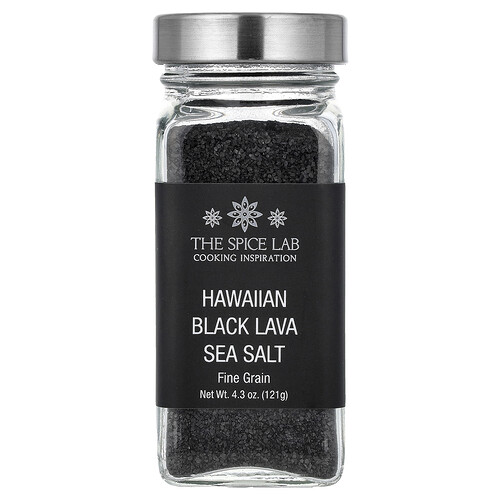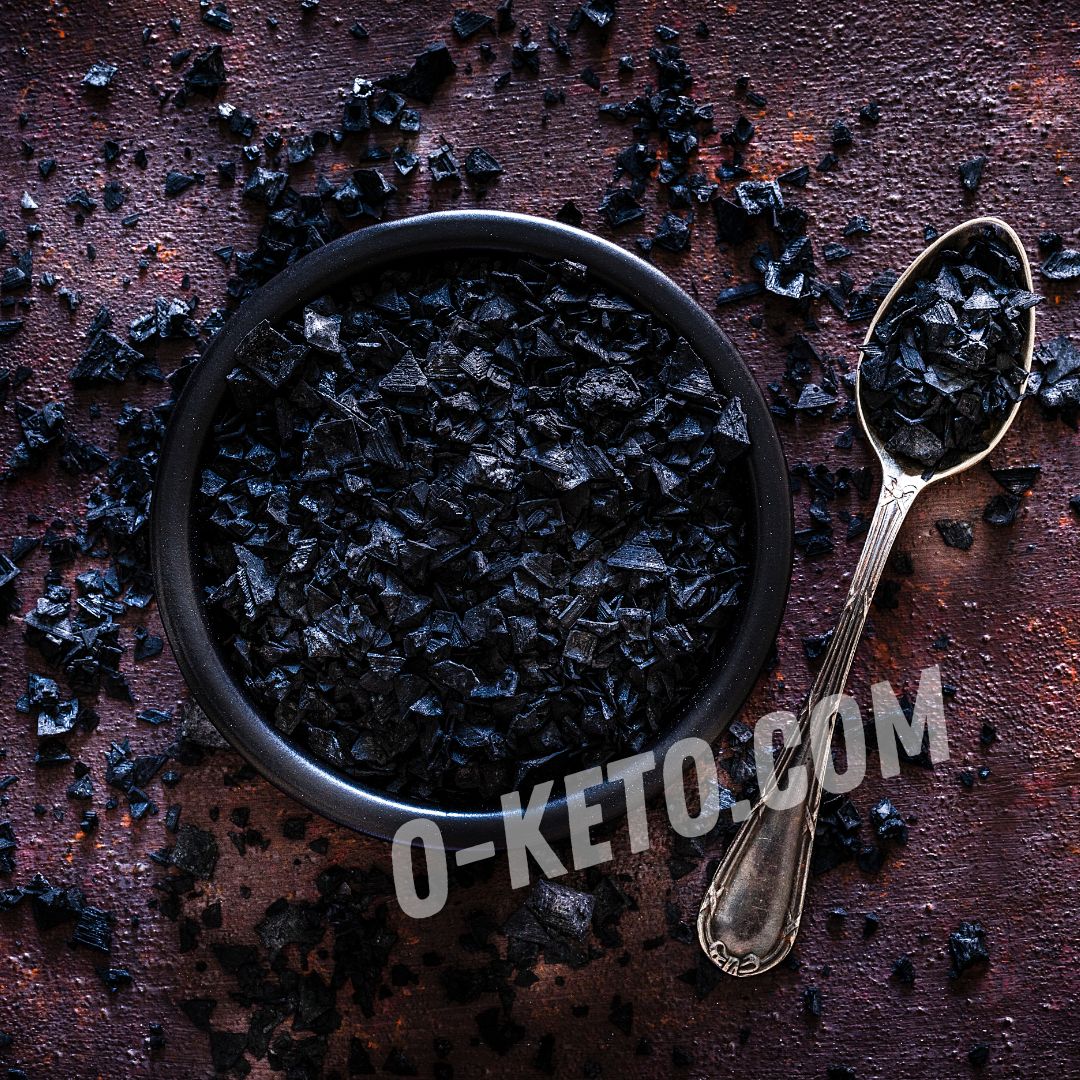

Hawaiian black salt is a coarse sea salt with a dark color that usually comes from added activated charcoal. It is often marketed with Hawaiian and volcanic imagery, but it should be understood first as a finishing salt, not a product with special effects.
Its taste is salty, sometimes with a light earthy or smoky note, while the main culinary effect is visual contrast. Black crystals look good on eggs, fish, avocado, butter and pale sauces. For keto, it fits by carbohydrates, but it still requires normal moderation with sodium.
Nutrition
Hawaiian black salt contains no protein, fat or carbohydrates. Calories are practically zero, and glycemic index and glycemic load are absent. The main component is sodium chloride, as in regular salt.
It may contain trace amounts of minerals such as iron, magnesium and calcium, but the serving of salt is too small to be a meaningful micronutrient source. Activated charcoal mainly provides the color; this salt should not be used for special effects.
Is It Keto-Friendly?
Yes, Hawaiian black salt fits keto because it adds no carbohydrates. It can be useful as a flavor accent, especially when a low-carb dish tastes flat: a little salt enhances fat, protein and vegetables.
But “keto-friendly” does not mean unlimited. With personal sodium limits, edema or a prescribed eating plan, the amount of salt should be controlled just like ordinary table salt.
How to Use It
Black salt is best added at the end, on the plate. In boiling water, soup or long braising, its color and texture disappear, and the expensive product becomes a plain sodium source. Large crystals can be lightly crushed before serving.
Practical options include:
- finishing salt for eggs, omelets and avocado;
- an accent on white fish, scallops or shrimp;
- serving with unsweetened butter;
- an addition to cucumber, radish and fresh cheese;
- decoration for keto appetizers without sweet sauces.
How to Choose and Store
The ingredient list should contain salt and, for this black version, activated charcoal. Flavorings, sugar, flavor enhancers and unclear blends are better avoided. The color may stain moist foods and fingers, which is normal for charcoal salt.
Store it in a dry closed jar. Moisture makes crystals sticky and speeds clumping. Do not keep it next to strongly aromatic spices because large crystals can absorb odors.
Limits and Mistakes
The main mistake is expecting a special effect from black salt. Activated charcoal in specific doses and a pinch of salt on food are different things. In normal culinary amounts, this salt acts as seasoning, not as a sorbent.
Another mistake is replacing all mineral sources with it. If a keto diet lacks magnesium, potassium or calcium, that is addressed with food, mineral water or clearly dosed supplements, not decorative salt. Functionally, it can be replaced with sea salt, fleur de sel, Persian blue salt or regular rock salt.
Portion and Best Use
A normal serving is a few crystals or a small pinch. That is enough to highlight flavor and appearance. If salt is needed for boiling meat, broth or vegetables, regular salt is better because black salt gives no clear advantage there.
It works best by contrast: pale fish, white cheese, eggs, cauliflower or cream sauce. On dark meat or in thick stew, the visual point almost disappears, so the expensive product is better saved for finishing.
If the recipe already contains salty cheese, bacon, olives, anchovies or soy sauce, add black salt with extra care. Its visible crystals may make the dish look under-salted even when sodium is already high. Taste first, then adjust.
Grind and Serving
Large crystals give not only saltiness but also crunch. If even seasoning is needed, the salt can be lightly crushed in a mortar; if appearance matters, a few whole crystals are better left on top. On moist foods, charcoal salt can leave dark spots, so add it carefully and after the sauce.
This salt is not necessary for everyday cooking. Its point is finishing: eggs, white fish, avocado, butter, soft cheese, cauliflower or cucumber. In a pot of broth or stew, it loses the visual effect and tastes like ordinary salt.