


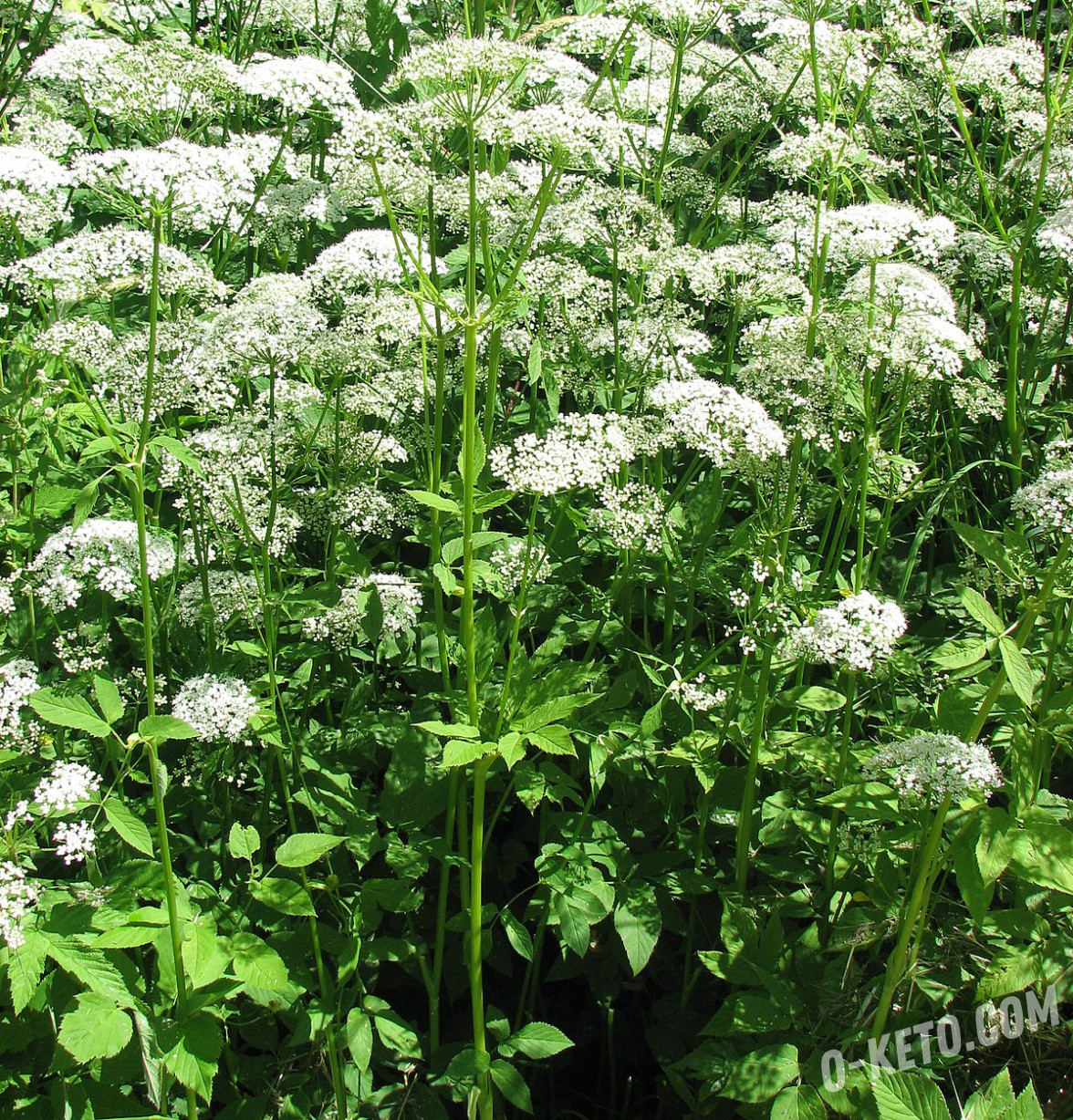

Ground elder, also known as snyt in Eastern European cooking, is an edible wild green with tender young leaves and a grassy flavor. It is known as an early spring green: young shoots are added to salads, soups, omelets, fillings, sauces and stewed vegetables. The flavor is mild, somewhat like parsley, carrot tops and celery leaves, but without sharp spiciness.
It should not be confused with sorrel, spinach or asparagus: it is a different plant. Older descriptions often give it broad wellness claims, but for everyday eating it is better to stay practical. Ground elder is interesting as a seasonal green with fiber, aroma and a modest carbohydrate amount, not as a special-purpose remedy.
Nutrition
The earlier values for 100 g of raw ground elder were about 43 kcal, 3.1 g of protein, 0.7 g of fat and 7.3 g of carbohydrates, including about 2.1 g of fiber. Net carbohydrates are therefore around 5.2 g. For a leafy green this is not zero, but a normal serving is often smaller than 100 g.
The glycemic load in a culinary portion is usually low, especially when ground elder is used as part of a salad, soup or filling. For keto, the whole recipe matters: the green itself is fairly light, but pies, grains, potatoes, sweet sauces and flour around it change the picture completely.
Is It Keto-Friendly?
Ground elder can fit keto and LCHF as a green in a moderate portion. It adds volume, grassy flavor and fiber, especially in spring when fresh leaves are welcome. It pairs well with eggs, butter, sour cream, cottage cheese, soft cheese, fish, chicken, mushrooms and cucumbers.
Young leaves and thin stalks are best. Older leaves are tougher, their aroma is stronger and their texture is worse for salads. In hot dishes, ground elder loses volume quickly, so it can look like a small amount, but carbohydrates and fiber should still be counted if a lot of greens are used.
How to Use It
Young ground elder can be eaten raw if it was gathered in a clean place and washed well. For a milder taste, the leaves can be briefly blanched, added to an omelet or warmed with butter. In soups and stews, add it near the end so it does not turn into a tasteless green mass.
Practical options include:
- salad with ground elder, cucumber, egg and sour cream;
- omelet or frittata with young greens;
- green sauce with sour cream, garlic and lemon;
- an addition to soup without potatoes or grains;
- filling with cottage cheese or soft cheese for low-carb baking.
How to Gather and Choose
Ground elder should be gathered only where the plant is correctly identified and the place is not polluted by roads, chemicals or animal walking areas. Some plants in the carrot family have dangerous lookalikes, so if there is any doubt, do not gather wild greens yourself. For food, choose young light-green leaves without spots, mold or tough stems.
Bought or gathered greens should smell fresh, without mustiness or fermentation. If the leaves are wilted, slimy or dark at the base, the flavor will be worse. Before eating, wash ground elder thoroughly and dry it for salads so the dressing does not become watery.
What to Pair With It
Ground elder pairs well with eggs, sour cream, butter, cottage cheese, goat cheese, cucumber, radish, mushrooms, chicken, white fish, lemon juice, garlic, dill, parsley and green onion. Too many strong spices can cover its mild flavor.
If a brighter salad is needed, add acidity and fat: lemon juice, vinegar, sour cream, olive oil or a little sugar-free mustard. This makes the greens taste fresher and removes the need for a sweet dressing.
Storage and Substitutes
Fresh ground elder should be kept in the refrigerator, wrapped in a slightly damp towel or placed in a covered container. It is better not to wash it in advance unless necessary, because extra moisture speeds spoilage. For longer storage, the greens can be blanched and frozen, but after thawing they are better for soups and omelets.
Ground elder can be replaced with young parsley, spinach, chard, celery leaves, blanched nettle or a mixture of green onion and dill. The best substitute depends on the dish: tender leaves for salad, firmer greens for soup and aroma for sauce.
Wild Green Safety
With ground elder, confident identification is especially important. Young leaves should match the plant by shape, smell and growing place; a random similar green is not suitable for kitchen experiments. If there is no gathering experience, it is safer to buy greens from a reliable gatherer or replace them with familiar leaves. In a low-carb dish, ground elder works best without flour or grains: with eggs, cheese, sour cream, fish, mushrooms and butter.


