


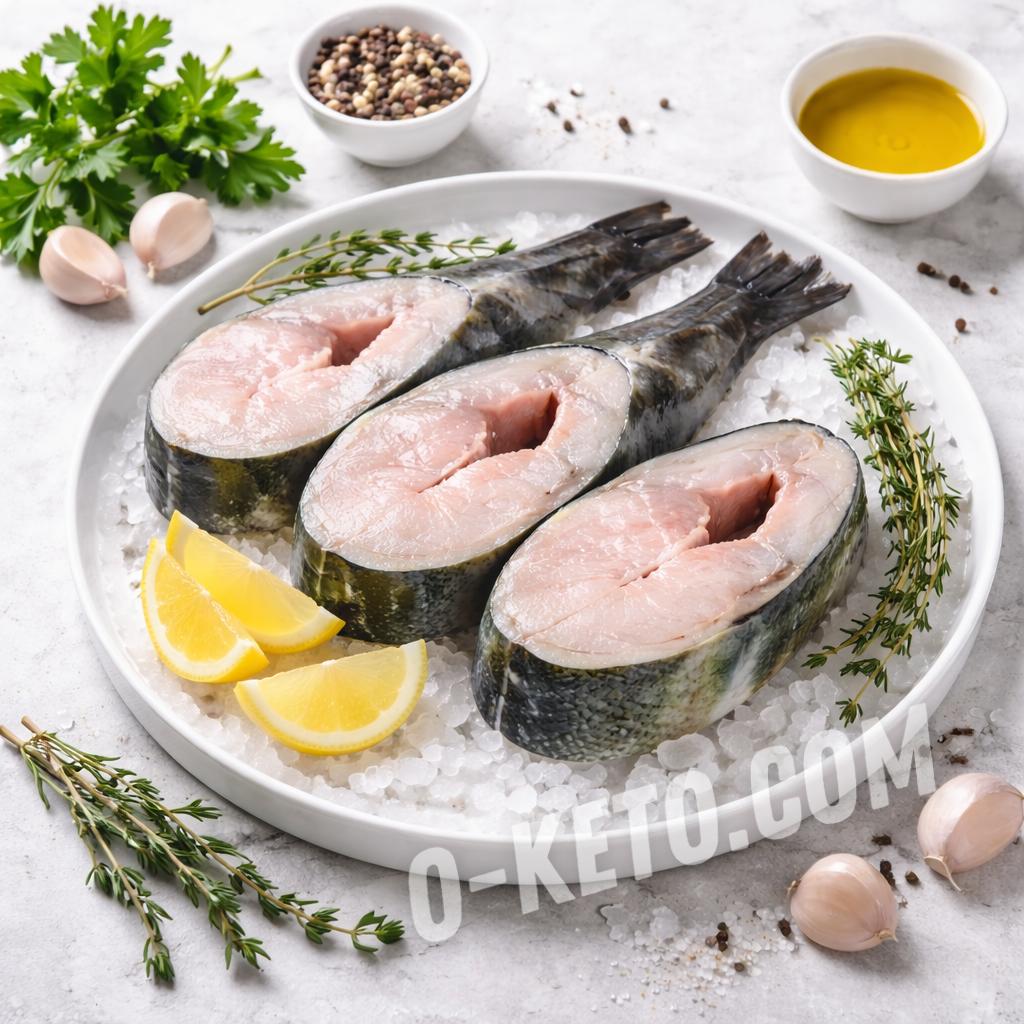

Catfish is a large freshwater fish with firm flesh, mild flavor, and characteristic whiskers. It lives in rivers, lakes, and reservoirs with slow currents, stays close to the bottom, and can grow very large. Shops may sell steaks, fillets, whole fish, smoked catfish, and sometimes mince for fish patties.
Catfish differs from dry white fish: it is richer, juicier, and holds its shape well. Large fish can taste stronger, sometimes with a light river note, so freshness, cleaning, and suitable spices matter. Catfish works in a pan, on the grill, in the oven, in fish soup, stewed in sauce, and in fish patties.
Nutrition
A 100 g portion of raw catfish usually has about 120-150 kcal, roughly 17-19 g of protein, 5-7 g of fat, and 0 g of carbohydrates. Exact values depend on species, size, part of the fish, and whether it is farmed or wild. Fillet differs from fatty belly, and smoked fish differs from fresh fish in salt and density.
For low-carb eating, catfish is convenient because it contains no starch or sugar. The dish changes completely if the fish is coated in flour, served with potatoes, or covered with sweet sauce. Cooked with butter, lemon, herbs, and vegetables, it remains a low-carb meal.
Is it suitable for keto?
Catfish fits keto and LCHF in simple forms: steak, fillet, soup, grill, or stew without breading and sweet marinades. It provides protein and a moderate amount of fat, so a portion is filling without grains or bread. If more fat is needed, add butter, ghee, olive oil, sour cream sauce, or a yolk-based sauce.
A usual serving is around 150-250 g of cooked fish, depending on the rest of the meal. Smoked and salted catfish are eaten in smaller amounts because of salt. Keto fish patties are better bound with egg, cheese, psyllium, or a small amount of almond flour instead of bread and crumbs.
How to cook
Before cooking, rinse catfish, pat it dry, and remove the skin if needed. If there is a river aroma, a short marinade with lemon, salt, garlic, black pepper, bay leaf, or dill helps. Do not keep the fish in acid for too long, because the flesh can become loose.
Steaks cook well in a pan or on the grill. Dry them first, place them on a hot surface, and do not move them too often so a crust can form. Fillets are convenient in cream sauce or tomato sauce without sugar. For soup, add pieces near the end so the flesh does not fall apart. In patties, catfish is juicy, but the mince should not be mixed for too long.
How to choose
Fresh catfish should smell like clean fish, not mud, ammonia, or old fat. The flesh should be elastic, without sticky surface or gray coating. In steaks, check the cut and the fat: yellow stains and rancid smell point to poor storage. Frozen fish should not have a thick snow layer or a lot of ice inside the package.
Large catfish can have a stronger taste, so medium-size fillets are often better for delicate dishes. Smoked catfish should be firm, without a wet sticky surface or harsh smoke. If buying ready products, read the ingredient list: starch, sugar, soy protein, and breading may be present.
What to pair it with
Catfish pairs well with lemon, dill, parsley, garlic, black pepper, paprika, bay leaf, butter, sour cream, and cream. Good vegetables include cauliflower, broccoli, zucchini, spinach, cucumber, salad leaves, mushrooms, and stewed cabbage. For a brighter taste, add capers, mustard without sugar, or a little pickled cucumber in the sauce.
To replace a potato side, use cauliflower mash, egg salad, stewed mushrooms, or pan-cooked zucchini. The fish is firm enough for rich sauces, but sweet glazes are usually unnecessary.
Limits and storage
Catfish is not suitable for people with fish allergy. Large fish can contain bones, so serve it carefully to children and to anyone who finds fish bones difficult. During pregnancy, fully cooked fish is preferable, while raw or questionably chilled fish should be avoided.
Chilled catfish is best cooked on the day of purchase or the next day. Cooked fish should be stored in a closed container and eaten within 1-2 days. Strong reheating makes the flesh drier, so warm it gently with sauce or a little oil. Frozen fish should be thawed once, in the refrigerator.
Substitutes
The closest substitutes are carp, silver carp, pike-perch, burbot, sea bass, or another firm-fleshed fish. For a more neutral flavor, cod or hake can work, but they are drier. For a fattier fish, use mackerel or salmon, though the flavor will be very different.


