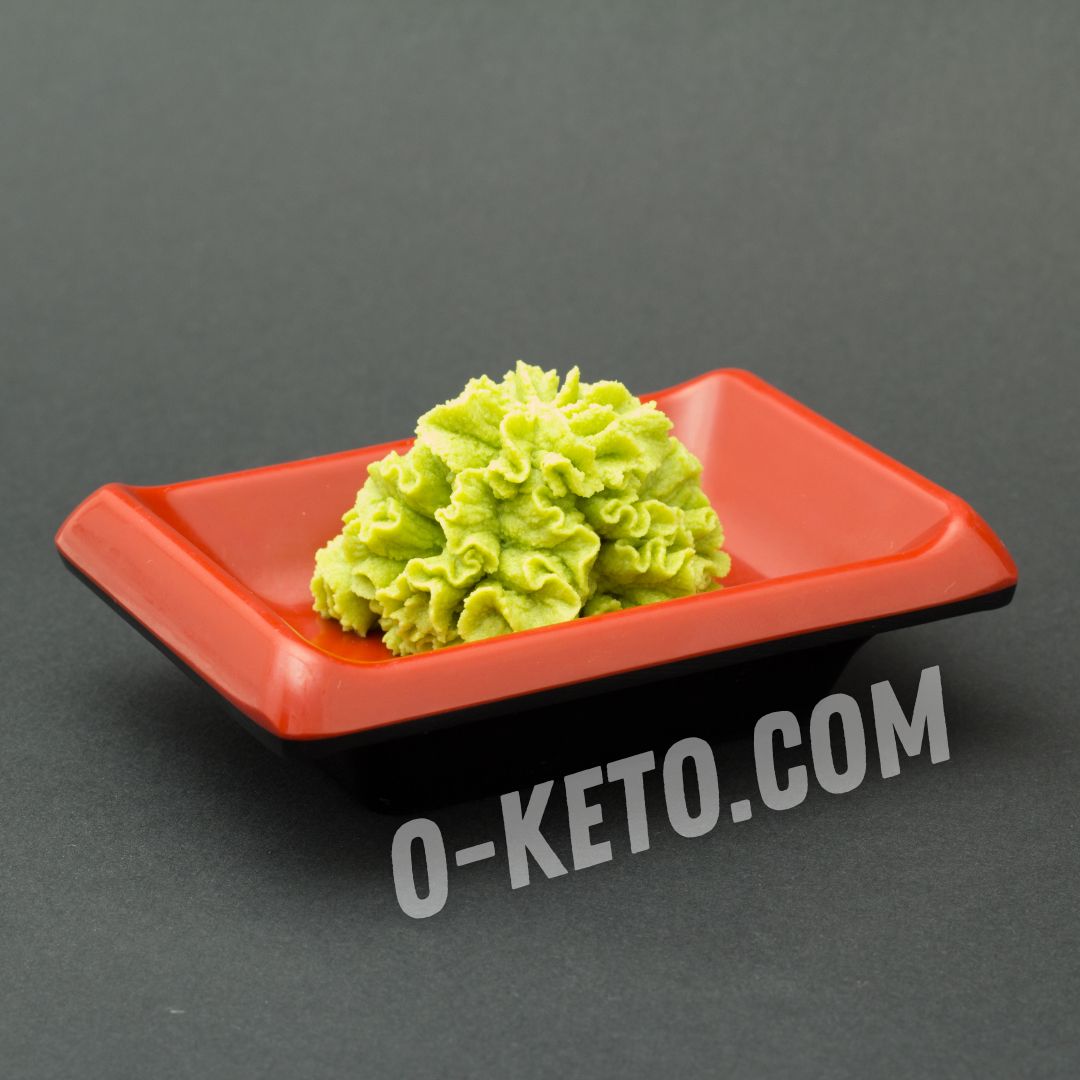

Wasabi is a sharp Japanese condiment with volatile, nasal heat. Real wasabi is made from the stem of Eutrema japonicum, also known as Wasabia japonica. It is grated fresh and served with fish, sushi, sashimi, noodles, meat, mayonnaise-based sauces, and marinades. The heat appears quickly and fades quickly, so it is different from the long burn of chili.
Most green pastes sold as wasabi are not made from the real Japanese plant, but from horseradish, mustard, coloring, and sometimes a small amount of wasabi. This is not necessarily bad for taste: such paste is cheaper, more stable, and familiar to many people. But for choosing a product and counting carbohydrates, it is important to understand what is actually in the tube.
Fresh real wasabi is valued for a more delicate aroma: grassy, pungent, slightly sweet, and less rough than ordinary horseradish. At the same time, it is expensive, stores poorly, and quickly loses brightness after grating. That is why pastes, powders, and ready sauces are more common in home kitchens.
Nutritional value
Fresh wasabi root or stem contains water, fiber, a little protein, minerals, and carbohydrates, but the real portion is very small. Usually it is a quarter teaspoon, half a teaspoon, or a thin layer in sauce. In that amount, the carbohydrate load is usually low.
Ready pastes vary much more. The ingredient list may include horseradish, mustard powder, vegetable oil, starch, rice flour, sugar, sorbitol, colorings, flavorings, and stabilizers. These additions, not the sharp taste itself, are what most often change the carbohydrates and quality of the product.
Is it suitable for keto?
For keto and LCHF, wasabi can work as a small condiment. A little amount makes fish, eggs, beef, cucumbers, avocado, mayonnaise, or cream sauce brighter without sweet glaze or breading. The ingredient list of the ready paste matters as much as the heat.
If a paste contains sugar or starch, that does not mean it is impossible to use, but the portion should be counted. For strict keto, it is better to choose a short ingredient list or a sugar-free powder mixed with water just before serving. Sushi with rice, sweet sauce, and plenty of marinade does not become low-carb only because wasabi is present.
How to use it
Wasabi is served in a small amount with fish, seafood, roast beef, steak, eggs, cucumber, radish, avocado, and salad leaves. It can be mixed into sugar-free mayonnaise, cream cheese, sugar-free soy sauce, lemon juice, sesame oil, or keto salad dressing.
Strong heat makes the aroma flat, so wasabi is better added at the end or served separately. In marinades it works as a sharp note, but after frying it almost disappears. For a sauce, start with a small amount: the heat rises quickly, and fixing an overly sharp sauce is harder than adding a little more.
How to choose
If real wasabi is needed, look for Eutrema japonicum or Wasabia japonica in the ingredient list and check the percentage. The words wasabi flavor or horseradish usually mean a horseradish-based paste. That is fine if you are buying a sharp sauce, but it should not be treated as freshly grated Japanese wasabi.
In powder, check sugar, starch, rice flour, and colorings. In a tube, pay attention to oil, syrups, thickeners, and preservatives. Color does not prove quality: very bright green often comes from coloring. Good paste smells sharp and clean, without fermentation, mold, or stale oil.
What to pair it with
Wasabi pairs especially well with fatty fish, tuna, salmon, mackerel, shrimp, crab, beef, duck, eggs, cucumber, avocado, daikon, salad leaves, and sesame. For a keto sauce, it is convenient to mix it with sugar-free mayonnaise, sour cream, cream cheese, or olive oil.
Limitations
Wasabi may irritate mucous membranes, intensify heartburn, and cause discomfort with a sensitive stomach. Large portions are unnecessary: the condiment is meant as an accent, not as a separate food. After handling fresh root or concentrated paste, avoid touching eyes and nose.
How to store it
Fresh wasabi is kept in the refrigerator, wrapped so it does not dry out, and grated right before serving. Grating it in advance quickly reduces the aroma. Tube paste is stored according to instructions, tightly closed. Powder is kept dry, away from moisture. If paste changes smell, darkens, swells, or becomes watery, it is better not used.
What can replace it?
The closest replacement is sugar-free horseradish, especially when a sharp aroma rising into the nose is needed. Sugar-free hot mustard, daikon with mustard, black radish, or a little ginger can also work. Chili gives a different heat: it burns longer and does not repeat the character of wasabi.