


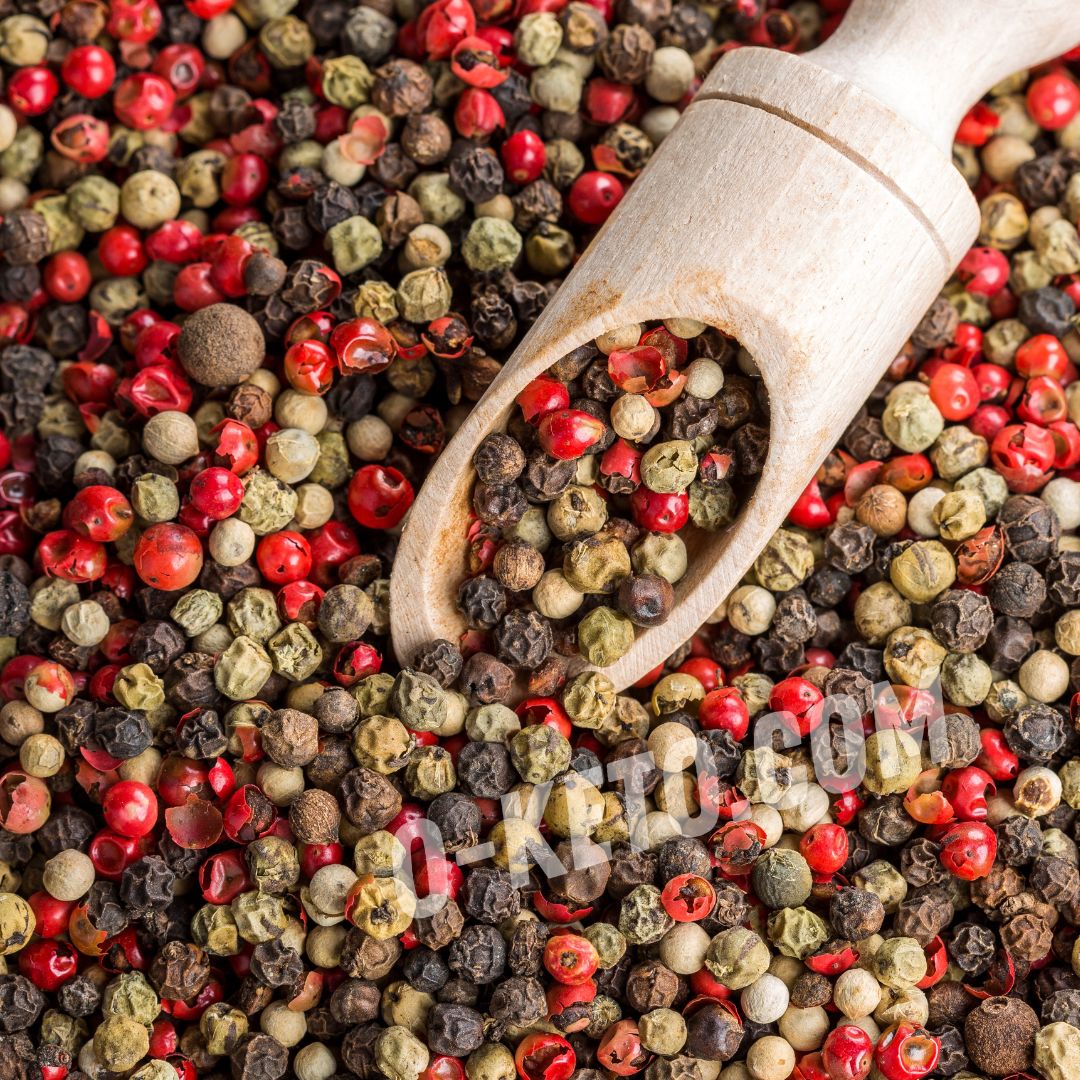

A pepper mix is a spice blend made from different types of pepper: most often black, white, green and pink peppercorns, sometimes with allspice or chili added. Such a mix gives a broader aroma than black pepper alone: black brings sharpness, white gives a warm earthy note, green adds freshness, and pink gives a softer sweet-spicy accent.
Typical reference values for pepper mix may include a glycemic index around 15, about 250 kcal per 100 g, around 10 g of protein, 5 g of fat and 60 g of carbohydrates. These numbers need context: almost nobody eats 100 g of pepper, while a normal serving is a pinch or a few turns of a grinder. In a real dish, a pepper mix matters mainly as a spice, not as a source of calories.
Nutrition
Pepper contains essential oils, piperine and other spicy compounds, plus small amounts of minerals and plant substances. Because the serving is tiny, its contribution to vitamins and minerals is usually small. It is better to describe not broad nutrition claims, but the flavor function: the mix makes food brighter without sugar, flour or sweet sauces.
This is especially useful on keto. When the diet is built around meat, fish, eggs, cheeses, vegetables and natural fats, flavor often comes from salt, acid, herbs and spices. A pepper mix adds heat and aroma without requiring carbohydrate-rich additions such as breading, ketchup or sweet marinades.
Is It Keto-Friendly?
A pure pepper mix fits keto well if it contains only pepper and no sugar, starch, dried vegetable powders high in carbohydrates, flavor enhancers or ready seasoning with salt and additives. In pure form, the serving is so small that its carbohydrates are usually negligible.
Problems begin not with pepper itself, but with ready blends “for meat,” “for grill” or “for chicken,” where sugar, dextrose, maltodextrin, crumbs, starch and flavorings may be mixed with pepper. A simple blend of peppercorns or ground pepper with a clear ingredient list is better.
How to Use It
Freshly ground pepper mix opens better than pre-ground spice. It can be added at the end of cooking to keep aroma bright, or earlier if a softer, warmer flavor is needed. Steak, eggs, fish, soup, salad and cheese sauce all need different amounts.
Practical options include:
- fresh grinding over steak, patties or roasted poultry;
- a pinch in omelet, fried eggs or poached eggs;
- an addition to cream sauce, cheese sauce or herb butter;
- flavor for cauliflower, broccoli, mushrooms and zucchini;
- a final accent in salad with olive oil and lemon.
How to Choose and Store
The best option is whole peppercorns in a grinder or a separate mix for a grinder. Whole pepper loses essential oils more slowly, so the aroma is brighter and cleaner. A ground mix is convenient, but fades quickly, especially if the package is open and stored near the stove.
The ingredient list should name the pepper types without unnecessary fillers. Pink pepper sometimes comes from another plant and may be an allergen for people reacting to cashews or pistachios, so sensitive people may choose a blend without it. Store spices dry, tightly closed and away from light.
Limits and Substitutes
A pepper mix can irritate the mucosa when used heavily, especially with gastritis, reflux or sensitivity to hot spices. In such cases, use less, choose milder white pepper or rely on herbs and acidic accents instead of heat.
Choose a substitute according to the task. For heat, black pepper, chili or cayenne work. For aroma, use allspice, coriander, cumin, thyme, rosemary or smoked paprika. For a fresh finish, lemon zest, herbs, garlic oil or a little sugar-free mustard can work well.
Portion and Common Mistakes
The main mistake is adding pepper mix like salt without tasting the dish. Pepper opens gradually, especially in hot fat and sauces. It is better to start with a small amount, let the dish stand for a minute and only then increase the flavor.
The second mistake is buying a large jar of ground mix. After a few months, the aroma becomes flat, and more powder is needed to get the old sharpness. For a kitchen where spices are used often, a grinder with whole peppercorns is more convenient. For rare use, a small package is better, so it can be finished before the aroma fades.
When to Grind
For meat and fish, a pepper mix is often best ground near the end, when the dish is almost ready: the aroma stays fresher. In stews and sauces, some pepper can be added earlier for a softer and deeper flavor. If the blend contains pink pepper, avoid long heating because its delicate sweet-spicy note fades quickly.


