


Anthocyanins
Blue, purple, and red plant pigments from berries and vegetables matter less as antioxidant pills and more as part of a diet connected with vascular function, inflammation, microbiota, and polyphenol variety.
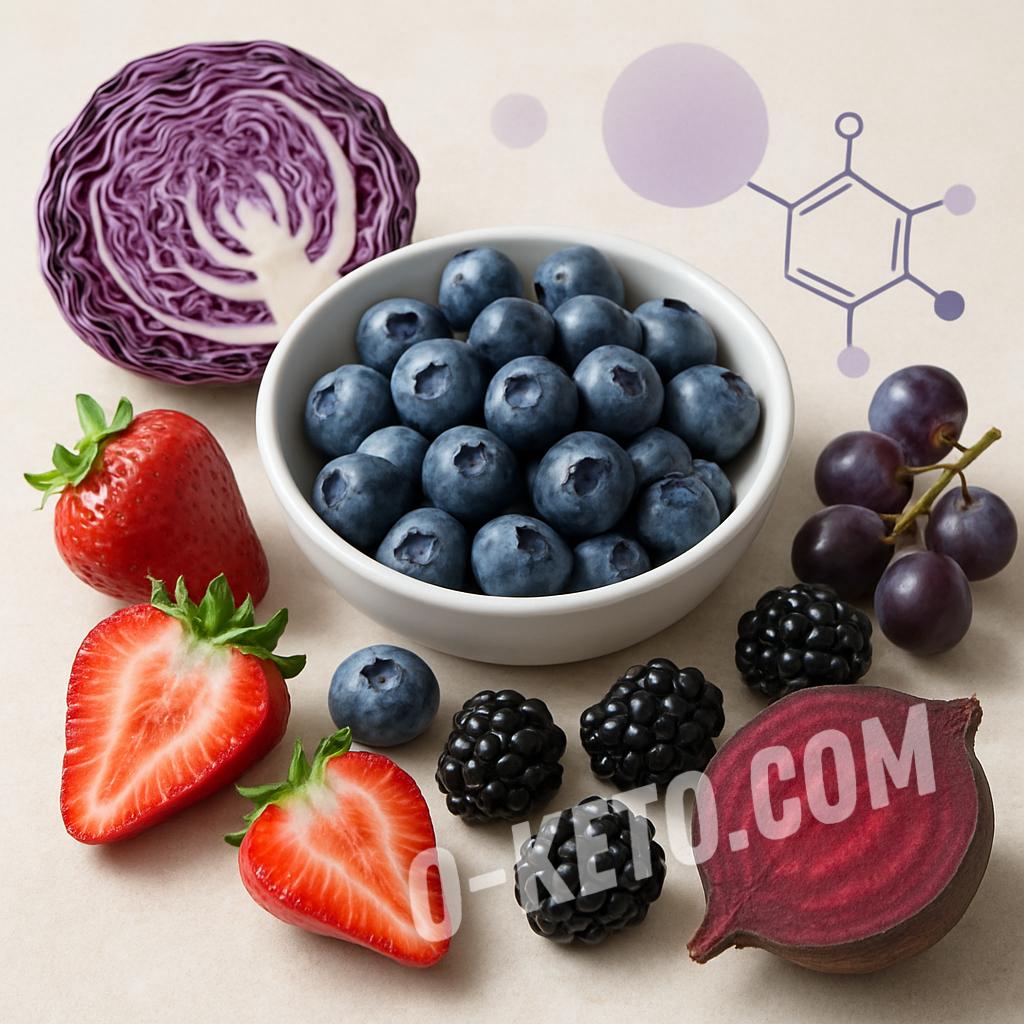
Anthocyanins are water-soluble plant pigments that give berries, fruits, and vegetables red, purple, blue, and almost black colors. They are abundant in blueberries, bilberries, blackberries, blackcurrants, cherries, red cabbage, eggplant skin, dark grapes, and some purple potato varieties. The final color depends on the molecule, acidity, and neighboring compounds, which is why the same anthocyanin-rich food can shift color in sauces, fermentation, or heating.
Interest in anthocyanins is not only about color. These compounds belong to the polyphenol family, and anthocyanin-rich foods are studied in relation to vascular function, blood pressure, inflammation, oxidative stress, insulin sensitivity, and the gut microbiota. They should not be treated as simple antioxidant pills, though. In real food, they come together with fiber, organic acids, vitamin C, other polyphenols, minerals, and the overall quality of the diet.
Food sources
The most useful low-carbohydrate sources are blueberries, bilberries, blackberries, raspberries, blackcurrants, unsweetened cranberries, red cabbage, eggplant with the skin, and small portions of cherries or dark berries. Grapes, sweet cherries, juices, and jams may also contain anthocyanins, but for keto and LCHF they often deliver too much sugar per serving. The source matters. A whole berry and a sweet berry syrup are very different foods even if the pigment family is similar.
Cooking changes anthocyanins. Long boiling, alkaline conditions, and light exposure can reduce color intensity and degrade some compounds. Acidic conditions often make red-purple colors more stable. This is why berries work well in cold sauces, unsweetened yogurt, gelatin desserts, meat sauces, salads, and fermented cabbage. The goal is not to preserve every molecule perfectly. The practical goal is to eat colorful plant foods regularly without turning them into a sugar load.
Vessels, glucose, and microbiota
Research on anthocyanins usually looks at risk markers rather than instant rejuvenation. Studies examine blood pressure, endothelial function, blood lipids, inflammatory markers, body weight, and carbohydrate metabolism. Anthocyanin-rich berries have evidence suggesting potential cardiovascular benefits, but results depend on the food, dose, duration, baseline health, and what the berries replace in the diet. Blueberries replacing cookies are not the same as a sweet berry dessert added on top of excess calories.
Part of the effect of anthocyanins involves the gut microbiota. Polyphenols are not simply absorbed unchanged. Gut bacteria transform them into metabolites that may influence vessels, inflammation, and metabolism in different ways. This helps explain why people respond differently to the same berry. Microbiota composition, medications, habitual diet, and digestive tolerance all matter. Anthocyanins do not replace fiber and fermented foods, but they fit well into a diet that already includes vegetables, herbs, spices, and varied polyphenol sources.
It is useful to judge not only the berry name but also the product form. Freeze-dried powders, concentrates, juices, and jams may provide anthocyanins, but they can also deliver concentrated sugar or become too easy to overconsume. Whole berries take longer to eat, provide more satiety, and are easier to fit into a daily carbohydrate limit.
Keto portions and practical use
On keto, anthocyanins are easiest to get from modest portions of berries and non-sweet vegetables. A small handful of blueberries or blackberries in yogurt, unsweetened cranberry sauce with duck, red cabbage in a salad, or eggplant with olive oil can add color and flavor without bringing back sugar. These foods help a low-carb diet avoid becoming only meat, butter, and cheese. They add acidity, freshness, astringency, and visual contrast.
Anthocyanin supplements and berry extracts may be useful in selected cases, but they are not the same as berries. A capsule lacks the full food matrix, chewing, volume, fiber, and culinary context. Dose, standardization, and extract composition also vary widely. Pregnancy, anticoagulant use, kidney disease, complex diabetes therapy, and strong digestive reactions are reasons to be cautious with concentrated extracts. For most people, the more useful first step is regular inclusion of dark berries and purple vegetables in actual meals.
If you have any questions about the term "Anthocyanins", you can ask them to AI. Please note, a low-cost OpenAI model is used. It may answer questions about disease treatment with errors!


 1 / 4
1 / 4

 1 / 4
1 / 4


 1 / 4
1 / 4 1 / 4
1 / 4