


E104 (quinoline yellow)
Quinoline Yellow is a synthetic yellow-green colorant that makes drinks, sweets, and processed foods look brighter. In low-carb eating, E104 matters not as a carbohydrate, but as a marker of ultra-processed products and possible sensitivity in some people.
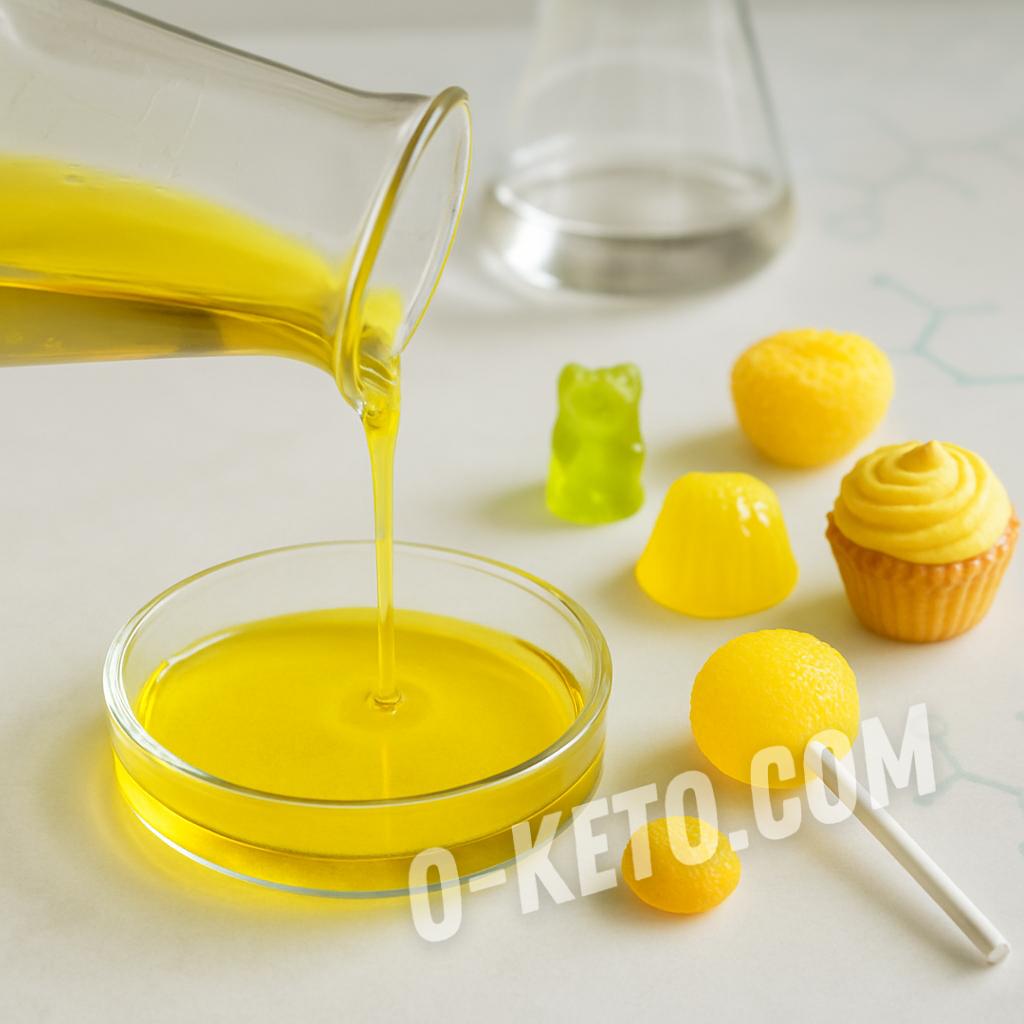
E104 is Quinoline Yellow, a synthetic food colorant with yellow, greenish-yellow, or lemon-like shades. It is used where a product needs a bright and stable color: drinks, sweets, desserts, sauces, snacks, chewing products, and some supplements. Unlike curcumins or riboflavin, E104 is not linked to a familiar food spice or vitamin. It is a technological colorant used for appearance, not for nutritional value.
What this colorant is
Quinoline Yellow belongs to synthetic colorants. It helps create a bright yellow color that buyers may associate with lemon, lime, pineapple, energy drinks, vitamin products, or fruit flavor. This connection is often visual: the color creates a taste expectation before the ingredient list is read. E104 is therefore common in products where the natural ingredient is present only in small amounts or is replaced by flavoring. The colorant does not make the product fruity, vitamin-rich, or healthy; it only supports the intended visual impression.
Where E104 is found
E104 may appear in carbonated drinks, powdered mixes, hard candies, jellies, gummies, desserts, sauces, snacks, baking decorations, chewing forms, and some tablet products. It can also be combined with other colors to create more complex shades, such as green or bright citrus tones. When a product is strongly colored, sweet, acidic, and flavored, E104 is not the only thing to evaluate. Sugar, syrups, maltodextrin, starch, polyols, acids, caffeine, benzoates, and the overall frequency of use all matter.
Relevance for keto and LCHF
Quinoline Yellow is not sugar, starch, or a source of net carbohydrates. It should not directly raise glucose. However, products that use it often fit low-carb goals poorly because of the formula around the colorant. A sweet drink with E104, even if sugar-free, may maintain the habit of intense flavor. Candies or jellies may contain syrups and starch. A sauce may be colored while also containing sugar or thickeners. E104 does not make a product non-keto by itself, but it often helps identify a product that deserves stricter checking.
Sensitivity and labeling
E104 is one of the colors for which the European Union requires, in relevant uses, a warning about possible adverse effects on activity and attention in children. This does not prove that every child or adult reacts to the colorant, but it makes it more relevant for families who already notice reactions to bright drinks, sweets, or additive mixtures. Complaints can be nonspecific: itching, hives, irritation, headache, digestive discomfort, or behavioral changes in sensitive children. In such cases, a food diary tracking specific colorants is more useful than a general fear of all E numbers.
How to evaluate a product
If E104 appears in an occasional product that contains no sugar and is well tolerated, the colorant itself may not be the main issue. If it appears daily in drinks, lozenges, sweets, snacks, or vitamin-like mixes, evaluation should be stricter. It is useful to ask why the product needs such a bright color: to suggest fruit content, hide the lack of natural ingredients, make a child-oriented product more attractive, or support a dessert image. The more a product is sold through color and aroma, the more important it is to read the full ingredient list.
Practical conclusion
E104 is not a carbohydrate problem in the direct sense, but a marker of industrial color design. For keto and LCHF, it is usually neutral for glucose when the rest of the formula fits. In real foods, however, it often appears alongside sweet taste, acids, flavorings, and processed texture. A person without sensitivity does not necessarily need to avoid trace amounts at all costs. But if the goal is stable appetite, less sweet taste, and simpler food, brightly colored products with Quinoline Yellow should rarely become an everyday foundation of the diet.
In practice, Quinoline Yellow is rarely part of simple home-style food. It appears where a manufacturer wants to keep a bright colour after heating, storage or dilution. The question around E104 is therefore usually not how many carbohydrates the colourant contains, but why the product needs that visual boost at all. If it sits next to sugar, syrups, starch, flavours and acids, the problem is usually the whole formula rather than one index.
If you have any questions about the term "E104 (quinoline yellow)", you can ask them to AI. Please note, a low-cost OpenAI model is used. It may answer questions about disease treatment with errors!


 1 / 4
1 / 4


