


Ferritin
Reflects iron stores more reliably than serum iron, but as an acute-phase protein it may rise during inflammation, so it should be interpreted with CRP, hemoglobin and transferrin saturation.


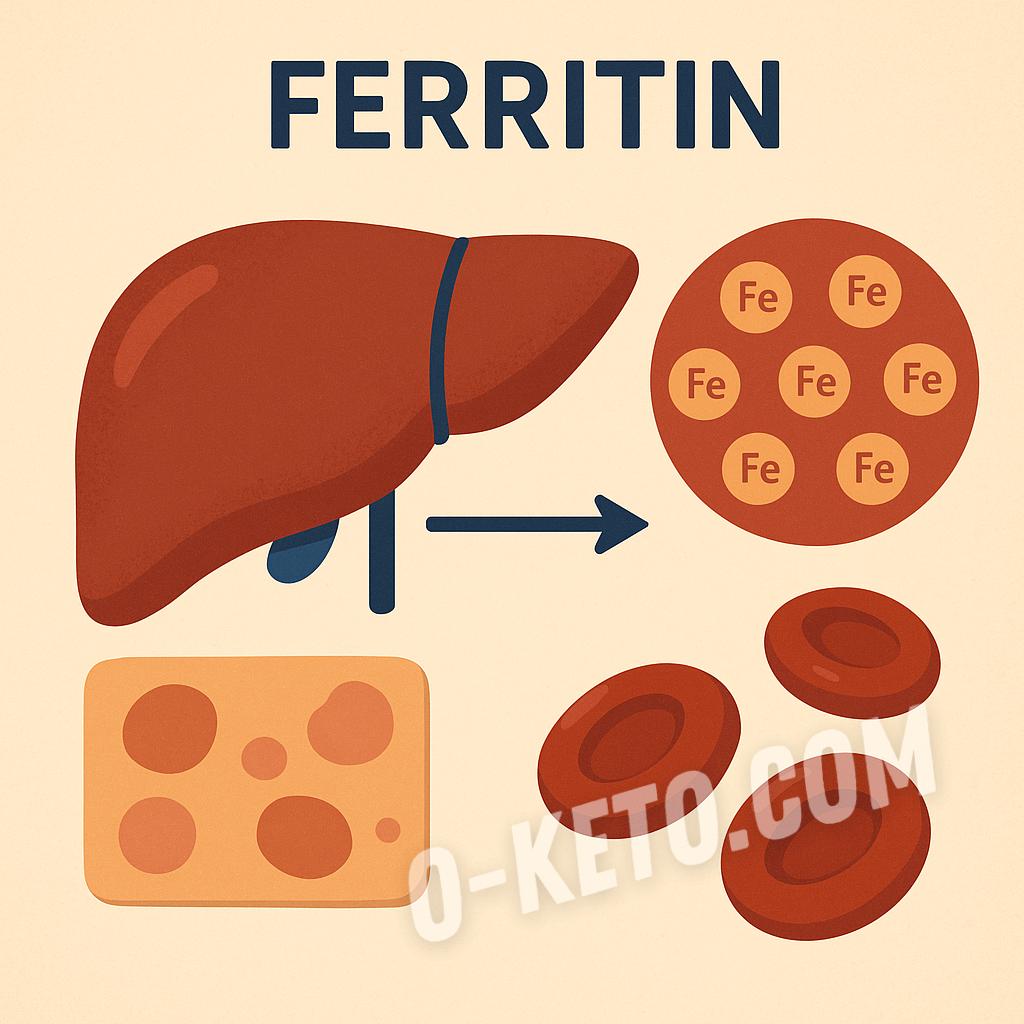
Ferritin is one of the most useful tests for estimating iron stores, and also one of the most misunderstood. In simplified language it is often called the body’s iron warehouse because this protein stores iron and releases it when needed. For that reason, a low ferritin value usually points toward depleted reserves. At the same time, ferritin is also an acute-phase reactant and can rise in inflammation, infection, liver disease, obesity and other stress states. Because of that, a normal or even high ferritin result does not always mean iron status is truly adequate.
What the test reflects
Ferritin mainly reflects stored iron rather than today’s dietary intake or the amount of iron currently circulating in serum. That is why it is often more informative than serum iron when the goal is to understand whether the body has enough reserves for blood formation, muscle function, hair growth and iron-dependent enzymes. In practice, ferritin can fall long before hemoglobin becomes clearly abnormal.
This makes the test especially relevant in chronic fatigue, hair loss, restless legs, poor exercise tolerance, heavy menstrual losses, pregnancy, inflammatory bowel disease, restrictive diets and recovery after blood loss. But its value is strongest when it is interpreted inside a full iron panel.
What can distort the result
The main limitation is that ferritin rises not only with iron repletion, but also with inflammation. Infection, autoimmune activity, fatty liver, obesity, trauma and chronic inflammatory signaling can all push it upward, sometimes masking a real shortage of usable iron. As a result, a person may still have depleted reserves even when ferritin looks “acceptable” on paper.
Recent iron treatment, transfusions, liver disease and the broader metabolic background can also alter interpretation. This is why ferritin should rarely be judged without CRP or another view of inflammatory status.
How it is read with other markers
If ferritin is low, that is usually a strong argument for depleted stores. If ferritin is normal or high, the next question is what hemoglobin, transferrin saturation, serum iron, TIBC and inflammatory markers look like. Low transferrin saturation with inflammatory activity may indicate that iron is present in the body but poorly available for actual use.
The combination of ferritin with a complete blood count, transferrin saturation, serum iron and symptoms is what helps distinguish true iron depletion from inflammatory iron restriction, anemia of chronic disease or other disturbances in iron handling.
When the test is especially useful
Ferritin is particularly valuable in early iron deficiency, before hemoglobin has moved far outside range. It is also important during follow-up of iron therapy, because symptoms alone do not prove that reserves have recovered. In people with hair loss, chronic fatigue or restless legs, ferritin often provides a more practical clue than serum iron alone.
Within low-carbohydrate or ketogenic eating, interpretation should not be reduced to whether someone eats red meat. Hidden blood loss, gastrointestinal function, inflammation, protein status, vitamin B12 and the overall iron-panel pattern often matter more.
Why ferritin alone is not enough
A common mistake is assuming that a normal ferritin always excludes iron deficiency. Another mistake is seeing any elevation and immediately concluding iron overload while ignoring inflammation or liver context. Ferritin is highly useful, but only when it is treated as a storage marker with important inflammatory caveats.
The safest approach is to view ferritin as a central, but not solitary, part of iron metabolism. In that role it helps reveal the real picture instead of creating false reassurance or unnecessary alarm.
In practice, ferritin is most useful when it is read not only against a lab range, but against the real question being asked: are symptoms present, are stores recovering, is inflammation active in the background? That broader framing turns ferritin into a clinically meaningful marker rather than a formal number on a report.
If you have any questions about the term "Ferritin", you can ask them to AI. Please note, a low-cost OpenAI model is used. It may answer questions about disease treatment with errors!


 1 / 4
1 / 4 1 / 4
1 / 4


 1 / 4
1 / 4 1 / 4
1 / 4 1 / 4
1 / 4