


Menaquinone
A form of vitamin K2 connected with calcium metabolism, blood clotting, bone tissue and the arterial wall. Menaquinones differ by side-chain length; MK-4 and MK-7 are discussed most often, but their effects and sources are not identical.
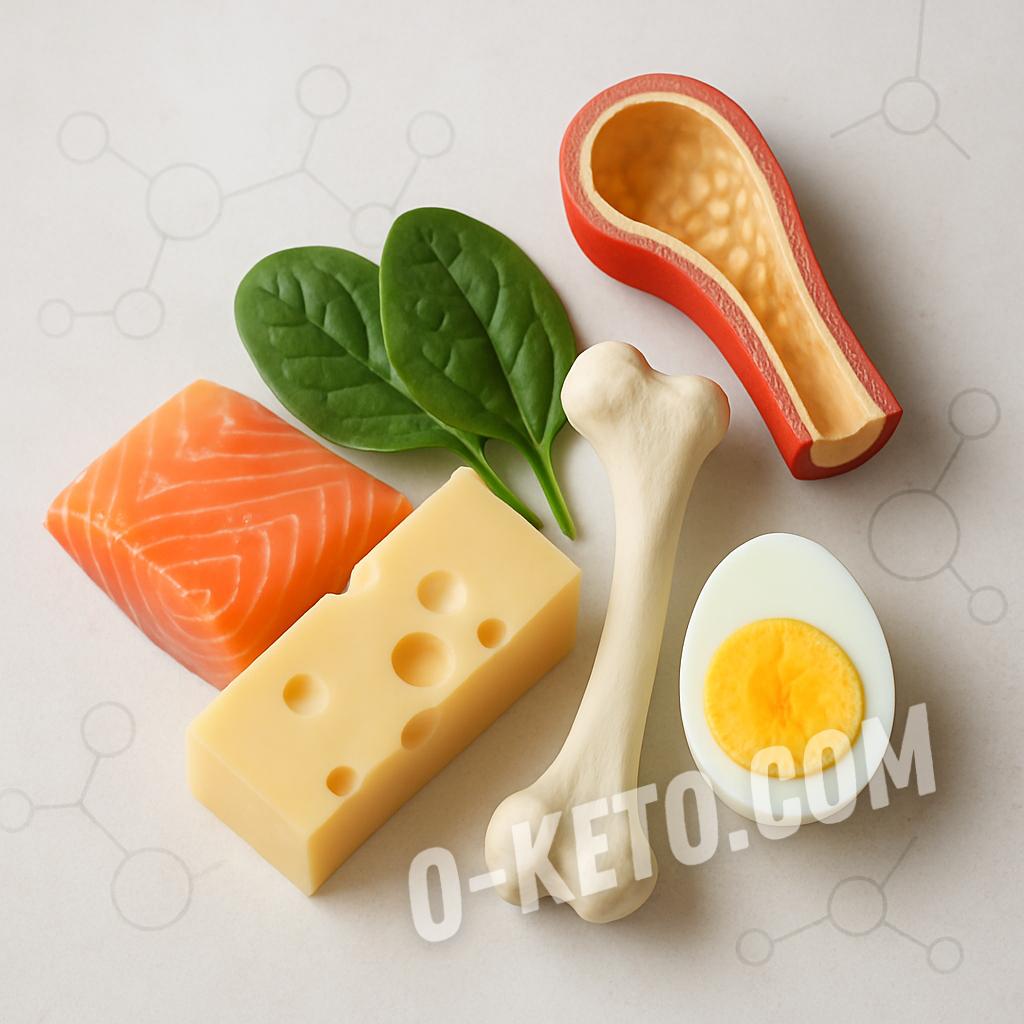
Menaquinone is the general name for vitamin K2 forms. Unlike phylloquinone, or vitamin K1, which mainly comes from green plants and is closely connected with blood clotting, menaquinones are more often associated with fermented foods, animal fats, bacterial synthesis, bone tissue and calcium distribution. K2 is not simply a separate “bone vitamin”, but part of the larger system of vitamin-K-dependent proteins.
Vitamin K2 names often include labels such as MK-4, MK-7, MK-8 or MK-9. The number refers to the length of the molecule’s side chain. This affects sources, half-life, tissue distribution and supplement behavior. The phrase “vitamin K2” without specifying the form can therefore be too rough: MK-4 and MK-7 may behave differently.
What vitamin K2 does
The main biochemical role of menaquinones is participation in the carboxylation of vitamin-K-dependent proteins. Once activated, these proteins bind calcium more effectively and perform their tasks. Osteocalcin is important in bone, while matrix Gla protein is important in vessels and soft tissues. These systems help direct calcium where it belongs and reduce inappropriate deposition.
This does not mean that K2 dissolves vascular plaques or treats osteoporosis by itself. Calcium metabolism depends on vitamin D, magnesium, protein, phosphorus, thyroid and parathyroid hormones, kidney function, physical loading and overall nutrition. Menaquinone matters, but it works inside this network rather than replacing it.
Sources of MK-4 and MK-7
MK-4 is found in animal foods such as egg yolks, liver, meat, butter, cheese and other fatty animal products. Its amount depends on animal feed and product quality. MK-7 is especially known from natto, fermented soybeans, while other long-chain menaquinones occur in some cheeses and fermented foods.
Gut bacteria can also synthesize some K2 forms, but relying only on that is not wise. It is not fully clear how much bacterial synthesis covers in a specific person. Microbiota, bile, dietary fat, antibiotics, intestinal disease and overall absorption of fat-soluble compounds all influence this system.
Keto, LCHF and absorption
On low-carbohydrate nutrition, K2 sources often fit naturally: eggs, aged cheeses, meat, liver, butter and fermented foods. Dietary fat supports absorption of fat-soluble vitamins. But a fatty diet is not automatically rich in K2; butter coffee and monotonous meat intake do not replace varied sources.
With gallbladder disease, pancreatic problems, intestinal disease, bariatric surgery or medications that impair fat absorption, K2 absorption may be reduced. In this situation the supplement is not the only issue. Digestion should also be considered: bile flow, stool pattern, fat tolerance, vitamins A, D and E status and the broader nutrient background.
Supplements and caution
Supplements most often use MK-7 and MK-4. MK-7 is usually taken in smaller doses and circulates longer; MK-4 has often been used in studies with different dosing patterns. There is no universally best form for everyone. The goal, diet, medications, tolerance and laboratory context matter more than marketing language.
The main caution concerns anticoagulants, especially warfarin and other therapies where vitamin K affects treatment. People using such medications should not start or sharply change K2 on their own. The problem is not only a large dose, but unstable vitamin K intake. Any change should be discussed with a clinician and monitored through clotting markers.
Practical meaning
Menaquinone is best considered together with vitamin D, magnesium, calcium, protein, strength training and kidney health. If a person takes high-dose vitamin D while ignoring magnesium, K2, food quality and testing, calcium metabolism becomes less predictable. K2 supplementation does not automatically make high-dose vitamin D safe.
For most people, a sensible strategy starts with food: eggs, cheeses, tolerated fermented foods, liver or other nutrient-dense animal products. Supplements may be appropriate with a limited diet, deficiency risk or a specific goal, but menaquinone should not become a universal insurance policy against all bone and vascular problems.
If you have any questions about the term "Menaquinone", you can ask them to AI. Please note, a low-cost OpenAI model is used. It may answer questions about disease treatment with errors!


 1 / 4
1 / 4

 1 / 4
1 / 4 1 / 4
1 / 4


 1 / 4
1 / 4