


Palmitoleic acid
A monounsaturated Omega-7 fatty acid found in macadamia nuts, sea buckthorn oil, some fish fats and human adipose tissue. It is often discussed as a metabolic signal, but in practice the priority is overall fat quality rather than chasing separate capsules.
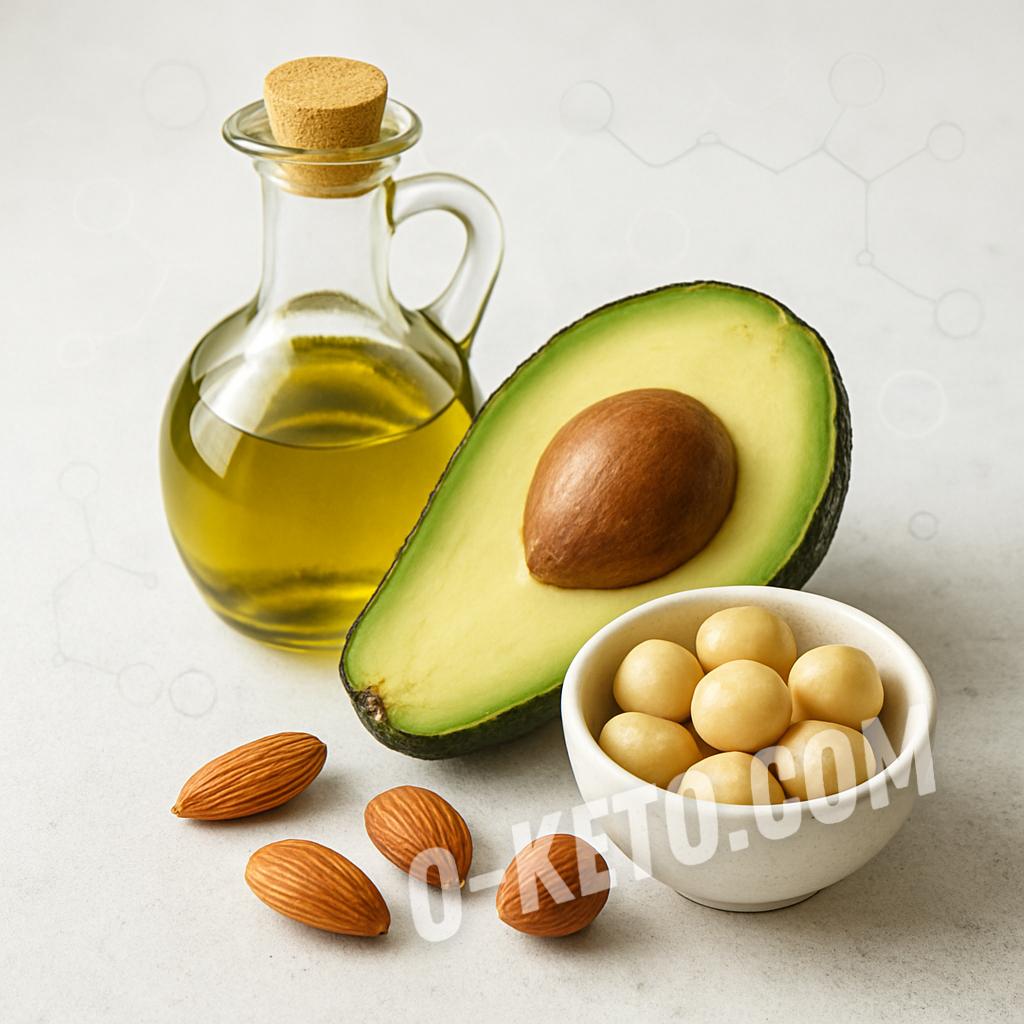
Palmitoleic acid is a monounsaturated fatty acid often classified as Omega-7. It is found in macadamia nuts, sea buckthorn oil, some fish fats, dairy fat and human adipose tissue. Unlike ALA or linoleic acid, it is not essential because the body can synthesize it from palmitic acid through the stearoyl-CoA desaturase enzyme. For that reason, palmitoleic acid should not be treated like a nutrient that must be obtained from food every day.
Interest in this fatty acid comes from the fact that it can be more than a dietary fat; it may also reflect internal metabolism. In blood and tissues, its level can be connected with lipogenesis, liver activity, carbohydrate load, energy excess and enzymes that convert saturated fatty acids into monounsaturated fatty acids. A high palmitoleic-acid level does not always mean someone ate a lot of macadamia nuts or sea buckthorn. Sometimes it reflects the body’s own fat production.
Food sources
The best-known culinary source of palmitoleic acid is macadamia nut. It is rich in monounsaturated fats, contains little carbohydrate and fits well into LCHF when the portion is small. Sea buckthorn oil also contains Omega-7, but it has a strong taste, high biological activity and is not always easy to tolerate. Smaller amounts of palmitoleic acid occur in dairy fat, fish, seafood and animal fats, although they are usually not the main dietary source.
It is important to distinguish a whole food from a concentrate. Macadamia provides fat together with a food matrix, minerals and a natural limit on portion size. Oil or capsules can deliver far more than a person would normally get from food. This is not always better. On keto, macadamias can be a convenient snack, but because they are energy-dense they can interfere with weight loss when eaten without regard to the whole diet.
Omega-7 as a metabolic signal
Palmitoleic acid is sometimes called a lipokine, a fatty acid that may participate in metabolic signaling between tissues. Research has connected it with insulin sensitivity, lipid metabolism, the liver and inflammatory markers. For an ordinary reader, however, this does not mean an Omega-7 capsule will automatically improve metabolism. Scientific interest in a molecule is not the same as a universal supplement recommendation.
Context matters because palmitoleic acid can rise during active de novo lipogenesis, the process by which the body converts excess energy, especially carbohydrate energy, into fatty acids. In fatty liver disease, insulin resistance, overeating, alcohol use and high sugar intake, this signal may reflect metabolic overload rather than a beneficial supplement effect. More is not automatically better simply because the fatty acid has an interesting name.
Connection with keto and LCHF
In low-carbohydrate nutrition, palmitoleic acid is interesting for two reasons. First, foods such as macadamia nuts and some animal fats can provide energy with very little carbohydrate. Second, reducing sugar, fructose and frequent snacking may lower the stimulus for liver lipogenesis. In other words, LCHF may influence internal production of some fatty acids through the metabolic background rather than through a separate supplement.
There is no need to build the diet around Omega-7. If a person eats whole foods, enough protein, fish, well-tolerated vegetables, olive oil, avocado and moderate portions of nuts, palmitoleic acid becomes part of the overall fat spectrum. It is far more important not to overeat nuts and oils, not to compensate for low carbohydrates with endless fatty snacks, and to monitor blood markers when metabolic problems are present.
Sea buckthorn oil and supplements
Sea buckthorn oil is often promoted as an Omega-7 source for skin and mucous membranes. It does have an interesting composition that includes fatty acids, carotenoids and other biologically active compounds. That does not make it a gentle universal supplement. It may irritate the stomach, affect bile flow, trigger individual reactions and be unsuitable in some gastrointestinal conditions. Concentrated capsules also differ by composition: sea buckthorn pulp oil and seed oil have different fatty-acid profiles.
If someone wants to try Omega-7, it is better to define the goal first. Dry mucous membranes, skin concerns, metabolic markers and simply adding macadamias to the menu are different situations. During pregnancy, lactation, liver or gallbladder disease, medication use or pronounced gastrointestinal symptoms, supplements should be discussed with a clinician. A food-derived product can be useful, but a concentrate is not automatically safer than ordinary food.
How to interpret it in tests
Palmitoleic acid may appear in expanded fatty-acid profiles. If it is elevated, triglycerides, glucose, insulin, liver enzymes, waist circumference, alcohol, carbohydrate load and energy balance should be reviewed together. Without that context, it is easy to confuse dietary intake with internal synthesis. Results also need caution during rapid weight loss, diet changes, inflammation and liver disease.
If the level is low, that is not automatically a problem either. Palmitoleic acid is not essential, so the logic “low means urgently supplement” does not apply. The overall pattern matters more: Omega-3 status, excess Omega-6 from refined oils, saturated and monounsaturated fats, triglycerides and fat tolerance. A separate Omega-7 deficit is rarely the main missing piece of the diet.
Practical takeaway
Palmitoleic acid is an interesting Omega-7, but it is not a required supplement for everyone. In ordinary keto cooking, it is easiest to obtain it from a moderate portion of macadamia nuts or as part of mixed fats. If sea buckthorn oil is used, its biological activity, taste, tolerance and the difference between seed and pulp oil should be considered.
The best approach is not to chase Omega-7 separately, but to improve the whole fatty-acid profile: fewer refined oils, more fish or algae-derived Omega-3s, good olive oil, enough protein and control over nut overeating. Then palmitoleic acid has a place in the diet without exaggerated promises and without becoming another miracle capsule.
If you have any questions about the term "Palmitoleic acid", you can ask them to AI. Please note, a low-cost OpenAI model is used. It may answer questions about disease treatment with errors!

 1 / 4
1 / 4

 1 / 4
1 / 4


 1 / 4
1 / 4

 1 / 4
1 / 4