


Elevated prolactin
High prolactin may accompany ovulation problems, cycle instability, breast tenderness, reduced libido, and infertility, but it should be interpreted only together with stress, sleep, thyroid function, medications, and cycle timing.
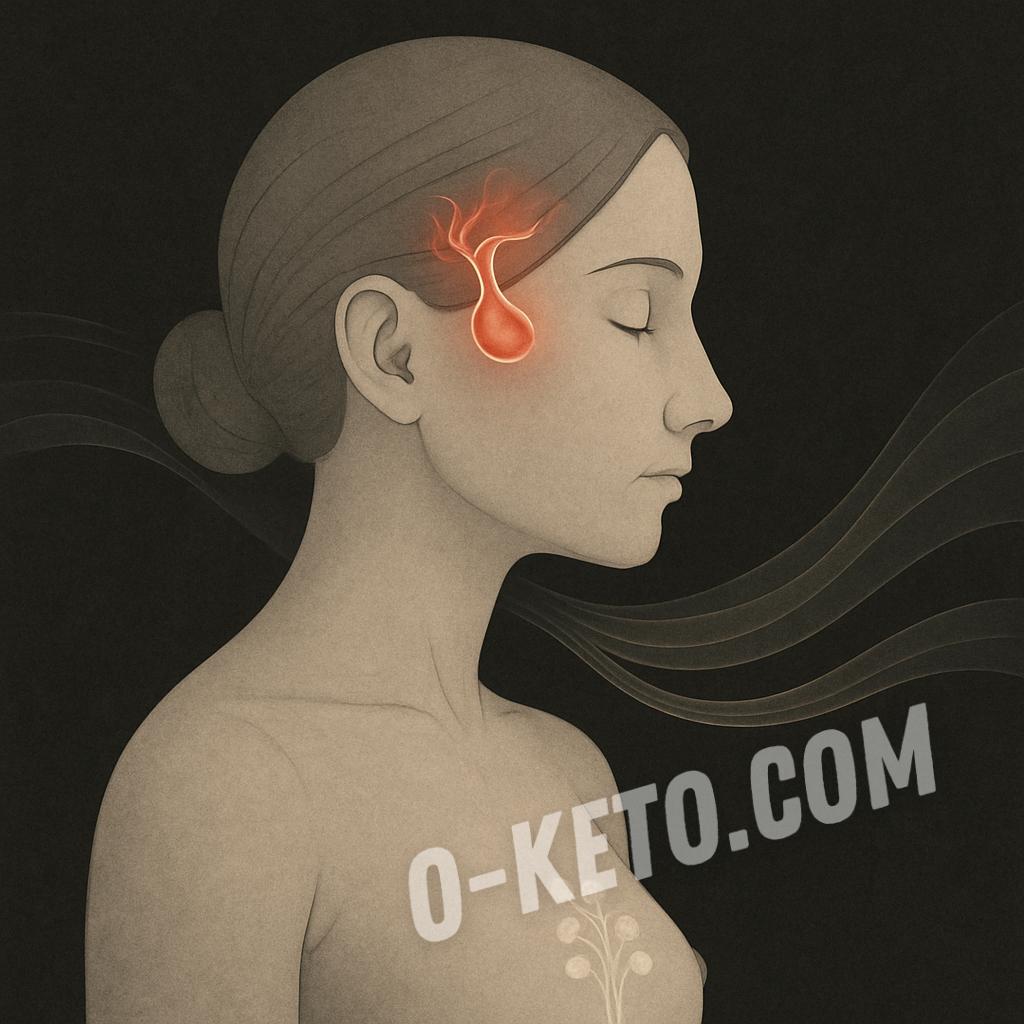
Elevated prolactin means that the level of this hormone is higher than expected for the specific situation, sex, and, in women, cycle phase. A single abnormal value does not yet explain the cause, but it can explain symptoms surprisingly well. In women, higher prolactin is often discussed together with ovulation problems, a weak or shortened luteal phase, breast tenderness, cycle instability, reduced libido, or difficulty conceiving. In both women and men it may also go together with fatigue, reduced dopaminergic drive, emotional heaviness, and impaired sexual function. The key point is that prolactin should not be interpreted in isolation: it is tightly linked to stress load, sleep, dopamine regulation, thyroid function, certain medications, and the broader reproductive context.
What prolactin does and when higher levels can be normal
Prolactin is produced in the pituitary gland and is not limited to lactation alone. It influences the reproductive axis, ovulation, sex hormones, breast tissue, and partly reflects the interaction between the pituitary, hypothalamus, and dopamine system. During pregnancy and breastfeeding, higher prolactin is physiological. It can also rise transiently after sex, intense exercise, poor sleep, pain, nipple stimulation, or even anxiety before the blood test itself.
Because of that, one unexpected lab value does not automatically mean disease. Timing matters: whether the sample was fasting, how well the person slept, whether there was hard training or acute stress the day before, and which medications were being used. If those details are ignored, formally high prolactin can easily be overinterpreted.
What often lies behind persistent elevation
When prolactin stays elevated repeatedly, several directions usually matter. One is chronic stress and poor recovery. Another is hypothyroidism or related thyroid-axis disturbances. A third is medication effect, especially from drugs that influence dopamine pathways, such as some antidepressants, antipsychotics, or antiemetics. A fourth group includes pituitary causes, including prolactinoma. In women, PCOS, low recovery capacity, and sustained psycho-emotional overload may also contribute, sometimes in combination rather than as a single cause.
Persistent elevation becomes especially meaningful when it fits the complaints: irregular cycles, absent ovulation, infertility, galactorrhea, mastalgia, reduced libido, or shifts in other hormones. If symptoms are minimal and the increase was only borderline, a careful repeat test and better context reading are often more useful than immediate overreaction.
How to test it properly and what to read with it
Prolactin is best interpreted when measured in a calm state, after adequate sleep, without acute heavy exercise, and with attention to the phase of the menstrual cycle when relevant. A repeat test is often useful if the first value was unexpected or did not fit the rest of the picture. In some cases macroprolactin is checked separately so that a biochemically high but clinically weak form is not mistaken for true hyperprolactinemia.
Alongside prolactin, clinicians often look at TSH, free thyroid hormones, and, depending on the case, LH, FSH, estradiol, progesterone, testosterone, or DHEA-S. Good interpretation usually also includes sleep quality, stress load, medication exposure, and nutritional status. In other words, a useful reading is almost never about one number alone.
How elevated prolactin can affect symptoms and the cycle
When prolactin remains high for a long time, it can suppress normal ovulatory activity, interfere with dopamine-linked regulation, and worsen the quality of the second half of the cycle. In some women this shows up as shorter cycles, in others as instability or anovulation. Breast tenderness, premenstrual heaviness, and the feeling that the body does not shift well into a stable luteal phase may all be part of the picture.
In men, elevated prolactin also matters. It may accompany lower libido, poorer erectile function, reduced motivation, and weaker androgen balance. That is why it should not be treated as an exclusively female issue.
What is sometimes considered in support
The right approach depends on the cause. If the main driver is sleep deprivation, chronic stress, or constant overload, even well-chosen supplements often work only weakly or temporarily until recovery improves. If the cause is medication-related or thyroid-related, the main solution belongs elsewhere. In softer support-oriented protocols, Vitex agnus-castus is sometimes considered, especially when the clinical picture points to functional cycle disruption and a weak luteal-phase pattern. In the therapy-scheme block on this site, that relevance should be understood as adjunctive plant support rather than a universal solution for every case of elevated prolactin.
It also makes sense to review overall recovery, protein intake, and possible deficits of magnesium, vitamin D, and zinc, together with the broader dopamine context. Still, clearly elevated prolactin should not be reduced to supplements alone when galactorrhea, marked hormone disruption, infertility, neurologic symptoms, or pituitary red flags are present.
When an in-person medical evaluation is needed
Timely medical assessment is important when high prolactin is accompanied by nipple discharge outside lactation, persistent lack of ovulation, pronounced cycle disturbance, infertility, sharp loss of libido, headaches, visual changes, or very high laboratory values. This is especially true if the elevation repeats and cannot be explained by stress, cycle timing, recent exertion, or medication.
A practical takeaway is simple: elevated prolactin is not a standalone label but a signal that one of the regulatory axes is under strain. The more carefully the context is examined, the lower the chance of treating the wrong cause and the better the chance of truly improving well-being, cycle quality, and reproductive function.
If you have any questions about the term "Elevated prolactin", you can ask them to AI. Please note, a low-cost OpenAI model is used. It may answer questions about disease treatment with errors!


 1 / 4
1 / 4 1 / 4
1 / 4 1 / 4
1 / 4 1 / 4
1 / 4 1 / 4
1 / 4