

Espresso and cappuccino become predictable at home when the coffee base is calibrated first and the milk is handled as a separate task. Espresso supplies the drink’s sweetness, bitterness, and acidity, while cappuccino adds warm milk with smooth microfoam. For a low-carbohydrate version, the milk choice matters as much as the technique because sweet syrups and sweetened plant drinks can quickly change the carbohydrate load.
Basic information about beans, storage, and brewing methods is available on the Coffee product page. The practical workflow below is designed for a home portafilter or automatic machine, with an alternative for kitchens without a proper steam wand.
What You Need for Consistent Espresso
The minimum setup is a machine with a suitable basket, a burr grinder, a scale accurate to about 0.1–1 g, and a timer. Fresh whole beans matter more than an expensive cup: let them rest after roasting, store them airtight, and grind immediately before brewing. Use clean water without off-odors and warm the cup if the drink cools too quickly.
For the first test, choose a medium roast rather than an extremely dark blend. Dark beans can produce persistent crema, but they move toward burnt bitterness faster at high temperature. Light roasts may show more fruit-like notes, yet they usually demand more precise control of grind and extraction.
Dose, Ratio, and Extraction
Start with 18 g of coffee in a double basket and aim for about 36 g of beverage, a 1:2 ratio. An extraction time of roughly 25–30 seconds is a starting point, not a law. The useful range depends on the beans, roast, basket, pressure, and taste, so the cup remains the final judge.
Distribute the fresh grounds evenly, level the bed, and tamp without creating a tilt. Lock in the portafilter, place the cup on the scale, and stop the shot at the target yield. If the stream runs too fast and tastes empty or sharply sour, grind a little finer. If the flow nearly stalls and the cup tastes dry or burnt, the grind generally needs to be coarser.
How to Judge the Espresso
Do not judge readiness only by crema color. Let the drink cool slightly and assess aroma, sweetness, acidity, bitterness, body, and aftertaste. A good cappuccino base does not have to be maximally strong; it needs enough clarity to remain present after milk is added. Milk foam cannot repair an espresso that is already harshly bitter or watery and sour.
Change one variable per attempt. Fix the dose first, adjust grind second, and then change yield or temperature only if needed. Record coffee weight, beverage weight, and extraction time so a successful shot can be repeated.
Milk Foam for Cappuccino
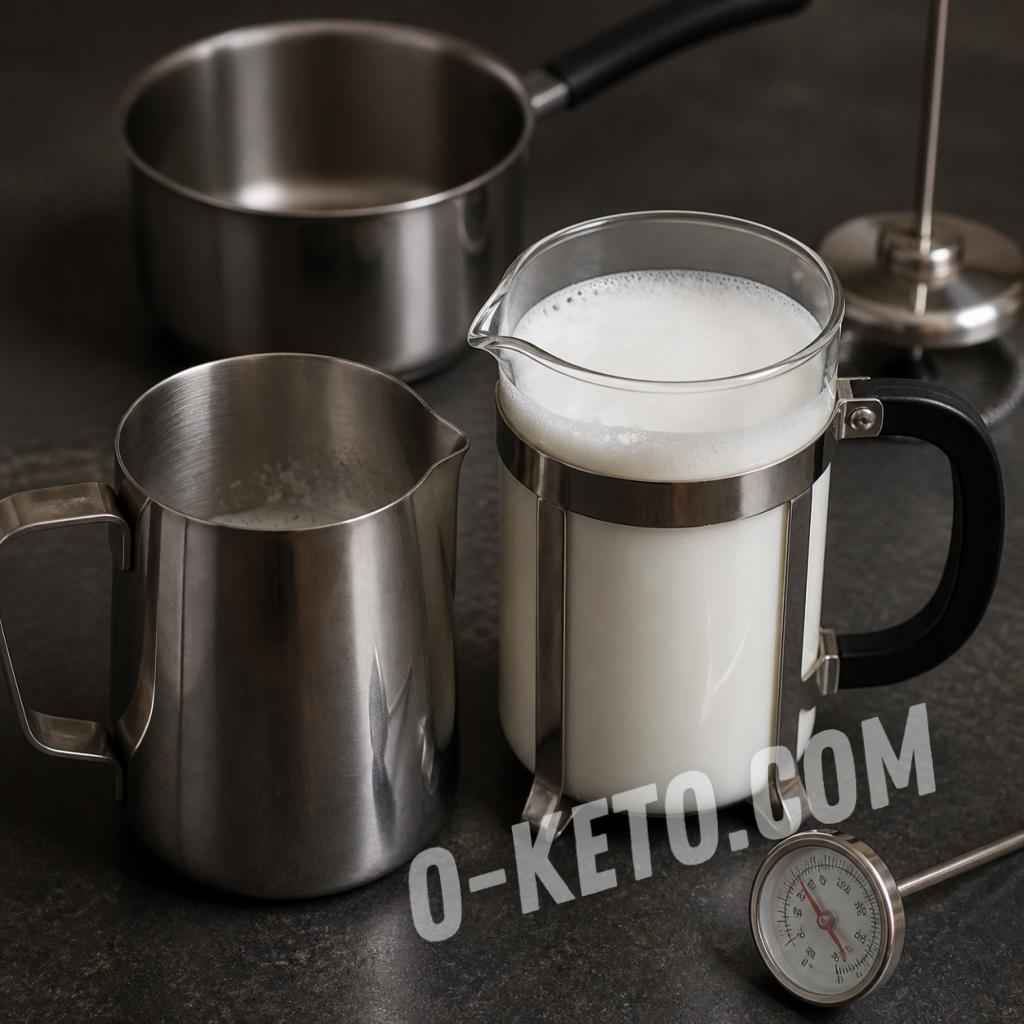
Use cold milk and a cold pitcher for microfoam. Introduce a little air at the beginning, then lower the tip and create a whirlpool that folds the milk together. The goal is not a tall, dry cap but a uniform, elastic, glossy texture with very small bubbles. Stop around 55–65 °C: overheating damages sweetness, aroma, and texture.
Without a steam wand, heat the milk in a small saucepan to about 55–60 °C and transfer it to a French press. Move the plunger in short strokes to incorporate air, then tap the pitcher once and swirl the milk. This does not reproduce professional steam, but it creates a smoother result than large-bubble whisking.
How to Assemble Cappuccino
Prepare one double espresso and use a cup of about 150–200 ml. Stir the espresso gently to distribute the crema. Add a small amount of milk to combine the flavors, then pour in a thin stream with the pitcher close to the surface. Lift the pitcher at the end to bring the microfoam to the top. The drink should be rounded and milky while the coffee remains recognizable.
Latte uses more milk and a thinner foam layer, while flat white is more coffee-forward, usually combining a double espresso with less milk. They are different proportions of the same base, not three names for one drink. Compare the cappuccino, latte, and flat white recipes.
Keto Milk Alternatives
Regular milk can work in a modest portion if its carbohydrates fit your daily plan. For fewer carbohydrates, choose unsweetened almond milk or another plant drink without sugar; read the label because brands differ in ingredients and carbohydrate content. Unsweetened coconut milk gives a stronger flavor, while a mixture of cream and water can provide a dairy-like body at a higher energy cost.
Syrups, caramel, condensed milk, and ready-made coffee mixes often contain sugar. If you want sweetness, use only a sweetener you already tolerate and enjoy, and check its composition. A keto substitute should replace the ingredient rather than hide the same sugar under a different name.
Common Mistakes
A coarse grind, stale beans, or uneven distribution can produce a fast, empty shot. A very fine grind, a tilted puck, or excessive tamping slows the water and increases dryness. A warm pitcher and warm milk leave too little time for microfoam, while overheated milk becomes flat and less sweet.
Do not try to rescue poor espresso by adding more syrup or milk. Tune the coffee separately, prepare the milk separately, and only then change the drink’s proportions. This keeps cappuccino manageable at home and easier to fit into a low-carbohydrate diet without hidden sugars.