
Good coffee at home does not come from one perfect brewer. Solubility, water composition, particle size, temperature, water movement, and contact time work together. If everything changes at once, the reason for a bad cup stays hidden; if the variables are separated, the recipe becomes repeatable.
The basic idea is simple: water should move evenly through the right amount of coffee and dissolve enough flavor compounds without pulling excessive bitterness and dryness. This balance is extraction. The same bean can taste bright in a V60, full in a French press, and soft in cold brew because each method creates a different contact pattern.
What happens during extraction
At the beginning, hot water wets the coffee and releases carbon dioxide. Then the most accessible aromatic and flavor compounds dissolve, while longer contact allows heavier bitter and drying compounds to become more prominent. Time therefore cannot be evaluated separately from grind, temperature, and agitation.
Under-extraction tastes sharply sour or green, thin, salty, and short. Over-extraction creates mouth-drying astringency, burnt bitterness, and a muddy aftertaste. Do not confuse clean fruit acidity with under-extraction: good acidity is structured and sweet, while an under-extracted cup feels sharp and unfinished.
Water, grind, and extraction
Water is the main ingredient in the cup, so its taste is not a neutral background. Chlorine, excessive mineral content, or extremely soft water can change the perception of sweetness and acidity. Use fresh drinking water without an off smell and with moderate mineralization. If coffee is consistently flat, check the water before replacing good beans.
Grind size controls contact surface. Fine particles dissolve faster and need less time; coarse particles dissolve more slowly and tolerate longer steeping. If a V60 drains too quickly and tastes sour, grind a little finer. If the filter stalls and the cup is dry, grind coarser and reduce unnecessary agitation.
Hot brewing often works within roughly 90–96 °C. Higher temperatures speed extraction and can help light roasts, but they also expose uneven pouring. Lower temperatures can soften dark roasts, while water that is too cool leaves the cup thin and under-extracted.
Turbulence is the movement of water and grounds. A short stir can remove dry pockets, but aggressive agitation lifts fines and slows filtration. V60 benefits from calm circular pouring; a French press usually needs one gentle stir and prompt separation from the grounds.
Brewing method comparison
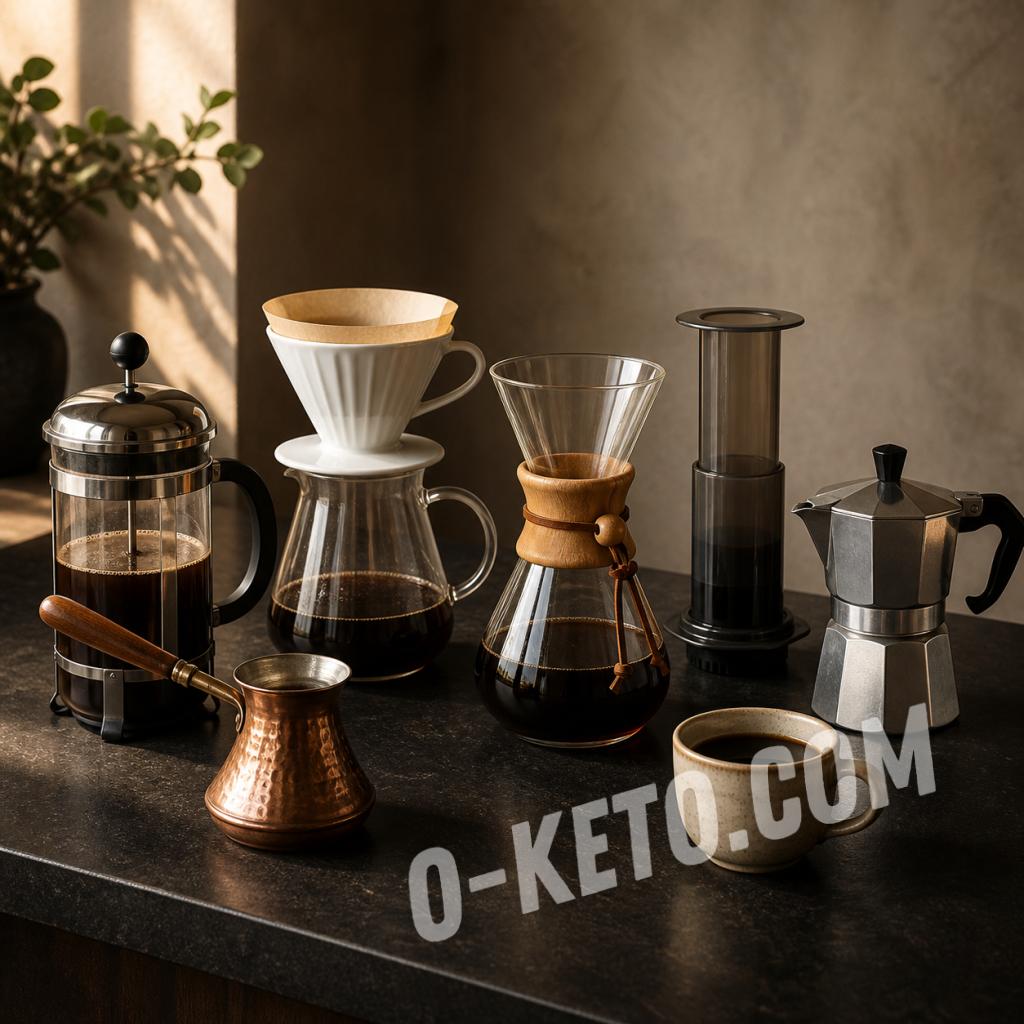
| Method | Profile | Grind and time | Typical problem |
|---|---|---|---|
| French press | full and oily | coarse, 4 minutes | continued extraction in the pot |
| Cezve | dense, with sediment | very fine, several minutes | overheating the foam |
| V60 | clean and bright | medium-fine, 2.5–4 minutes | uneven pouring |
| Chemex | clean and light | medium, 4–5 minutes | stalled thick filter |
| AeroPress | clean and concentrated | medium or coarse, 1.5–2 minutes | excessive pressing force |
| Cold brew | soft and low-acid | coarse, 8–16 hours | long storage without filtration |
When comparing brewers, change one variable at a time. Keep the bean dose stable, then adjust grind, temperature, or contact time. The same beans and a similar coffee-to-water ratio make differences easier to understand. Practical recipes for each brewer:
- French press coffee;
- Turkish coffee;
- Chemex coffee;
- V60 coffee;
- cold brew;
- AeroPress coffee;
- moka pot coffee;
- espresso;
- Americano;
- cappuccino.
French press and cold brew
A French press is an immersion brewer: all grounds stay in water for roughly the same period. Use a coarse grind, add hot water, stir gently, and wait about four minutes. Press slowly and pour into another vessel. Leaving coffee in the pot keeps extraction going and gradually makes the cup drier.
Cold brew uses cold water and develops slowly. Coarse grounds and long contact produce a soft profile, but a concentrate is not automatically suitable for indefinite storage. Filter it carefully, keep it refrigerated, and check the smell before drinking. Syrups and milk additions change the carbohydrate load even when the coffee itself has no sugar.
Cezve and moka pot
Cezve coffee needs a very fine grind. Heat the mixture slowly and remove it when the foam rises, before a vigorous boil. The sediment settles after a short pause, but the drink will not be transparent.
A moka pot uses steam pressure. Fill the lower chamber below the valve, add medium-ground coffee without tamping, and use low heat. Remove the pot before loud bubbling. Moka coffee is fuller than filter coffee, but its pressure and temperature are not the same as espresso.
V60, Chemex, and AeroPress
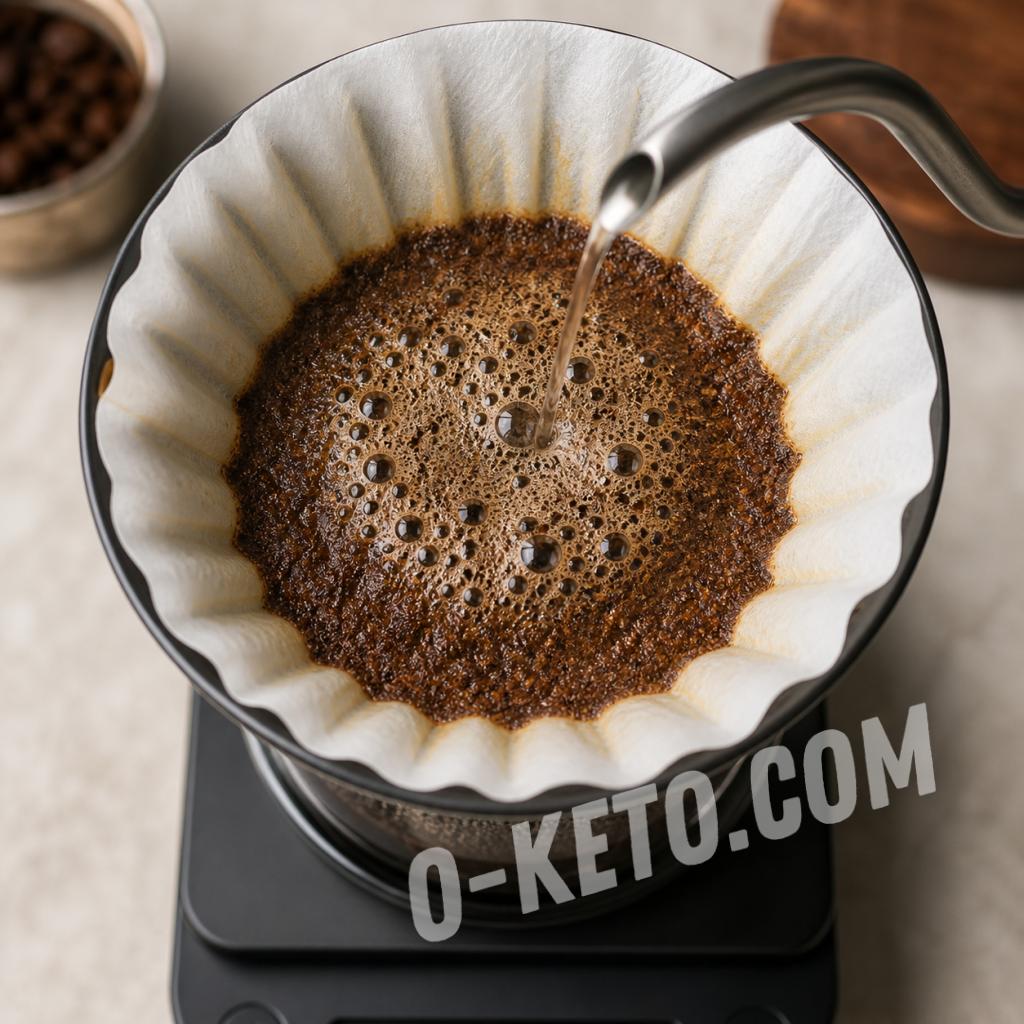
V60 and Chemex are pour-over methods. Rinse the paper filter to remove paper taste and warm the brewer. Bloom the coffee first, then pour in small circles while keeping the bed evenly wet. Pouring only into the center or flooding one side leaves some grounds under-extracted and can push fines into the filter.
Chemex uses thicker paper and produces an especially clean cup, but a fine grind can stall it. V60 reacts strongly to pouring technique and shows differences between beans. AeroPress combines immersion and pressure; vary temperature and steeping time, but press smoothly instead of forcing water through a compact plug.
How to tune a recipe
Weigh coffee and water, choose one brewer, and record temperature and time. Taste after the cup cools slightly, because a very hot drink can hide imbalance. If the coffee is sour and thin, grind finer, increase temperature, or extend contact. If it is bitter and dry, do the opposite: grind coarser, lower temperature, shorten time, or agitate less.
Change one variable per attempt. Switching beans, dose, filter, and temperature together turns calibration into guesswork. Once the base recipe is stable, compare roast levels, origins, and serving styles such as black coffee, Americano, or milk drinks.
Practical algorithm
Start with fresh whole beans, clean water, a scale, and a timer. Grind immediately before brewing, warm the equipment, and wet the entire coffee bed. Separate the drink from the grounds when the method allows it and judge not only the first sip but also the aftertaste.
Black coffee and unsweetened drinks are generally easier to fit into a low-carbohydrate diet than syrup-based coffee drinks. Milk, cream, coconut products, and sweeteners still need to be counted by their composition and serving size. Brewing technique does not remove individual caffeine sensitivity, so match strength and timing to sleep, anxiety, and tolerance.
Home coffee becomes predictable when it is treated as a system: water creates the medium, grind controls speed, temperature supplies energy, movement controls evenness, and time sets depth. Choose one method, change variables in sequence, and record the result instead of searching for one universal perfect cup.