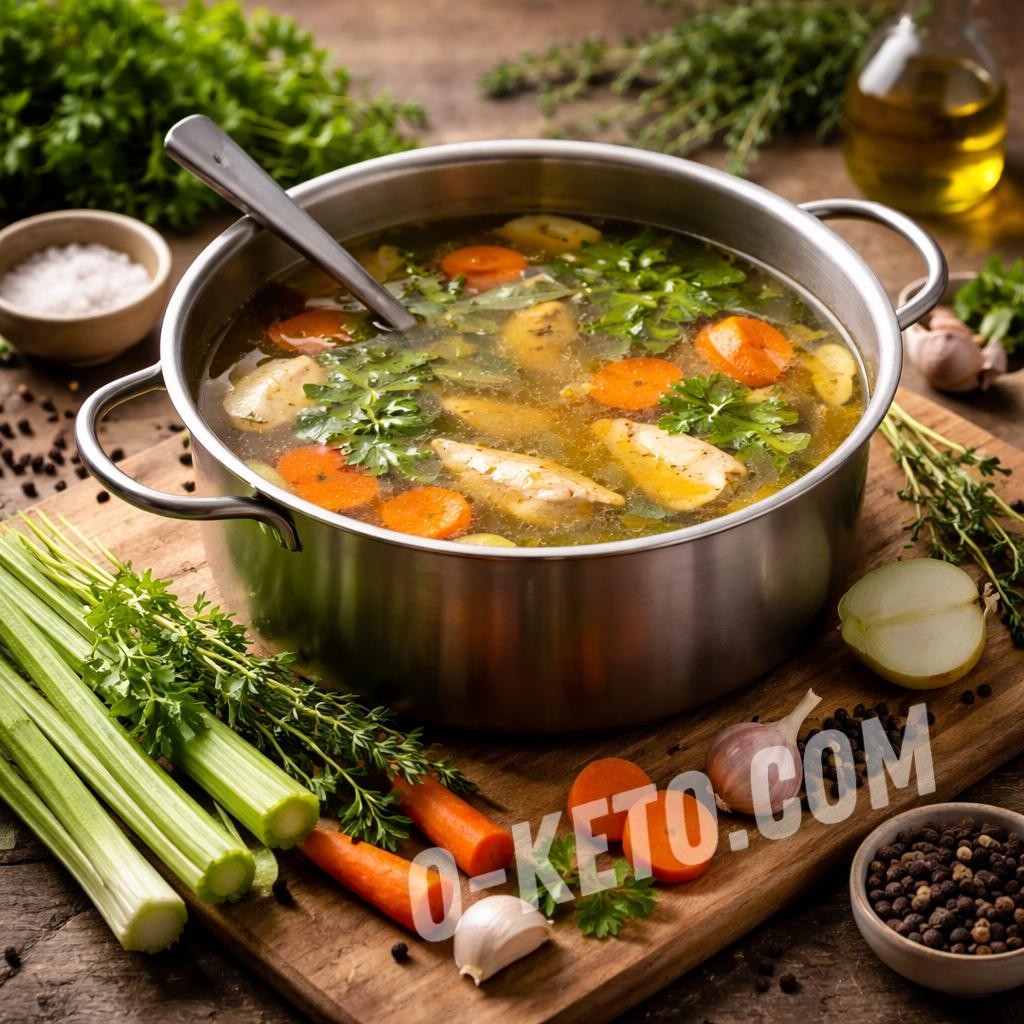

A good broth does not come from boiling everything forever. It comes from understanding what you are trying to pull out of the raw material. Sometimes you need a light clean base, sometimes a denser meat-driven broth, and sometimes a gelatin-rich foundation for soups, sauces, and restorative meals. Fish, chicken, and beef therefore cannot be handled by one universal rule because they release flavor at different speeds and each has a point after which longer cooking no longer improves the result.
This is exactly where most home mistakes begin. People simmer fish bones like beef bones and get a heavy overcooked smell. They use chicken breast and expect depth, but breast gives cooked meat far more readily than true broth structure. Or they put vegetables in too early and boil them for so long that the final pot tastes flat and sweet instead of deep and balanced. Broth becomes better when the base, aromatics, and cooking time match the type of broth rather than a vague idea that longer is always better.
Where to start: water, cold start, and the right base
For classic broth the raw material is usually covered with cold water and only then heated. This gives the liquid time to pull flavor, collagen, and extractive compounds into the pot gradually. If the goal is the opposite and you want to keep more flavor inside the meat itself, hot water makes more sense. But when the task is broth as a culinary base, the cold start is usually the most practical and predictable route.
The base should also fit the task. Fish broth works best from frames, heads without gills, tails, and bones of white fish such as pike perch, pike, or cod, though moderately fatty fish can also work. Chicken broth needs more than lean meat: backs, wings, necks, feet, legs, or a whole bird build far more body. Beef broth likes ribs, brisket, shank, marrow bones, and other parts that contain both bone and connective tissue. Those parts build depth instead of plain boiled meat water.
A useful home ratio is about 350 g of bones or meat on the bone per 1.3 liters of water to yield roughly 1 liter of finished broth. It is not absolute math, but it is a reliable working proportion that keeps the broth from being either weak or clumsily heavy before any reduction.
Why broth turns cloudy and how to keep it clear
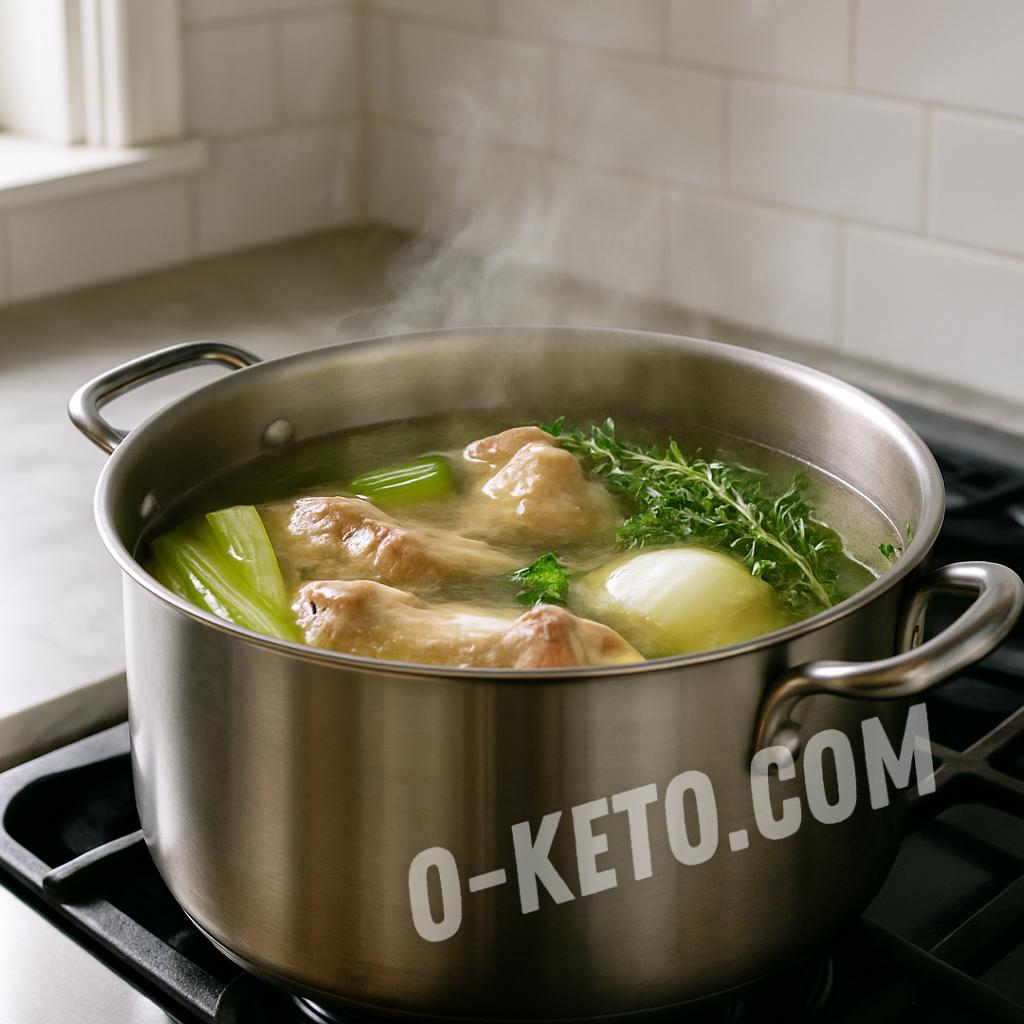
Cloudiness is usually caused less by ingredients than by heat. When broth boils aggressively, foam breaks into tiny particles, fat emulsifies into the liquid, and proteins spread through the whole pot. It may look like more energetic cooking, but in practice it gives a rougher taste and a dirtier appearance. After the liquid reaches a boil, the heat should be reduced so the surface only trembles gently.
Skimming matters most when you want a clean broth for clear soups, consomme, or elegant service. There is also little reason to stir the pot without need. A loosely covered lid works better than sealing the pot tightly because steam can escape and the taste stays fresher. If the broth is only going into a hearty stew, perfect clarity matters less. But for a classic clear broth, calm heat matters more than anything dramatic.
Fish broth: why it should not be overcooked
Fish broth is the fastest and easiest to spoil. It is usually built from washed bones, frames, tails, and heads with the gills removed. Blood and dark clots should be rinsed away because they often cause a muddy taste. The aromatic side should stay restrained: a peeled onion is often more useful than a whole collection of roots and spices. Fish flavor is easy to bury under carrot, bay leaf, celery, and prolonged simmering.
A practical time frame is about 20 minutes of gentle simmering after the boil, sometimes up to 30 or 40 minutes for a stronger base, but not hours. Fish does not behave like beef bone. If you cook it too long, the broth turns heavier, cloudier, and sometimes bitter. If you want more concentration, it is much safer to strain the broth and reduce the clear liquid than to keep punishing the fish bones themselves.
Fish broth also needs fast cooling and relatively short storage. It is best as a fresh base for one or two days or as a frozen portioned stock. It is excellent for light soups, seafood braising, and clear sauces, but it rewards speed and restraint rather than endurance.
Chicken broth: why breast is rarely loved for it
Chicken broth is popular because it is versatile, but that same familiarity makes people assume any piece of chicken will do. In practice breast and fillet are poor choices when you want real broth depth. They give cooked meat, but not much body. For a richer result it is better to use backs, necks, wings, feet, legs, or a whole bird. An older laying hen or simply a firmer bird almost always gives a fuller taste than very young lean chicken.
A practical home range is about 1.5 hours of gentle simmering after the boil, sometimes closer to 2 hours for a stronger bird. Onion skin can help with color, and carrot can be grated or added in large pieces for a warm golden tone. Celery, however, needs caution. In chicken broth it can easily become too dominant and pull the flavor away from the bird itself.
If you want a broth that is gentle but not empty, build it on bones, skin, joints, and connective tissue rather than on clean white meat alone. That gives the broth body instead of plain protein water. Such a broth works well both on its own and as a base for soups, sauces, savory drinks, and recovery meals.
Beef broth: why bones matter and why vegetables are often charred
Beef broth likes bones, connective tissue, and tougher parts of the animal. Ribs, brisket, shank, marrow bones, and tails provide what lean muscle alone cannot: density, gelatin, and a deeper meat background. If you cook only lean beef, you may get a pleasant stock, but not the serious broth that can support soups, sauces, and reduction.
This is also the broth where lightly charring or roasting vegetables makes the most sense. Carrot, onion, and celery root develop a darker, drier, more mature flavor after dry-pan charring or roasting. Onion skin improves color, while too many spices in the pot itself are often unnecessary. Bay leaf and assertive aromatics are frequently better added later to the final dish so the broth base stays broad and useful.
Beef broth usually needs about 1.5 to 2 hours for an ordinary meat-and-bone version and clearly longer for a more bone-focused gelatinous stock. But even here the point is not to boil hard “for benefit.” The point is patient extraction on low heat. A dark, deep beef broth comes from the right base and moderate heat, not from violence in the pot.
How onion, carrot, and celery behave differently
Onion is the most universal of the classic broth vegetables. In fish and chicken broth it usually gives a soft background without needing heavy pre-treatment. In beef broth it can work raw, charred, or even studded with cloves when you want a more classical French note.
Carrot gives sweetness and color, and that is exactly why it is easy to overdo. In chicken broth it is best used in moderation for warmth and a light golden tone. In fish broth it is often unnecessary because it can push the taste away from the fish and toward a generic vegetable soup profile. In beef broth it behaves best after roasting or charring, when the sweetness becomes deeper and less childish.
Celery is the most forceful of the three. Celery root often fits beef broth well because the meat base can carry it. In chicken broth it should be modest. In fish broth it is often omitted or kept to a trace so the marine profile does not disappear under aggressive herbal notes.
Salt, straining, and storage
It is usually easier to finish the salt closer to the end. A small pinch early on is fine, but heavy early salting becomes risky if the broth later reduces. Once done, the broth should be strained, first through a colander and then, if needed, through a fine sieve or cheesecloth. The clearer the intended result, the stricter the filtering should be.
Rapid cooling matters, especially in warm weather and with fish. The pot can be set into cold water, then the broth can be divided into smaller containers and moved to the refrigerator. Fish broth is best used within one or two days. Chicken and beef usually last somewhat longer, but freezing is better for reserves. If you want a concentrate, strain first and reduce later.
Common mistakes
The common mistakes are simple: using the wrong cut or bones, boiling too hard, choosing vegetables without regard to the style of broth, expecting richness from chicken breast, overcooking fish, and forgetting that technique ruins clarity more often than ingredients do. Another classic mistake is trying to make one “perfect” broth for all purposes. In practice it is better to keep three separate logics in mind: quick and restrained for fish, gentle and versatile for chicken, and deeper and darker for beef.
Once the base, cooking time, and aromatics are chosen with purpose, broth improves quickly. It becomes cleaner, more useful, and more flavorful because it stops being accidental boiling and becomes a controlled foundation for a much wider kitchen.
Sources
- Keep Food Safe! Food Safety Basics: USDA Food Safety and Inspection Service
- Leftovers and Food Safety: USDA Food Safety and Inspection Service
- Physicochemical Properties of Chicken Breast and Thigh as Affected by Sous-Vide Cooking Conditions
- Effects of Different Thermal Methods and Degrees on the Flavor of Channel Catfish (Ictalurus punctatus) Fillets: Fatty Acids, Volatile Flavor and Taste Compounds