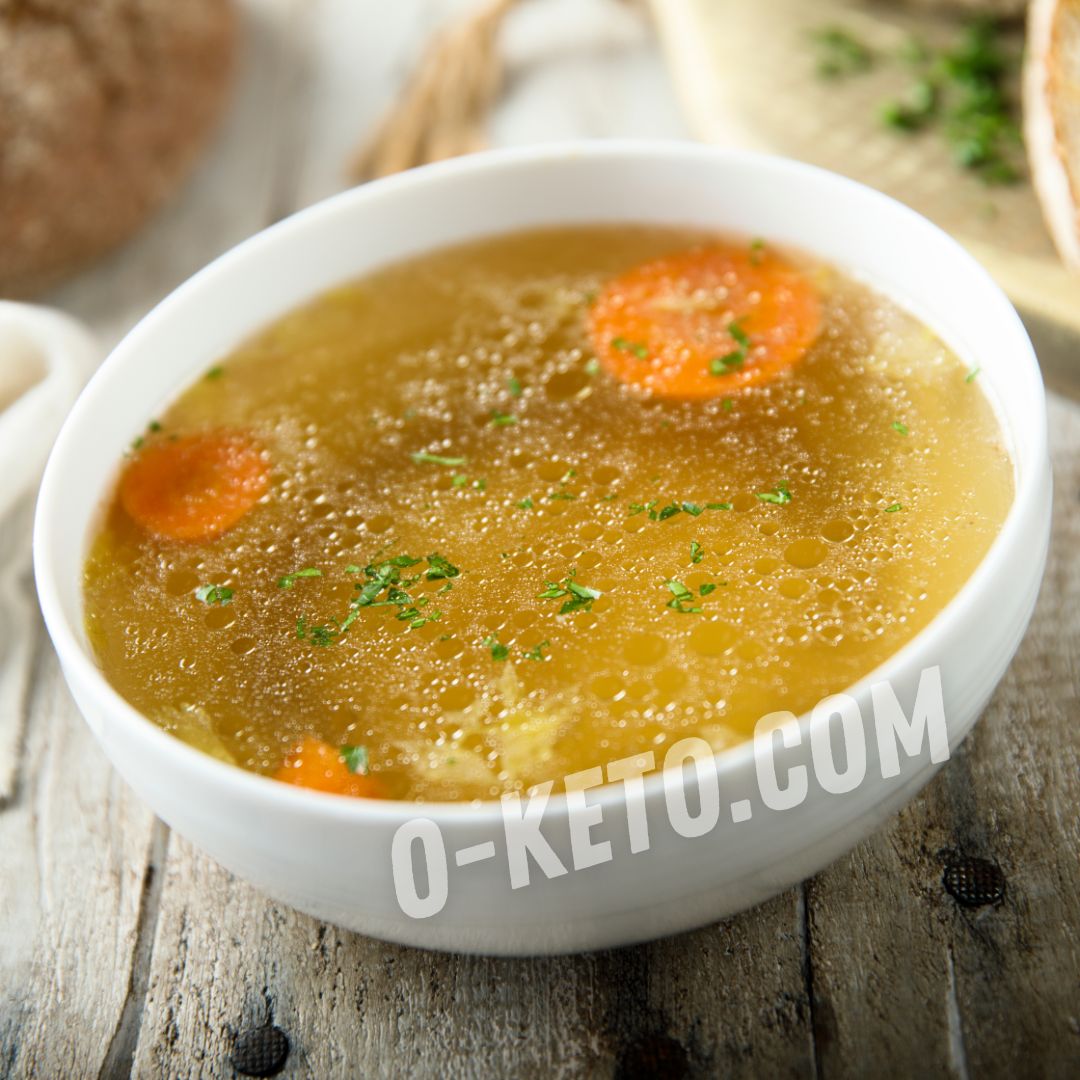

Chicken broth is a liquid base made by simmering chicken, bones, skin, cartilage, vegetables, and spices. It may be light and clear or richer if cooked longer with bones. In cooking, broth is used for soups, sauces, braising, cauliflower-based keto dishes, and also as a hot drink with salt and herbs.
For keto and LCHF, chicken broth is convenient because it contains almost no carbohydrates when made without sugar, flour, noodles, potatoes, or starchy thickeners. Its nutrition depends strongly on the recipe: broth from chicken breast will be very lean, while broth from bones, skin, and joint parts will be richer in flavor and texture.
Nutritional value
Per 100 ml, chicken broth is often listed with about 15-20 kcal, 1-2 g of protein, 0-1 g of fat, and 0 g of carbohydrates. One cup may contain around 30-50 kcal, 6-8 g of protein, 0-2 g of fat, and 0-2 g of carbohydrates if vegetables or small additions are present. The glycemic index of plain broth is close to zero.
Broth may contain sodium, potassium, phosphorus, a little gelatin, and soluble substances from bones and tissues. It is not the same as a full portion of meat. If you need protein, add chicken, egg, fish, or cheese; if you need satiety, add fat such as butter, cream, avocado, or fatty chicken pieces.
Place in keto and LCHF
Homemade chicken broth usually fits keto. It makes the diet warmer and more varied and works as a base for soups with broccoli, cauliflower, mushrooms, egg, chicken, and herbs. During early low-carb adaptation, salted broth can be a convenient hot drink, but salt amount should be adjusted individually.
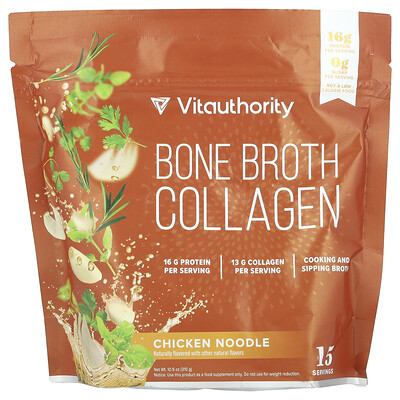
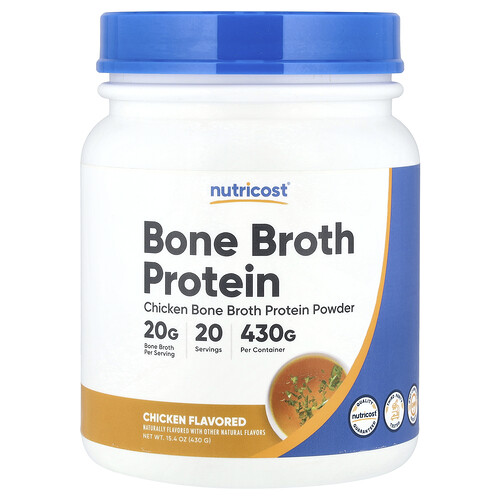
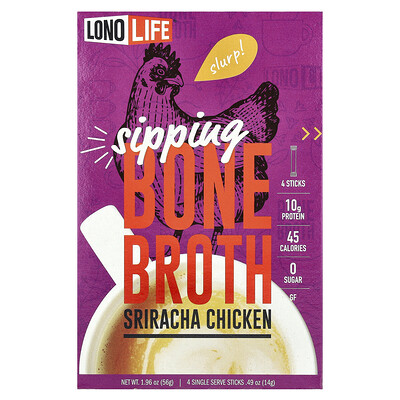
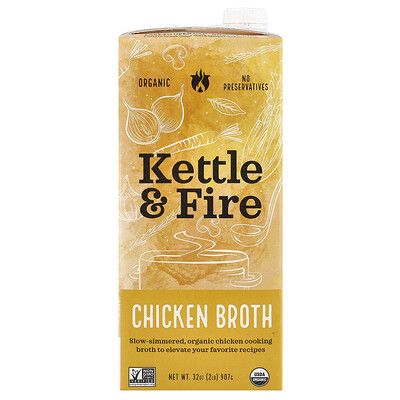
Store-bought broths, cubes, and concentrates require ingredient checks. They may contain sugar, starch, maltodextrin, noodles, flavorings, a lot of salt, or vegetable oils. For strict keto, choose a clear composition: chicken, water, salt, spices, and non-starchy vegetables.
If broth is drunk on its own, it may not satisfy for long because it contains little fat and little dense protein. For a complete keto plate, add chicken pieces, egg, herbs, butter, cream, or vegetables. Then broth becomes a meal base rather than just hot liquid.
How to cook
For a light broth, chicken, water, salt, bay leaf, pepper, onion, and celery are enough. For a richer taste, use bones, wings, drumsticks, skin, and a little acid such as lemon juice or vinegar, then simmer longer over low heat. Foam can be skimmed at the beginning, and the finished broth strained.
If you want a clean taste, do not add too much carrot or onion because they bring sweetness and a small amount of carbohydrates. For keto soup, broth pairs well with cream, egg, chicken, mushrooms, cauliflower, broccoli, spinach, and herbs. Surface fat can be kept for satiety or removed for a lighter version.
Hard boiling makes broth cloudier and can give it a rougher taste, so a gentle simmer is better for a clear base. If richness matters more than clarity, cook it longer and chill it afterwards; the fat rises to the top, and the body of the broth becomes easier to judge by texture.
How to choose
Good prepared broth should smell like chicken and spices, not yeast extract, sugar, or harsh artificial seasoning. It should not contain flour, starch, sweet syrups, or noodles if you follow keto. With concentrates, check both carbohydrates and salt per serving.
Homemade broth may become gel-like after chilling. That is normal when it was cooked with bones and skin. Cloudiness is not automatically a problem; it depends on boiling and straining. Sour smell, fizzing, mold, or bitterness are signs that it should not be used.
Storage
Cooked broth should be cooled quickly and refrigerated. It is convenient to divide it into small containers so the whole batch is not reheated each time. Homemade broth is usually used within the next few days in the refrigerator; for longer storage, freeze it in portions.
When freezing, leave space for liquid expansion. Broth can be frozen in ice cube trays and added to sauces. After thawing, heat it well. Repeatedly cooling and reheating the same large pot is not a good practice.
Substitutes
Chicken broth can be replaced with turkey broth, bone broth, sugar-free vegetable broth, mushroom broth, or water with butter and spices. For soups, turkey and bone broth are closest; for sauces, concentrated chicken or mushroom broth; for light dishes, water with salt, herbs, and a little butter.
If the broth is needed for chicken flavor, turkey broth or a mild bone broth is the closest replacement. If it is mainly a braising liquid, water with salt, butter, bay leaf, and pepper can work. For sauces, the key is not only the replacement but also reduction: weak broth leaves a watery taste, while a concentrated one brings the dish together faster.