


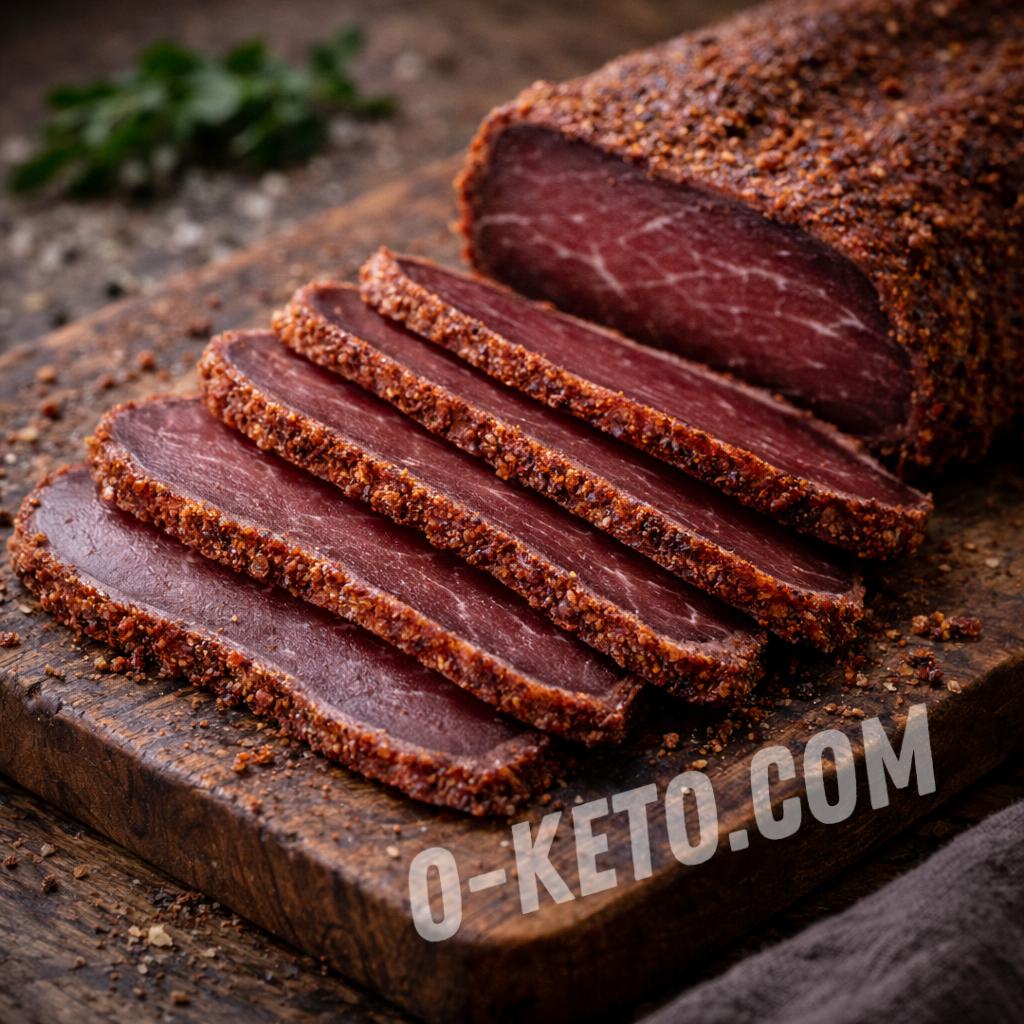

Basturma is cured dried meat, most often beef, salted, pressed, and coated with a spicy paste. It is known in the cuisines of the Caucasus, Armenia, Turkey, the Middle East, and the Balkans. Good basturma is dense, slices thinly, smells of garlic, fenugreek, and paprika, and tastes salty, meaty, and very concentrated.
The main spice coating is often called chaman. It may include fenugreek, garlic, paprika, hot pepper, cumin, coriander, and other spices. This paste is what distinguishes basturma from simple dried meat: it protects the surface, gives aroma, and makes the product recognizable.
Basturma appeared as a way to preserve meat before refrigerators: salt, pressing, and drying reduced moisture, while spices shaped the flavor. Today it is more of a delicacy and appetizer than an everyday protein source. Because of salt and density, it is eaten in thin slices, not large pieces. A good serving is built on contrast: salty meat, fresh cucumber or radish, soft cheese, greens, and a little fat.
Nutritional value
In 100 g of basturma there are usually about 220–320 kcal, 28–40 g of protein, 8–20 g of fat, and 0–3 g of carbohydrates. The range depends on meat cut, drying level, fat amount, and spice paste composition. The drier the product, the higher the concentration of protein and salt per 100 g.
Classic basturma is low in carbohydrates, but ready products may contain sugar, dextrose, starch, flavor enhancers, or sweet paprika blends with additives. For keto, the label of the specific product matters as much as the technology itself.
A usual serving of basturma is smaller than a serving of fresh meat: often 20–40 g is enough. In that amount it adds flavor and protein without turning the plate into a heavy meat meal. This is useful for a snack, antipasti, or an addition to eggs when strong taste is needed without a sweet marinade.
Is it suitable for keto?
For keto and LCHF, basturma usually fits by macronutrients: it has a lot of protein, some fat, and almost no carbohydrates. It is convenient as a small snack with cucumber, greens, cheese, eggs, olives, avocado, or salad. A few thin slices give strong flavor without bread or sweet sauces.
But it is not unlimited. Basturma is very salty, dense, and easy to overeat as a snack. If the diet already contains many cheeses, salted fish, cured meats, and pickles, another salty meat slice may be excessive. On a keto plate it is better paired with fresh vegetables and fat, not starch-based crispbreads.
How to use it
Basturma is sliced very thinly across the grain and served at room temperature: the spice aroma opens better than straight from the refrigerator. It is added to meat platters, omelets, scrambled eggs, salads, cheese rolls, cucumber appetizers, and greens. In hot dishes it quickly gives off salt, so it should be used moderately.
If slices are too salty or firm, they can be used like a seasoning: finely chopped and added to eggs, stewed cabbage, mushrooms, or cream sauce. Long frying is not recommended: the meat becomes dry and spices may turn bitter.
How to choose
Good basturma should be firm but not stone-hard, with a clean meaty smell and bright spice coating without mold, slime, or mustiness. The meat color is usually dark red or burgundy. A wet surface, sour smell, and stickiness are poor signs.
Look for meat, salt, and spices in the ingredient list. Nitrite salt may appear in industrial versions, but sugar, syrups, and starch are unnecessary for a classic product. If the coating is too bright and sweetish, check colorings and additives.
Limitations
The main limitation is sodium. When salt is restricted, swelling is an issue, or salty foods are poorly tolerated, the portion is better reduced. Basturma can also be hot and garlicky, so it does not suit every sensitive stomach. Pregnant people and those who poorly tolerate cured products need a reliable producer and proper cold chain.
How to store it
A whole piece is kept in the refrigerator, wrapped in parchment or cloth so it does not become damp. After opening vacuum packaging, it is better to replace it with dry wrapping or a breathable container. Slices dry out faster, so they are kept covered and eaten soon. If slime, unintended mold, or unpleasant smell appears, discard the product.
What can replace it?
The closest replacements are bresaola, sugar-free pastrami, sujuk in a small portion, dried beef without sweet marinade, jamón, prosciutto, or smoked beef. The taste will differ, but the role is similar: salty sliced meat with strong aroma. For a less salty plate, roast beef, baked beef, or tongue is better.


