


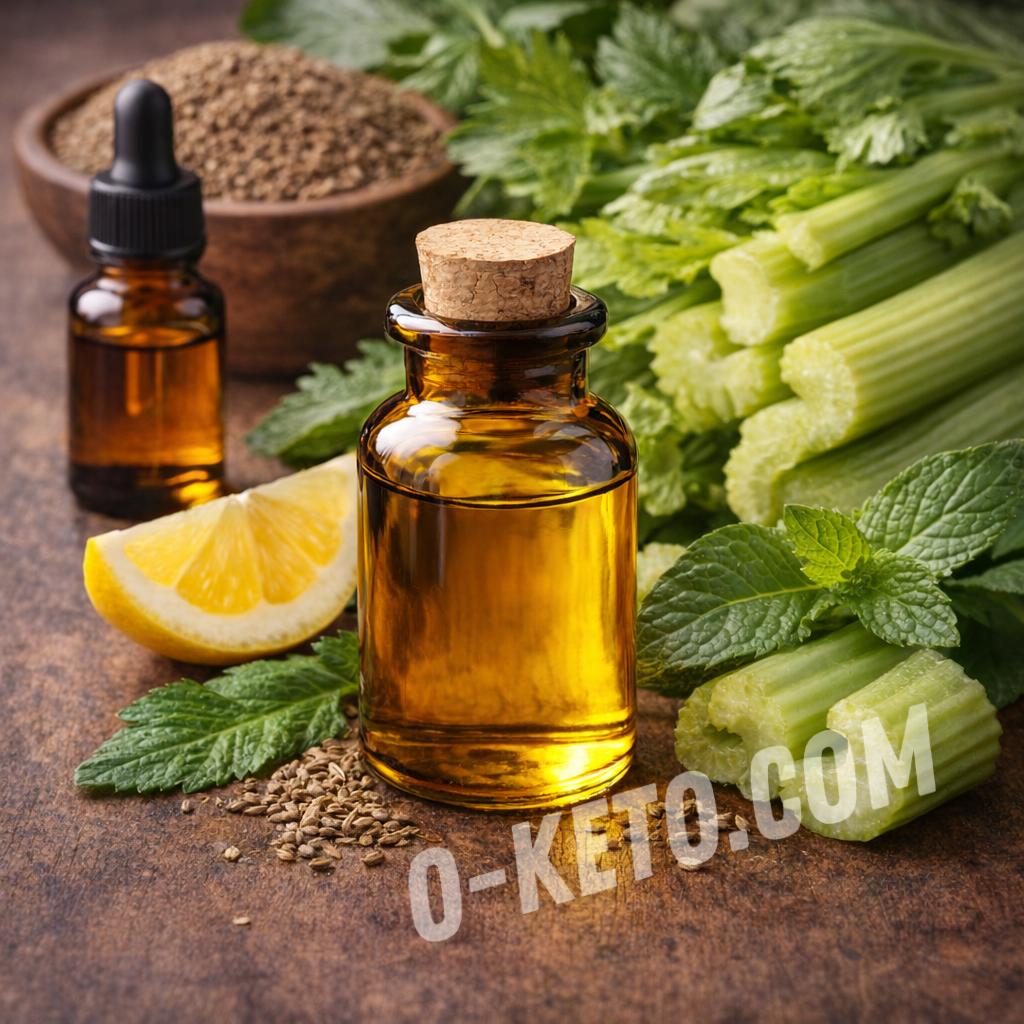

Celery essential oil (Apium graveolens) — is a concentrated natural extract, most commonly obtained from seeds (less often — from leaves). It has a characteristic spicy-green, slightly earthy aroma and is used in aromatherapy and traditional practices as a means to support digestion, metabolism, and the nervous system.
Celery has been known since ancient times: it was valued as a food and medicinal plant in Mediterranean and Middle Eastern cultures.
Celery essential oil contains biologically active compounds (terpenes and their derivatives) that provide anti-inflammatory, antiseptic, and mildly calming effects.
Composition and Properties
The chemical composition of celery essential oil can vary depending on the raw material (seeds/leaves), the origin of the plant, and the method of extraction. However, it most commonly contains terpenes and sesquiterpenes, which form the main effects of the oil.
Key Components
- Limone — supports antioxidant processes, fresh citrus note.
- Pinenes — characteristic pine-terpene base, supports respiratory and antiseptic effects.
- Selinenes (e.g., β-selinene) — mild anti-inflammatory and antispasmodic action.
- Phenolic and flavonoid compounds (in trace amounts) — contribute to antioxidant potential.
Main Properties
- Anti-inflammatory — may reduce the severity of local inflammatory reactions (with correct external application).
- Antiseptic — supports skin cleanliness and prevents secondary microflora (in blends).
- Supports digestion — often used in aromatherapy as a “digestive” aroma (on the level of sensations and relaxation).
- Calming — may help with tension and fatigue due to the influence of aroma on psycho-emotional state.
Use of Celery Essential Oil in Aromatherapy and Daily Life
Celery essential oil is used in aromatherapy to create a “collected,” calm state and a sense of inner stability. It blends well with citrus, woody, and herbal oils.
Aroma Diffuser
- Dosage: 2–4 drops per standard diffuser reservoir.
- When to use: during emotional exhaustion, fatigue, distraction, in periods of high tension.
- Combines with: orange, lemon, neroli, lavender, cedar, frankincense.
Aroma Bath
- Important: essential oils should not be added to water “just like that.” They need to be mixed with an emulsifier beforehand.
- How to do it correctly: mix 3–6 drops of oil with 1 tbsp. of salt/honey/base oil, then add to a warm bath.
Massage and Rubbing
For external use, celery oil is used only diluted with a base oil (jojoba, almond, grape seed, etc.).
- Standard concentration: 1 drop per 10 ml of base (≈0.5%).
- For local application: up to 1 drop per 5 ml of base (≈1%), if there is no sensitivity.
- Areas: shoulders/neck (tension), feet (relaxation), abdomen (gentle “warmth” in the blend).
Use in Cosmetology
In skin care, celery oil is more often used as a component of blends — due to its active composition and potential irritating ability when exceeding dosage.
For Problematic Skin
- add only to a ready base (cream/oil/serum) in minimal amounts;
- avoid applying to damaged skin;
- always perform a sensitivity test.
Example of Adding to Base
- Dosage: 1 drop per 30 ml of cream/lotion.
Recommendations for Use and Contraindications
To use safely:
- Always start with the minimum dosage.
- Before the first use, perform a test: 1 drop per 10 ml of base, apply to a small area of skin for 24 hours.
- Do not apply to mucous membranes and the area around the eyes.
- Do not use undiluted.
Possible contraindications:
- Pregnancy and lactation — use only after consulting a specialist.
- Allergy to celery and plants of the Apiaceae family.
- Sensitive skin — high risk of irritation when exceeding dosage.
- Chronic diseases (especially when taking medications simultaneously) — it’s better to coordinate use.
Important: essential oils are not a substitute for medical treatment. In case of pronounced symptoms or chronic conditions, consult a doctor.
Conclusion
Celery essential oil — is a spicy, “grounding” aroma and a functional component for aromatherapy and gentle body practices. When used correctly, it can help relax, reduce tension, and support a sense of inner focus. The main thing is to adhere to dosages, dilute, and consider individual sensitivity.


