


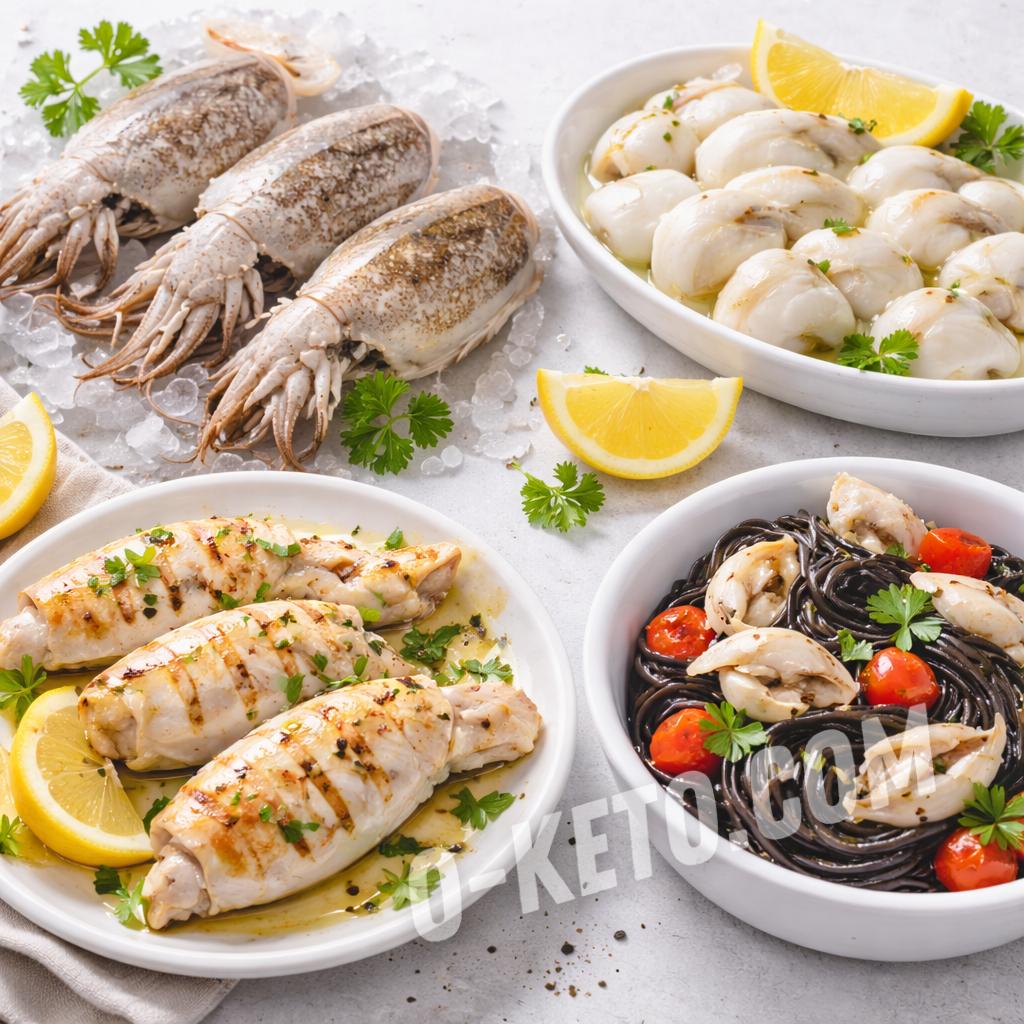

Cuttlefish are marine cephalopods related to squid and octopus, but they have their own culinary role. They have firm white flesh, mild sea flavor, and an internal calcareous plate often called the cuttlebone. In Mediterranean and Asian cooking, cuttlefish are fried, stewed, grilled, added to stews, salads, soups, and dishes made with ink.
The main feature is the narrow line between tender and rubbery texture. Small cuttlefish cook very quickly, in just a few minutes. Large ones, by contrast, may be stewed longer over low heat so the connective tissue softens. The middle path, where the product sits too long over strong heat, usually gives a tough result.
Cuttlefish are not the same as squid. Their taste is often deeper, the texture firmer, and the ink is valued as a separate ingredient for sauces and rice-style dishes. For keto and LCHF, the flesh itself is interesting: carbohydrates are almost absent, protein is high, and fat can be added through butter, cream sauce, or olive-oil dressing.
Nutritional value
In 100 g of raw cuttlefish there are usually about 80–100 kcal, 15–18 g of protein, 1–2 g of fat, and less than 1 g of carbohydrates. Exact values depend on species, size, season, and whether the product is sold with liquid. It is a lean seafood, so it does not make a dish fatty by itself.
Cuttlefish contain vitamin B12, selenium, phosphorus, copper, iodine, zinc, taurine, and a small amount of marine fatty acids. Still, the portion on the plate matters more than a long nutrient list: this is mainly a protein-rich seafood that needs correct cooking and a suitable fat in serving.
Is it suitable for keto?
Cuttlefish fit keto well when cooked without flour, breading, sweet sauces, and starchy sides. The flesh has almost no carbohydrates, but it is rich in protein, so very large portions should be counted as part of the total protein meal in a strict plan.
Good options include cuttlefish with olive oil, butter, a little garlic, parsley, lemon, egg, leafy greens, zucchini, cauliflower, mushrooms, or unsweetened tomato sauce. If ink is used, check the composition of ready-made ink paste: store mixes may contain thickeners, sugar, or excess salt.
How to choose
Fresh cuttlefish should smell like clean sea water, not ammonia or old fish. The flesh should be springy, moist, but not slimy. In a whole specimen, the eyes should look clear and the skin should be free of sticky film and sharp smell. For frozen product, check the ice layer, package integrity, and absence of dry white freezer marks.
Small cuttlefish are convenient for quick frying and grilling. Larger ones are better for stewing, stuffing, or slicing into strips. Cleaned product saves time, but may lose some flavor. If ink is needed, choose a product with the ink sac preserved or ink listed as a separate ingredient.
How to cook it
Before cooking, remove the insides, cuttlebone, beak, and, if needed, the skin. Small bodies can be left whole; larger ones are cut into rings, strips, or pieces. For quick frying, the pan should be hot and the product dry, otherwise it will start stewing in its own moisture.
There are two reliable methods: very fast, or slow and longer. Quick frying takes only a few minutes. For stew, cuttlefish is cooked over low heat until tender, often with tomato, wine, broth, olive oil, and herbs. Salt should be moderate because seafood and ink may already be salty.
What to pair with
Cuttlefish work well with olive oil, butter, lemon, parsley, thyme, garlic, pepper, fennel, unsweetened tomatoes, zucchini, eggplant, cauliflower, spinach, and salad greens. In Mediterranean cooking they are often served with rice or pasta, but in a keto version that role is better filled by cauliflower, zucchini noodles, or simply the sauce.
Limitations
Cuttlefish are seafood, so individual reactions are possible. If sodium is limited, count the saltiness of the product, ink, sauces, and marinades. Like other seafood, cuttlefish should not stay long at room temperature and should be heated sufficiently unless the product is intended for raw serving.
How to store it
Fresh cuttlefish are best cooked on the day of purchase. In the refrigerator, keep them in the coldest area, separate from ready-to-eat foods. Frozen product should be thawed slowly in the refrigerator and not frozen again. Cooked cuttlefish quickly loses tenderness, so leftovers are better used in a cold salad or gently warmed in sauce.
What can replace it?
By culinary role, squid, octopus, baby octopus, shrimp, scallops, or firm white fish can work. For ink dishes, squid ink is the closest option, though the flavor will not be identical. If firm marine texture is needed, squid is the most practical replacement; if softness is more important, scallops or shrimp are better.


