


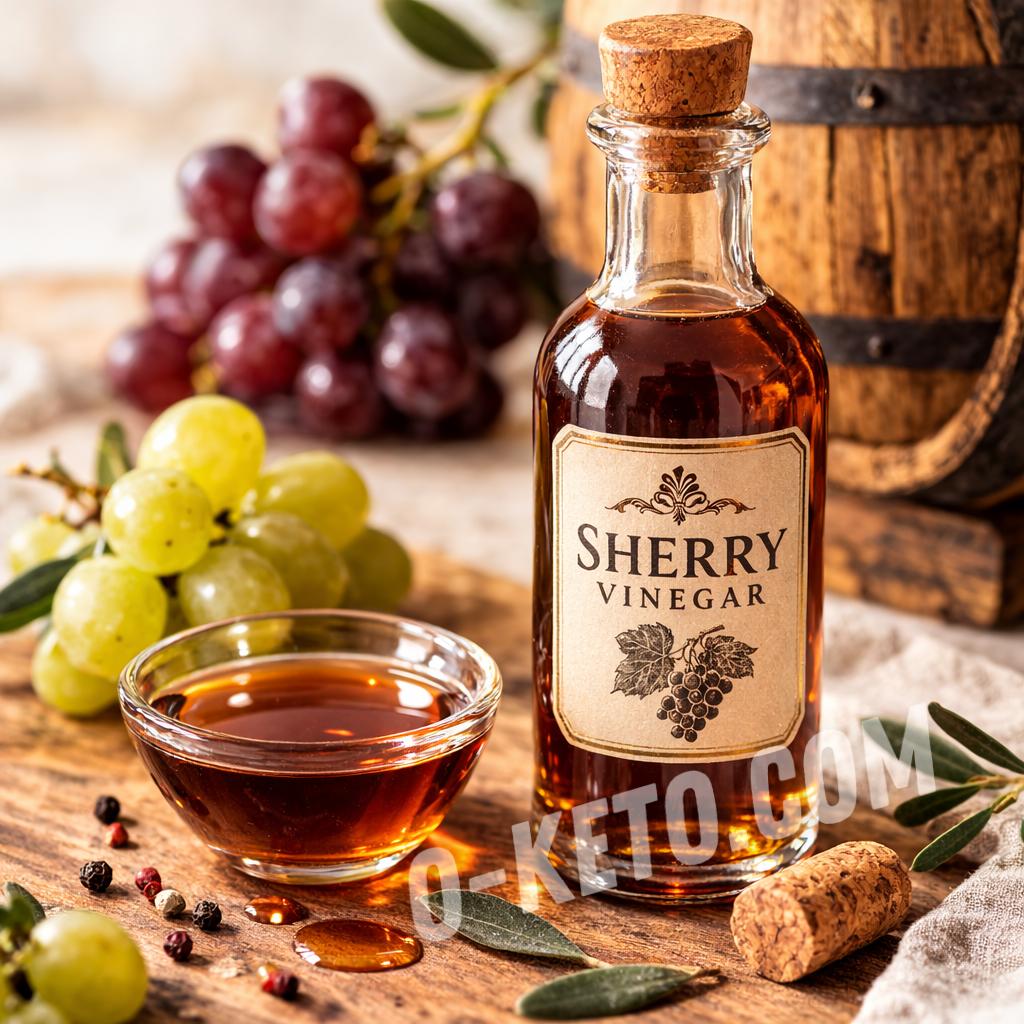

Sherry vinegar is a wine vinegar made from sherry wine and aged in oak barrels. It comes from Andalusia, from the area around Jerez de la Frontera, where sherry is produced. Its flavor is softer and deeper than many ordinary wine vinegars: it has acidity, nutty and woody tones, dried fruit, caramel-like bitterness, and a light wine complexity.
In cooking, sherry vinegar is used not for harsh sharpness but for depth. A few drops can bring together a salad, marinade, sauce, stewed vegetables, mushrooms, fish, or meat. It works especially well with olive oil, fatty fish, seafood, pork, poultry, tomatoes, peppers, herbs, and roasted vegetables.
How it is made
The base is wine from Palomino, Pedro Ximenez, or Moscatel grapes. The wine undergoes acetic fermentation, then the vinegar is aged in oak barrels. The solera system is often used: younger batches are gradually blended with older ones, which makes the flavor more stable and complex. Longer aging usually means softer acidity and more noticeable nutty, woody, and wine-like notes.
Classic vinagre de Jerez has protected geographical status. Reserva and gran reserva versions are aged longer. There are also sweeter vinegars based on Pedro Ximenez: they are thicker, darker, and softer, but may contain more sugars, so the label matters for a strict low-carb diet.
Nutrition
Ordinary dry sherry vinegar contains very few calories and carbohydrates: a tablespoon usually provides only a few kilocalories and less than 1 g of carbohydrates. The main components are acetic acid, water, and aromatic compounds formed during fermentation and aging. Minerals and polyphenols are present only in trace amounts and do not make vinegar a stand-alone nutrient source.
For keto and LCHF, the specific bottle matters as much as the category. Some versions are softer and sweeter, especially if made from Pedro Ximenez or additionally sweetened. If the vinegar is thick, syrupy, and clearly sweet, count it separately rather than treating it like ordinary dry wine vinegar.
Keto and LCHF
Dry sherry vinegar usually fits low-carb eating well: portions are small, sugar is low, and the flavor is strong. It helps make dressings without honey, sweet sauces, or ready-made marinades. A good basic ratio is one part vinegar to three or four parts olive oil, plus salt, pepper, and sugar-free mustard.
When vinegar is used in a marinade, much of it remains outside the final portion, but the flavor has time to enter the food. In sauces and glazes, carbohydrates depend on the added ingredients: onion, wine, fruit, sweeteners, or tomato paste. The vinegar itself is usually not the issue; the sweet part of the recipe often is.
How to use it
In salads, sherry vinegar is especially good with olive oil, greens, cucumbers, tomatoes in a moderate portion, roasted peppers, avocado, tuna, eggs, and hard cheeses. In hot cooking, add it near the end to refresh stewed meat, mushrooms, cabbage, pork, chicken, or seafood. A few drops can replace lemon where a more wine-like, nutty acidity is wanted.
In Spanish cooking, it often appears in gazpacho, marinades, fish sauces, legume dishes, and vegetable appetizers. For keto versions, keep the vinegar and aromatic vegetables but change the high-carbohydrate base. For example, the dressing can be used for tuna and egg salad, fried mushrooms, or a cold appetizer with peppers and cheese.
How to choose and store
Look for vinagre de Jerez on the bottle, an aging indication, and a clear ingredient list. Good vinegar does not have to be the oldest and most expensive: a basic version is often enough for everyday salads, while reserva and gran reserva shine in simple dishes where the aroma is not hidden. If caramel or sweet additions are listed, the flavor may be softer, but carbohydrates should be checked.
Sherry vinegar can be stored tightly closed in a dark cupboard at room temperature. Refrigeration is usually unnecessary. Over time, sediment may appear, and unfiltered vinegars may develop a vinegar mother; this is not always spoilage, but the smell should remain clean, acidic, and wine-like. If moldy or musty notes appear, do not use it.
Substitutes
The closest substitutes are red or white wine vinegar, sugar-free apple cider vinegar, a good balsamic vinegar in a very small amount, or wine vinegar mixed with a drop of dry sherry. Sherry vinegar is softer and nuttier than most substitutes, so start with less and balance the flavor with oil, salt, and spices.


