


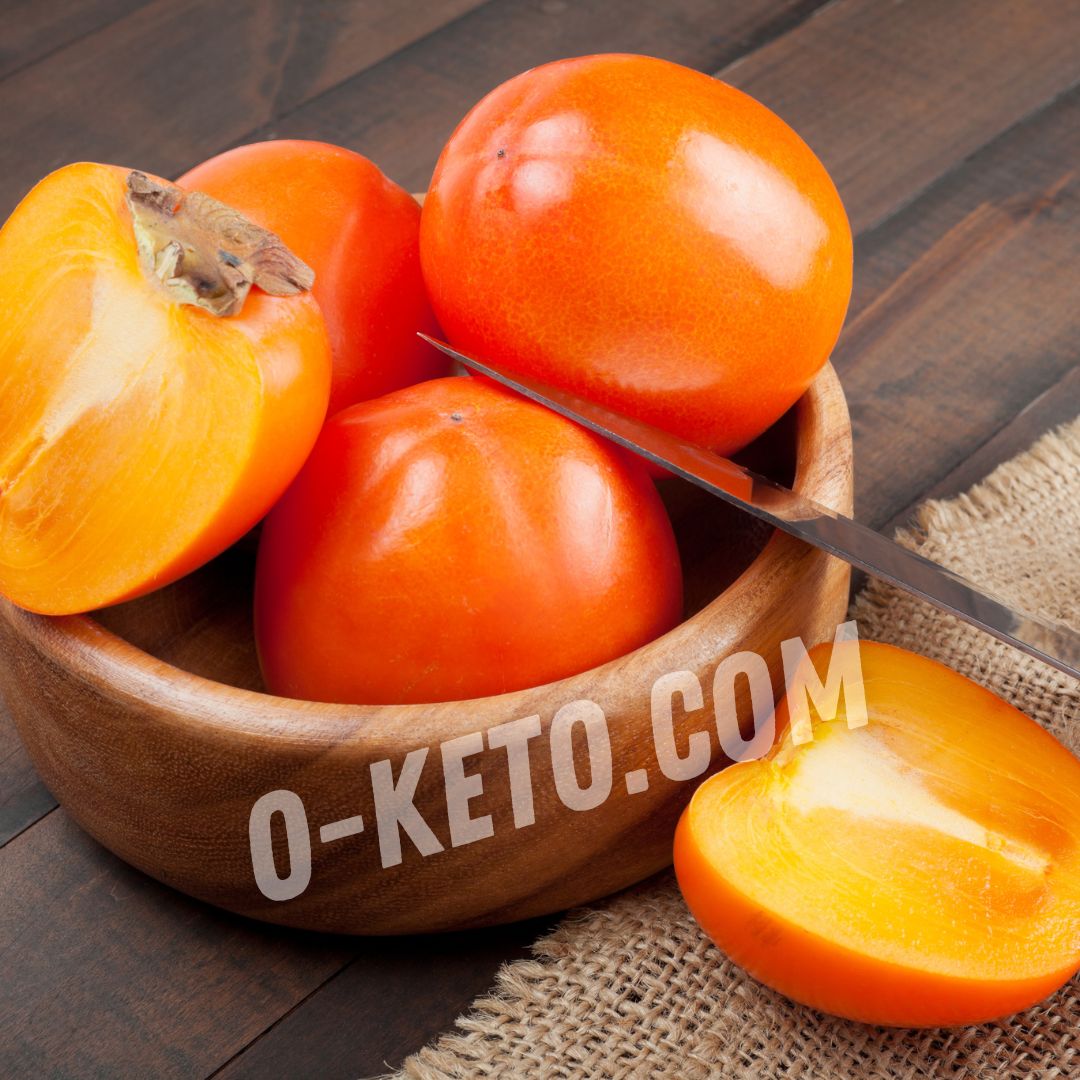

Persimmon is a sweet orange fruit with soft flesh, strong seasonality and varying astringency. Some varieties are eaten firm, while others become pleasant only when fully softened. In an ordinary diet, persimmon can be a dessert fruit, but for keto it is difficult: its sugars and total carbohydrates are noticeably higher than in most berries and low-carb vegetables.
Per 100 g, persimmon is often listed at about 81 kcal, 0.6 g of protein, 0.2 g of fat and around 22 g of carbohydrates. The glycemic index is often around 55, and glycemic load in a normal serving is fairly high. The orange color is linked to carotenoids, and it also contains vitamin C, vitamin E, fiber and potassium, but these details do not make persimmon convenient for strict keto.
Nutrition
Persimmon contains almost no fat and little protein. Its flavor is built on sweetness, juiciness and soft texture. Fiber slows absorption somewhat compared with juice or puree, but it does not remove the carbohydrates. Persimmon should therefore not be judged only as a “fruit with vitamins”: for a low-carb menu, sugar, portion weight and the daily limit matter more.
One fruit often weighs much more than 100 g. Eating a whole persimmon can provide as many carbohydrates as several small berry portions or a meaningful part of a strict keto daily limit. That is why a recommendation around 30 g looks strict, but it is closer to reality than a usual fruit serving.
Is It Keto-Friendly?
For strict keto, persimmon usually does not fit as a regular food. It can only be treated as a rare micro-portion if carbohydrates are counted in advance and the rest of the menu is adjusted. A 20-30 g piece of flesh is more of a flavor accent than a full dessert.
For more flexible LCHF, persimmon still needs caution. It is better not eaten on an empty stomach and not combined with other sweet fruits, honey, syrups, sweet yogurt or pastries. If you want to try it, add small pieces to a meal with protein and fat rather than eating a whole fruit separately.
How to Use It
Persimmon works better as an accent in a salad or dessert plate where the amount is limited in advance. The flesh can be cut into small cubes and added to leafy greens, soft cheese, a small portion of nuts, poultry or unsweetened yogurt. This spreads the sweetness through the dish instead of turning it into a separate fruit load.
Practical options, if carbohydrates are counted in advance, include:
- 20-30 g of persimmon in a salad with cheese and greens;
- a few cubes with unsweetened Greek yogurt;
- a small sweet accent for duck or poultry;
- an addition to cottage cheese with cinnamon and no sweeteners;
- a rare tasting portion instead of a usual dessert.
How to Choose and Store
Ripe persimmon should match the variety: some fruits remain firm and sweet, while others become almost jelly-soft. Strong astringency is often linked to underripeness and tannins. For eating without unpleasant dryness, choose fruits without cracks, mold or fermented smell.
Firm persimmons can be left to ripen at room temperature, while soft ones are best refrigerated and eaten soon. Once cut, the fruit darkens, releases juice and becomes even easier to eat by the spoon. For portion control, cut the needed 20-30 g and put the rest away immediately.
Limits and Substitutes
The main limit of persimmon is its high carbohydrate share for a low-carb menu. Dried persimmon, puree, smoothies, jam and desserts with persimmon are even more difficult: water is removed or the fruit is blended, and sugar accumulates faster. For strict keto, these options usually do not fit.
If a sweet fruit accent with fewer carbohydrates is needed, raspberries, strawberries, blackberries, a little blueberry, lemon zest or cinnamon with unsweetened dairy are usually easier. If persimmon itself is desired, weigh a small piece in advance and do not combine it with other sugar sources in the same meal.
Astringency and Micro-Portions
Astringent persimmon can leave a dry feeling in the mouth even when the color looks good. Ripening may help, but for keto that does not make the fruit easier to use: the softer and sweeter the flesh, the easier it is to eat more. First decide what role the fruit has in the dish: an aromatic detail in a salad, a small cube with cheese or a rare tasting portion.
If persimmon is wanted mainly for winter flavor, part of that role can be covered by cinnamon, lemon zest, a few berries or an unsweetened sauce for poultry. It is not an exact substitute, but it is often enough to avoid spending a large share of carbohydrates on one sweet fruit.


